
How to Identify the Shilling of James I
Practical checks for the Jacobean silver shilling: crowned bust, quartered shield, size and metal, mint marks, and hammered-coin authentication cautions.
Read the full Shilling of James I encyclopedia entry →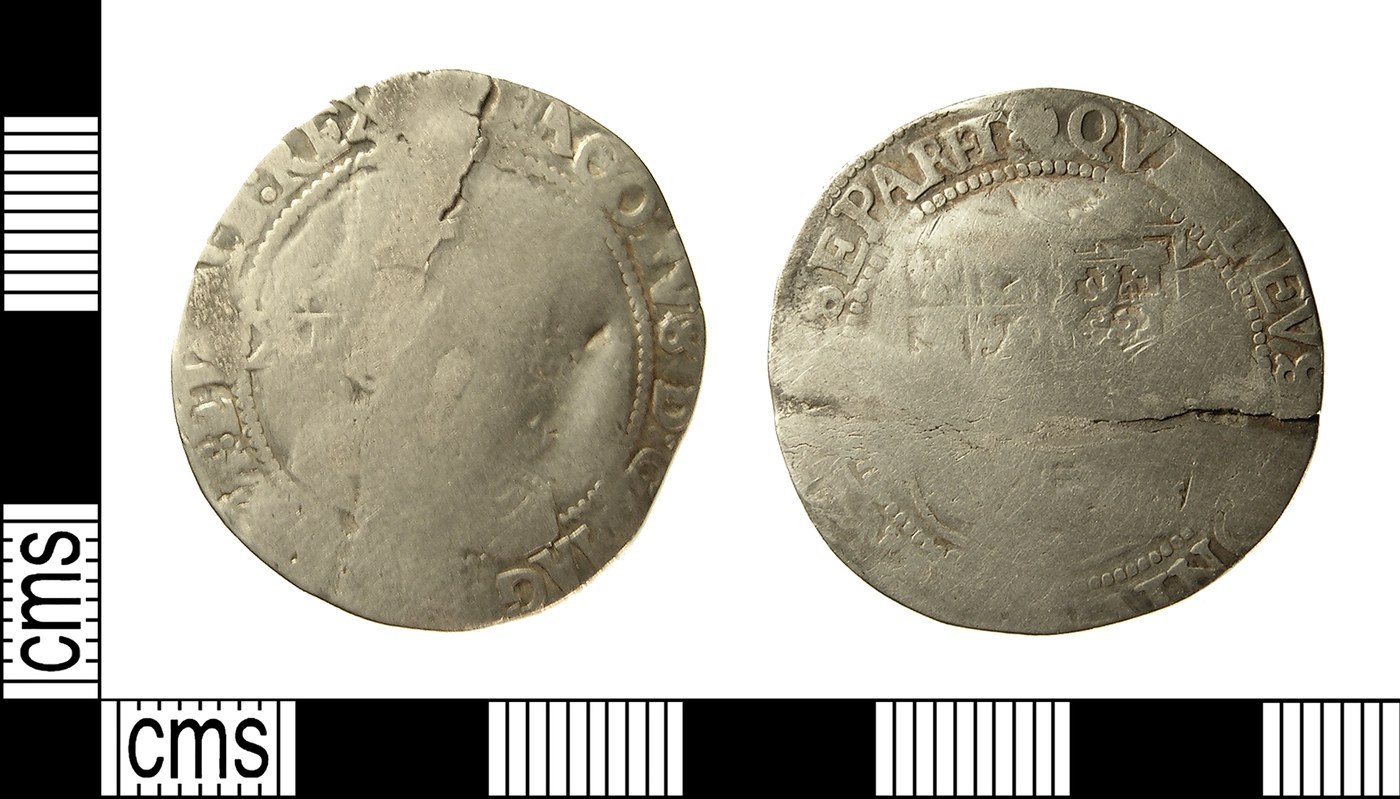
Start with the fabric of the coin. A genuine James I shilling is hammered silver, broad and thin, roughly 30-32 mm across, and often slightly irregular in outline rather than perfectly round. If your coin is thick, perfectly circular with a milled (reeded) edge, or clearly base metal, it is likely a later machine-made piece or a reproduction rather than an early Stuart hammered shilling.
Read the obverse. You should see a crowned bust of the king in profile facing left, surrounded by a Latin legend naming James with royal titles. The style of the bust and the exact wording of the titles changed across the reign's coinages, so note whether the portrait is crude or refined and whether the crown and drapery are sharp, as these help specialists assign the coin to a specific coinage.
Check the reverse. The defining feature is a heraldic shield divided into four quarters, framed by a Latin legend and usually a motto referring to the united kingdoms. Confirm the shield is quartered (four sections) rather than showing a single coat of arms or a cross-and-shield layout, which points to different reigns. Look at the very start of both legends for a small symbol, the mint mark, which is the main tool for dating within James's reign.
Separate look-alikes. Sixpences of James I share the crowned bust and quartered shield but are noticeably smaller and were often dated. Shillings of Elizabeth I, Charles I, and later monarchs use different portraits, titles, and reverse layouts, so read the legends rather than relying on the general design. Half-crowns and other silver denominations can look similar in worn condition, so size and denomination markings matter.
Authenticate with care. Hammered silver has long been faked, from period forgeries to modern cast copies. Casting seams, a soft "soapy" surface, bubbles, or a coin that feels too light or too regular are warning signs. Because uneven strikes and honest wear are normal here, judge authenticity by metal, weight, and die detail rather than by shape alone, and for a valuable example seek an experienced hammered-coin dealer or third-party grading before buying or selling.
Frequently asked questions
How do I tell a shilling from a sixpence of James I?
Both share the crowned bust and quartered shield, but the shilling is the larger coin at about 30-32 mm, while the sixpence is noticeably smaller and usually carries a date in its reverse legend.
There is no date, so how is it identified?
Most James I shillings were not fully dated. Identification relies on the mint mark at the start of the legend, the style of the bust, and the exact royal titles, which together place the coin within the 1603-1625 reign.
Is an irregular, off-center coin a fake?
Not necessarily. Hammered coins were struck by hand, so uneven flans and off-center designs are expected and normal. Judge authenticity by the metal, weight, and detail of the dies rather than by a slightly irregular shape.
What is the mint mark and where do I look?
The mint mark, or initial mark, is a small symbol at the beginning of the obverse and reverse legends. It was changed periodically during the reign and is the primary way collectors narrow down when the coin was struck.