
How to Identify the Shilling of George II
A collector's guide to identifying a George II silver shilling by its left-facing bust, legend, reverse emblems and date, size and metal, and to spotting look-alikes and fakes.
Read the full Shilling of George II encyclopedia entry →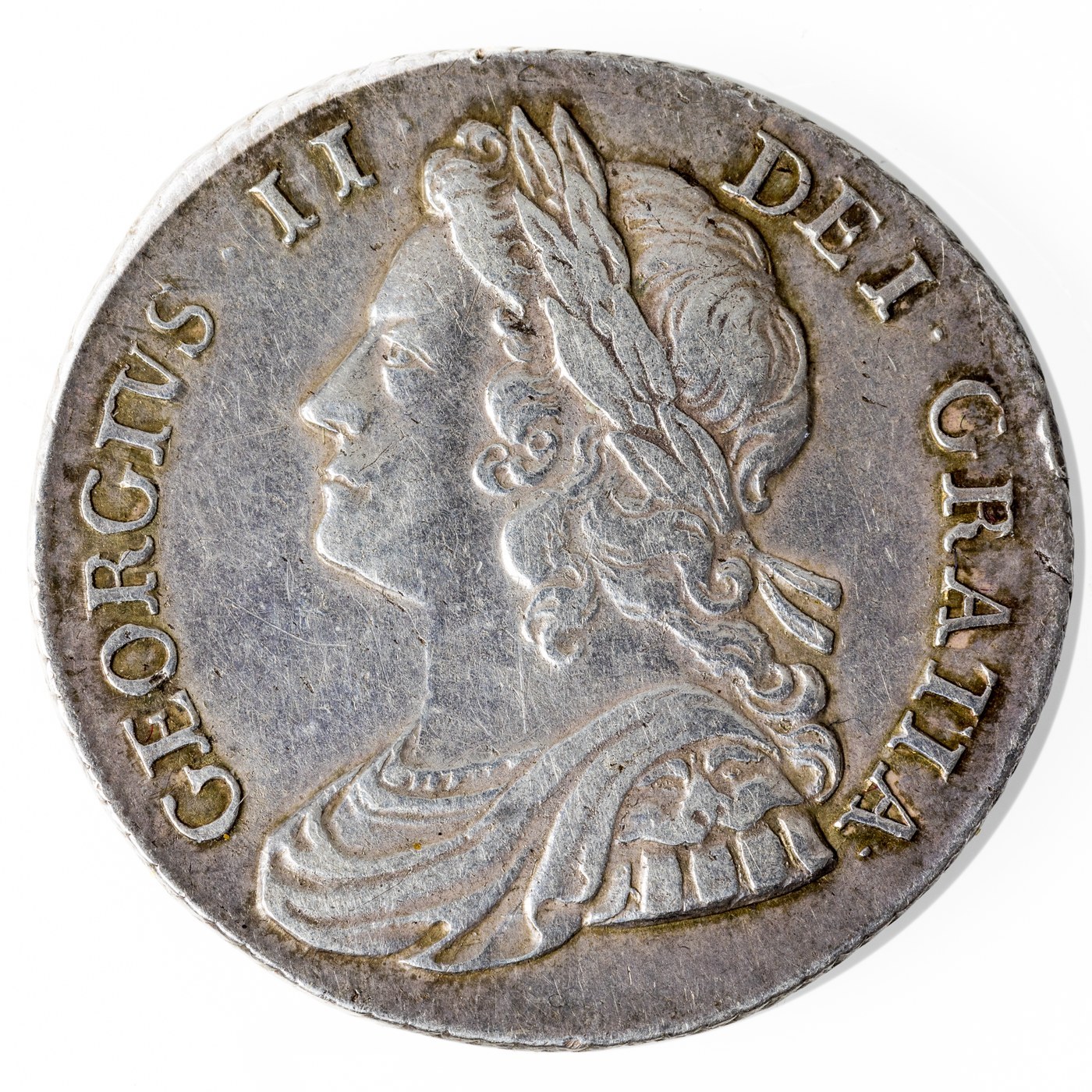
Start with the obverse portrait and legend. A George II shilling shows the king's laureate, draped bust facing left, surrounded by GEORGIVS II DEI GRATIA. Confirm both the name in the legend and the direction the bust faces, since the left-facing profile and the "II" separate this reign from adjacent monarchs. Then judge the bust style: earlier coins such as a 1736 example use a younger portrait, while later years of the reign use an older head, and knowing which you have narrows the date range immediately.
Turn to the reverse and read the emblems and date. The reverse carries four crowned shields of the royal arms set in a cross with the central Garter Star, and small emblems occupy the four angles between the shields. Identify those emblems carefully: roses and plumes together mark combined-source silver, roses alone and plumes alone mark other suppliers, and the word LIMA in the legend marks Spanish treasure silver. Record the date in the legend as well, because the same portrait can appear across several years and the emblem-and-date combination is what fixes the exact variety.
Check size, metal, and edge. The shilling is a small silver coin close to the size of a modern shilling; weigh and measure it and compare against published specifications for the type. The edge may be plain or lettered depending on the issue, and the fabric should read as genuine struck silver with crisp milled detail rather than a soft, grainy, or seamed surface.
Rule out look-alikes. Sixpences of the same reign share the design but are noticeably smaller, while later George III shillings and contemporary or modern imitations can resemble the type at a glance. Compare diameter, weight, portrait style, legend spelling, and the reverse emblems against reference images before settling on an identification, and be wary of coins whose lettering or proportions look wrong.
Authenticate before assuming value. Cast copies show seams, bubbles, and mushy detail; tooled or cleaned coins have unnatural fields and hairlines. Because desirable dates and emblem varieties of Georgian silver are faked and altered, and because date and variety drive value, have any scarce or high-grade piece examined by a specialist in British milled silver, and confirm the date and reverse emblems against a catalogue before relying on an identification or a price.
Frequently asked questions
Which side is the obverse?
The side with the king's profile bust, here facing left, and the legend GEORGIVS II DEI GRATIA is the obverse. The crowned cruciform shields with emblems in the angles is the reverse.
How do I read the reverse emblems?
Look at the four angles between the crowned shields. Roses and plumes together indicate combined-source silver; roses alone or plumes alone indicate other suppliers; the word LIMA in the legend marks Spanish treasure bullion. These emblems, with the date, identify the variety.
How do I tell a shilling from a sixpence of the same reign?
They share the design, but the sixpence is noticeably smaller and lighter. Measure the diameter and weigh the coin, then compare against published specifications to confirm the denomination.
How can I tell a genuine coin from a fake?
Genuine coins show crisp milled detail and honest wear on struck silver. Casts show seams, bubbles, and soft detail, and altered coins have tooled fields or reworked dates. For any scarce or valuable date, get a specialist opinion.