
How to Identify the Sestertius of Nero (Port of Ostia)
A collector's guide to recognizing Nero's brass harbour sestertius by its portrait, aerial Ostia scene, size, and patina—and spotting copies.
Read the full Sestertius of Nero (Port of Ostia) encyclopedia entry →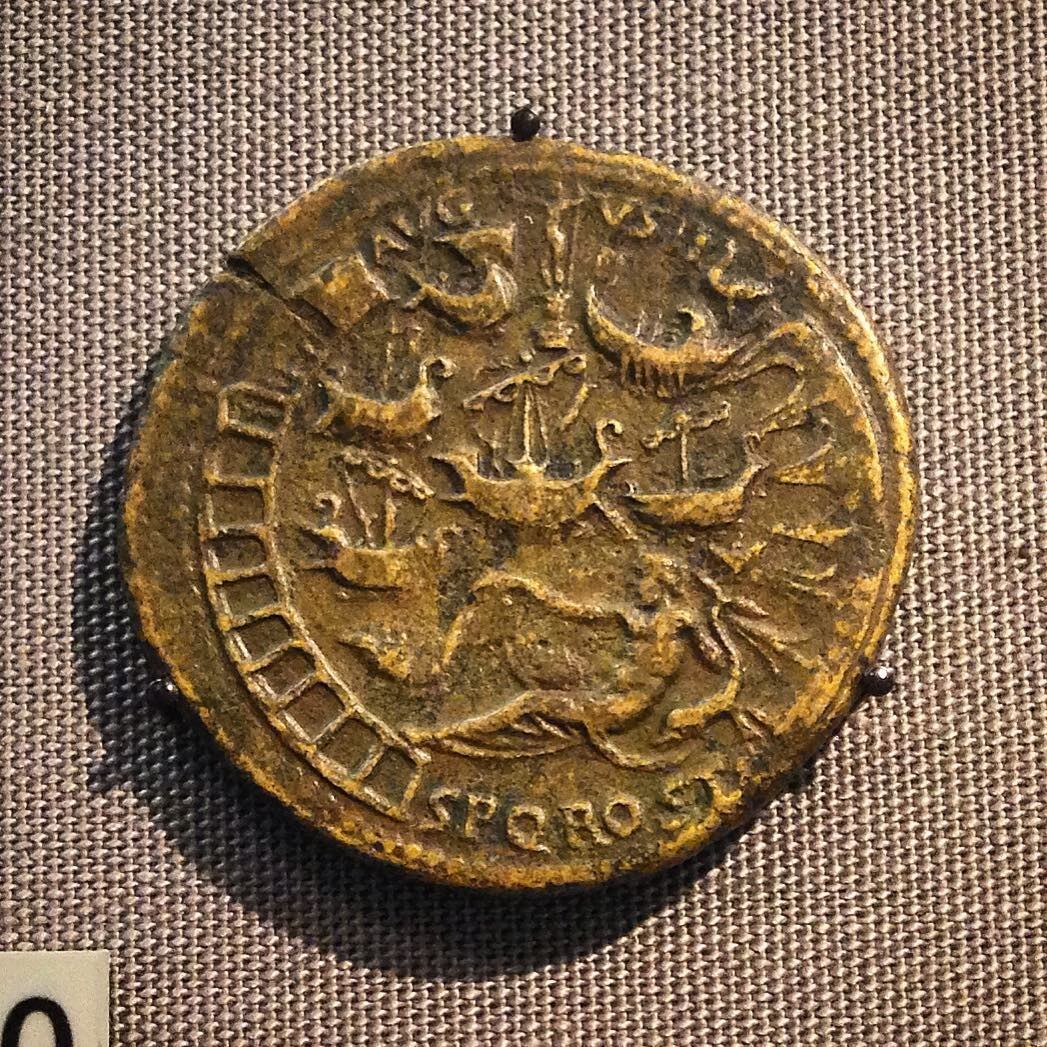
Start with the physical coin. A sestertius is large and heavy, generally about 34–36 mm in diameter, and struck in brass (orichalcum) rather than copper or silver. Weigh and measure it: a genuine piece is a substantial coin, and a specimen that is too small, too light, or the wrong color for its size deserves suspicion. The surface should show an ancient patina—brown, olive-green, or reddish—rather than raw bright metal.
Read the obverse portrait. You are looking for a single male head facing right, Nero, typically laureate, with a thick neck and fleshy features, ringed by a Latin legend of imperial names and titles. Nero's portrait is distinctive and appears only on his own coinage, so identifying him narrows the type immediately. Do not expect a signature or date in modern form; Roman coins are dated by the emperor and by the titles in the legend.
The reverse is the decisive diagnostic. Look for a crowded, top-down view of a harbour: two curving breakwater moles enclosing a basin, several small ships shown inside, a reclining deity (a river or sea god) stretched along the lower edge, and a standing figure or statue at the top marking the harbour entrance. Faint letters in the field or exergue abbreviate the harbour name and the senatorial mint formula. No other emperor pairs a right-facing portrait with this harbour panorama, so once the scene is confirmed the attribution is secure.
Be alert to look-alikes and copies. Nero struck several different large-bronze reverse types, so a Nero sestertius without the harbour scene is simply a different issue, not this one. More importantly, the Ostia design has been reproduced for centuries: Renaissance 'Paduan' medallions by Giovanni Cavino and later, plus modern cast reproductions and tourist replicas. Cast fakes often betray themselves through soft, mushy detail, a seam around the edge, tiny surface bubbles, and an unnaturally uniform or painted-looking patina, whereas a genuine struck coin shows crisp relief and metal flow.
Because the type is valuable and heavily faked, treat identification and authentication as two separate steps. Recognizing the design is easy; confirming that a given coin is an ancient strike is not. For any piece of real value, rely on weight, fabric, patina, and the judgment of a specialist dealer or a third-party grading service rather than on the picture alone.
Frequently asked questions
How big should a genuine example be?
A sestertius of this era is large, roughly 34–36 mm across and noticeably heavy in the hand. A coin much smaller or lighter than that, or one that feels thin for its width, is likely a reduced-size copy or a different denomination.
How can I tell a cast copy from a real struck coin?
Casts often show soft, blurred detail, a faint seam around the rim, small round bubbles or pitting in the fields, and an even, artificial-looking surface. A genuine struck sestertius has sharper relief and a natural, layered patina, though expert confirmation is best for valuable pieces.
What if my Nero sestertius shows a different scene?
Nero issued many large-bronze reverse types, such as figures, temples, and the goddess Roma. Only the top-down harbour view with breakwaters, ships, and a reclining god is the Port of Ostia type; other reverses are separate issues.
Do I need to clean the coin to identify it?
No. The patina is part of an ancient coin's identity and value, and cleaning can damage the surface and reduce worth. Identify it from the portrait, the harbour scene, the size, and the metal as they are, and leave any conservation to a specialist.