
How to Identify the Sestertius of Hadrian
Practical checks for a Hadrian bronze sestertius: portrait and legend, standing reverse figure, size and metal, S C mark, look-alikes, and fakes.
Read the full Sestertius of Hadrian encyclopedia entry →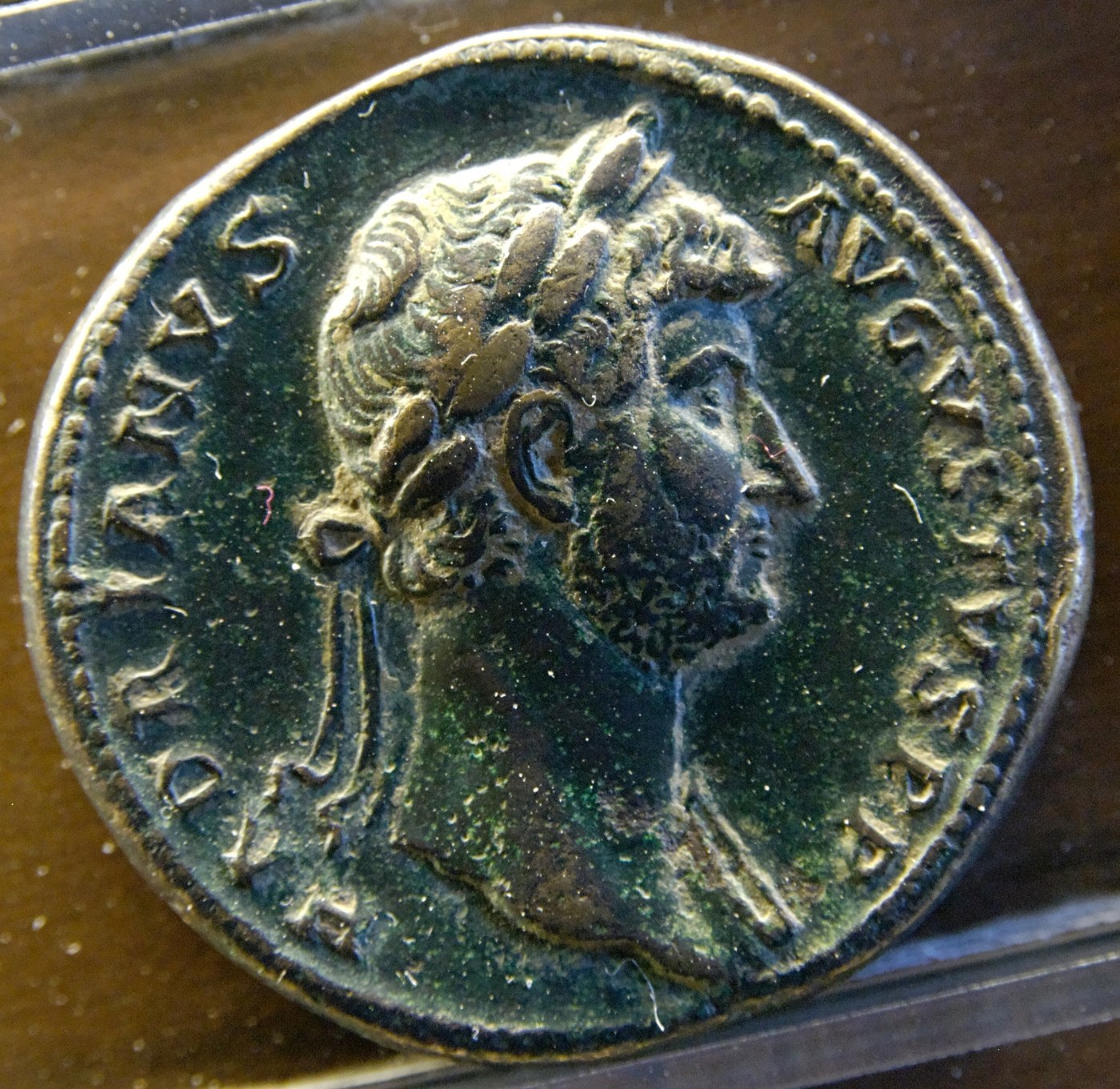
Begin with size and metal. A sestertius is a large, heavy bronze coin, generally around 30-35 mm in diameter with real heft in the hand. If your piece is small, thin, or clearly silver, it is a different denomination, such as a bronze as or a silver denarius, rather than a sestertius.
Read the obverse portrait. Hadrian is shown in profile with a full beard and tightly curled hair, a look that distinguishes him from the clean-shaven emperors before Trajan and from Trajan's own straighter hair. The surrounding Latin legend abbreviates his name and titles, often opening with HADRIANVS AVG or a longer form including IMP CAESAR TRAIAN HADRIANVS. Confirm the name in the legend rather than relying on the face alone, since worn portraits of different emperors can look similar.
Examine the reverse. On the example shown a draped figure stands facing, typically a deity or a personification such as Roma, Pax, Fortuna, Salus, or a province, identified by its attributes and the surrounding legend. Look for the letters S C, usually in the field to either side, which confirm a senatorial bronze issue. Matching the exact figure and legend to a standard reference (such as RIC, Roman Imperial Coinage) pins down the specific type.
Watch for look-alikes and lower grades. Smaller Hadrian bronzes (the as and dupondius) share similar designs but are lighter and smaller, and heavily worn sestertii can lose their legends entirely, making attribution harder. Provincial bronzes struck in the Greek East can also carry Hadrian's portrait but use Greek legends and different styles.
Authenticate with care. Ancient bronzes are frequently faked by casting, so check for casting seams, air bubbles, and an unnaturally uniform or "soapy" surface. Be cautious of coins that have been tooled, smoothed, or artificially repatinated to sharpen detail, as this reduces value. When a coin is valuable, favor examples with documented provenance or third-party authentication from a specialist in ancient coins.
Frequently asked questions
How do I tell a sestertius from a smaller Hadrian bronze?
The sestertius is the largest common bronze, about 30-35 mm and heavy. The dupondius and as are smaller and lighter, though they can share similar portraits and reverse designs.
How can I be sure the portrait is Hadrian and not another emperor?
Read the obverse legend for his name (HADRIANVS). His full beard and curly hair also separate him from earlier clean-shaven emperors, but the legend is the reliable confirmation.
What does the standing figure on the reverse represent?
It is usually a deity or personification, identified by its attributes and legend. Matching the figure and inscription to a reference like RIC tells you the exact reverse type.
How do I spot a fake or altered example?
Look for casting seams, bubbles, and overly smooth surfaces that suggest a cast copy, and be wary of tooled or repatinated coins. For higher-value pieces, seek provenance or specialist authentication.