
How to Identify the Sesquicentennial of American Independence Quarter Eagle
A collector's checklist for the 1926 Sesquicentennial $2.50 gold coin — dual dates, standing Liberty, Independence Hall, size, alloy, and authentication cautions.
Read the full Sesquicentennial of American Independence Quarter Eagle encyclopedia entry →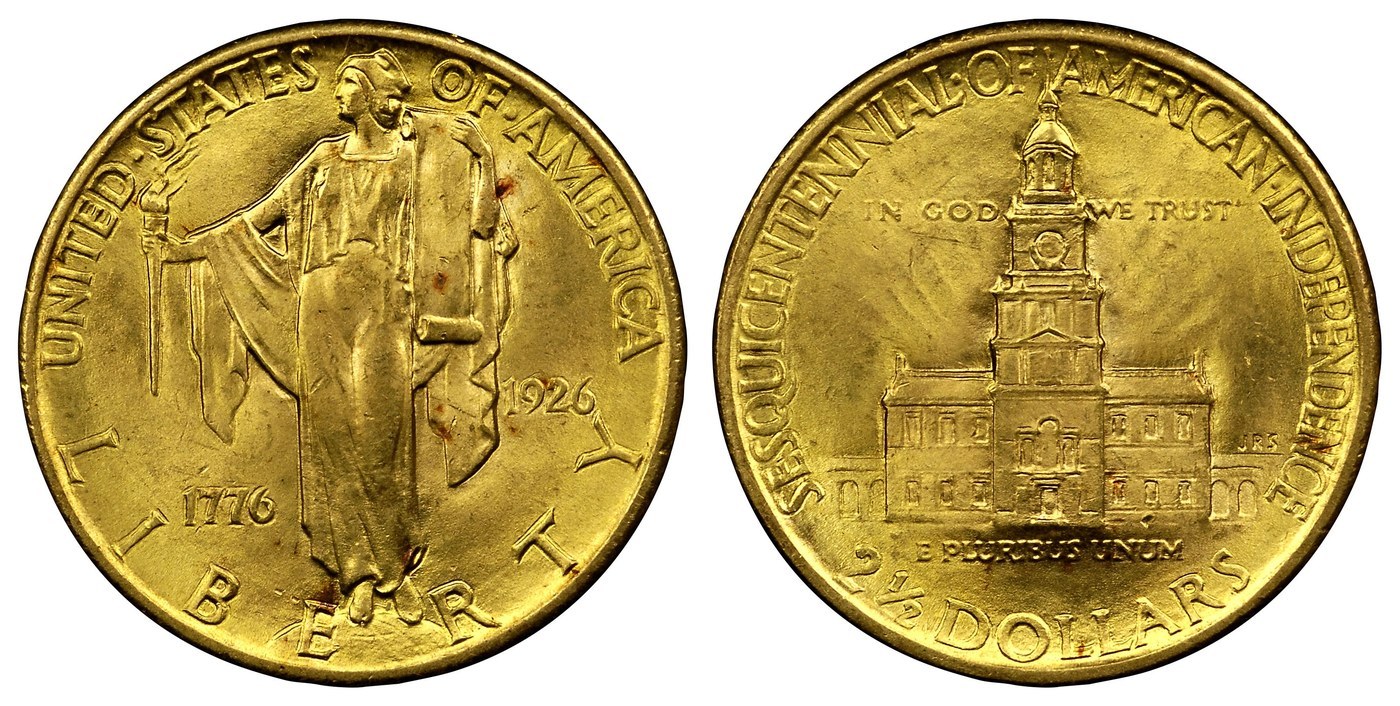
Start with the obverse figure and the dates. This issue shows a full standing Liberty holding a torch in one hand and a scroll or document in the other, with the dual dates 1776–1926 present in the design. That standing Liberty combined with the two dates is the quickest way to confirm the type; do not confuse the 1776–1926 span with the coin's actual year, which is 1926.
Turn to the reverse to confirm. The reverse should show Independence Hall in Philadelphia as the central building, together with IN GOD WE TRUST, E PLURIBUS UNUM, and the $2.50 denomination that marks it as a quarter eagle. The pairing of standing Liberty on the obverse and Independence Hall on the reverse is specific to this commemorative and separates it from ordinary Indian Head quarter eagles of the era, which show a Native American profile and a standing eagle instead.
Check the physical specifications. As a quarter eagle it is small — roughly 18 mm in diameter — and struck in 90% gold, 10% copper, giving a warm yellow-gold tone. A defining trait is its very shallow, flat relief: the design sits low and can look worn even when the coin has seen little circulation, so judge wear by loss of detail on the high points rather than by overall flatness alone.
Do not search for a mint mark. Every genuine example was struck at Philadelphia with no mint mark, so its absence is correct; a coin of this type bearing a mint mark should be treated with suspicion. Because it is a scarce and valuable gold commemorative, it is a target for counterfeiting and alteration — watch for wrong weight or diameter, tooled or added details, and mismatched color from non-standard alloy.
For any purchase of consequence, insist on third-party authentication. Coins certified by PCGS or NGC carry far more assurance than raw pieces, and confirming that weight, diameter, and gold color all match the standard specifications is the most reliable defense against fakes and altered coins.
Frequently asked questions
How do I tell this from a regular Indian Head quarter eagle?
The Sesquicentennial coin shows a standing Liberty with a torch and scroll and the dates 1776–1926 on the obverse, with Independence Hall on the reverse. Regular Indian Head quarter eagles show a Native American profile and a standing eagle.
What size and metal should it be?
It is a quarter eagle about 18 mm in diameter, struck in 90% gold and 10% copper for a warm yellow-gold color. Weight and diameter that don't match those specs are a counterfeit warning sign.
Why does my coin look flat or worn even in nice condition?
The design was struck in very shallow relief, so it naturally appears flat. Judge actual wear by loss of fine detail on the high points rather than by the overall low-relief look.
How can I be sure a genuine example is authentic?
Because it is scarce and valuable, rely on third-party grading from PCGS or NGC and confirm weight, diameter, and gold color against the standard specifications rather than trusting eye appeal alone.