
How to Identify the Seleukos I Nikator Tetradrachm
A silver tetradrachm of the founder of the Seleucid Empire, typically showing a helmeted head on the obverse and Nike crowning a trophy or Zeus enthroned on the reverse.
Read the full Seleukos I Nikator Tetradrachm encyclopedia entry →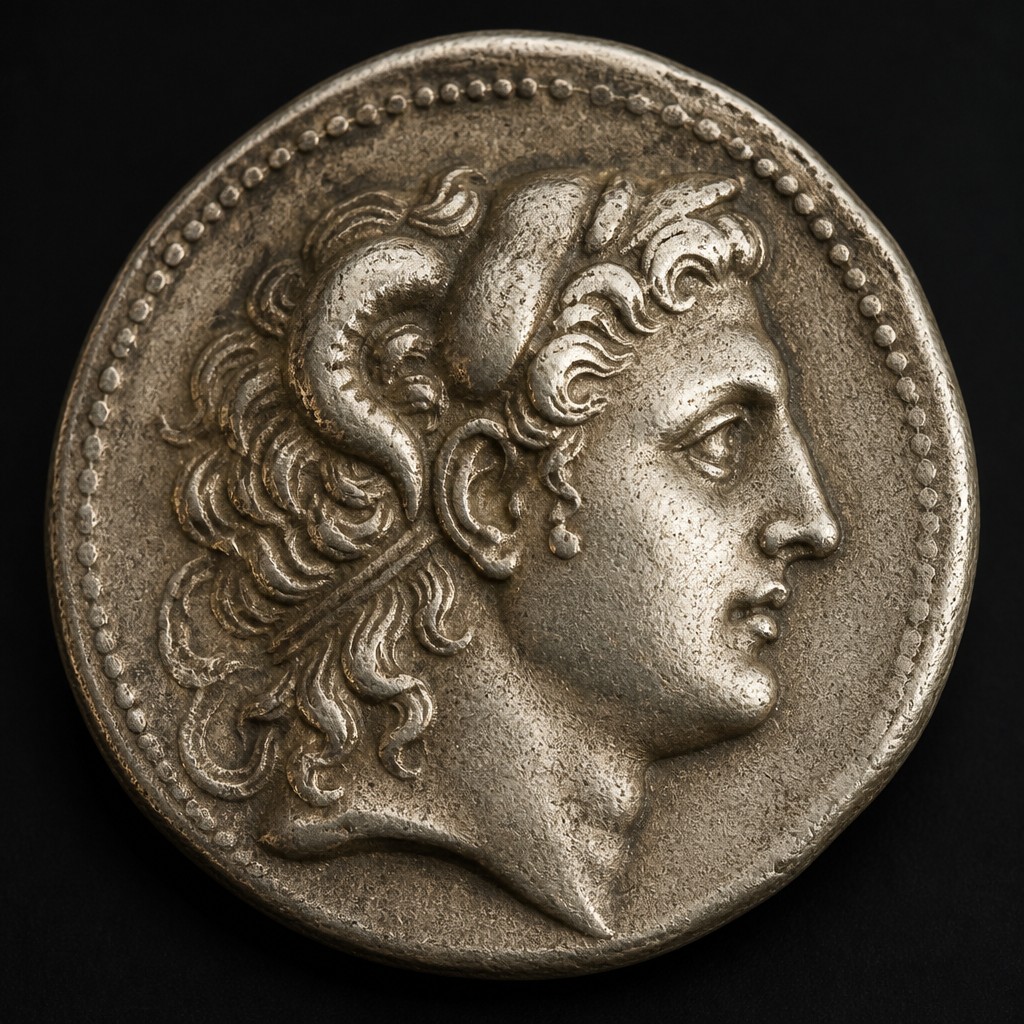
What This Coin Is
This is a silver tetradrachm struck in the name of Seleukos I Nikator (reigned circa 305-281 BC), one of Alexander the Great's generals and founder of the Seleucid dynasty. Coins were minted at various eastern mints including Seleucia on the Tigris, Susa, and Babylon, so designs and fabric can vary noticeably from one mint to another.
Obverse Design
The most recognizable obverse type shows a helmeted head facing right, wearing a Boeotian or crested helmet often decorated with a panther skin and a bull's horn or ear, a design linked to Seleukos's own military exploits and his connection to Alexander's legacy. Some issues instead carry the diademed head of Alexander the Great in the guise of Herakles, or a youthful diademed portrait believed to represent Seleukos himself. Facial style tends to be strong-jawed and heavily modeled, typical of early Hellenistic portraiture.
Reverse Design
Common reverse types include Nike (Victory) standing and crowning a military trophy of captured arms, or Zeus seated on a throne holding an eagle and scepter, a type inherited from Alexander's coinage. The Greek legend reads BASILEOS SELEUKOU ("of King Seleukos") across the field, sometimes accompanied by small control marks, monograms, or a mint symbol such as an anchor, which was a personal emblem associated with the Seleucid house.
Size, Weight, and Metal
These tetradrachms are struck in good silver and generally weigh close to the Attic standard of about 17 grams, with a diameter in the range of 26 to 30 millimeters. The edge is plain, as struck by hand on a heated blank rather than machine-milled.
Mint Marks and Symbols
Look in the exergue (the space beneath the main reverse device) or in the field beside Zeus or Nike for small letters, monograms, or symbols. An anchor device is one of the most diagnostic Seleucid marks and appears on many issues tied to Seleukos personally. Different eastern mints used distinct control marks, which specialists use to sort issues by workshop and approximate date.
Telling It Apart From Similar Coins
Because Seleukos began his career striking coins in Alexander the Great's name, many early pieces look almost identical to standard Alexander-type tetradrachms (Herakles/Zeus). The presence of the anchor symbol, the distinctive horned-helmet portrait, or the legend naming Seleukos specifically (rather than Alexander) helps separate his personal coinage from earlier Alexander issues and from later Seleucid kings, whose portraits become more individualized with age and diadem style over the dynasty's long run.
Judging Condition at a Glance
Check the helmet crest, horn, and panther-skin details on the obverse for sharpness, since these are the first areas to wear down. On the reverse, Nike's wings and the trophy's weapons, or Zeus's facial features and throne detail, show wear quickly. Full, even strikes are less common than off-center or weakly struck examples, so centering and strike quality matter as much as actual wear when assessing overall eye appeal.
Authenticity Red Flags
Cast fakes often show a seam line around the edge, a slightly grainy or pitted surface, and soft, mushy details compared to the crisp die-struck lines of a genuine coin. Modern struck forgeries may have suspiciously perfect or oddly toned surfaces, incorrect letterforms in the Greek legend, or a weight noticeably outside the normal range for the type. Because these coins have been reproduced for centuries as souvenirs and study pieces, comparing weight, diameter, and legend spacing against well-documented examples is a useful first check.
Frequently asked questions
How can I tell if my coin shows Seleukos I himself or Alexander the Great?
If the legend names Alexander and the reverse follows the standard lion-skin Herakles/Zeus format, it is likely an Alexander-type issue. Coins naming BASILEOS SELEUKOU, especially with the horned helmet portrait and anchor symbol, are attributed to Seleukos personally.
What does the anchor symbol mean on these coins?
The anchor was a personal badge associated with the Seleucid royal house and appears as a small control mark on many tetradrachms linked to Seleukos I, helping distinguish his issues from other Hellenistic silver.
What is the normal weight range for this tetradrachm?
Genuine examples generally weigh close to 17 grams, following the Attic weight standard used throughout the early Hellenistic period.
Why do some examples look off-center or weakly struck?
These coins were hand-struck with hammer and dies on individually prepared blanks, so centering and strike strength vary naturally from piece to piece and do not necessarily indicate a problem coin.