
How to Identify the Saxony Thaler
Saxony issued its own silver thalers for centuries under its Electors and Kings, identifiable by a ruler's portrait paired with the distinctive striped Saxon coat of arms.
Read the full Saxony Thaler encyclopedia entry →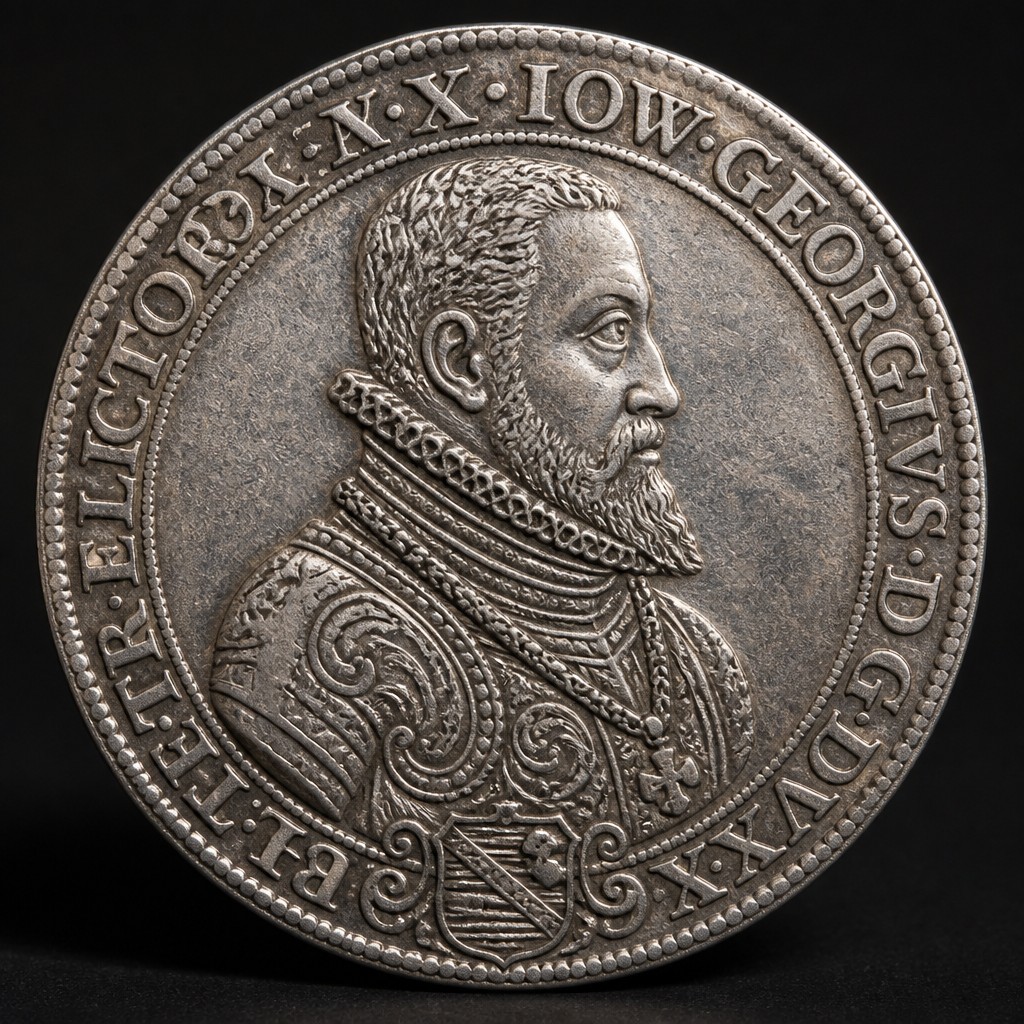
What Is the Saxony Thaler
The Saxony thaler was struck by the German state of Saxony, first as an Electorate and later as a Kingdom, from the 16th century into the 19th century, forming part of the broader German thaler tradition that predated national unification. Saxony was one of the more prolific German mints of the era, producing large silver thalers for both everyday circulation and commemorative purposes, such as marking mining anniversaries or dynastic events.
Obverse Design and Inscriptions
Most issues show a profile portrait of the reigning Elector or King of Saxony, with earlier issues sometimes depicting a standing or armored figure instead. The legend names the ruler and title, such as "FRIEDRICH AUGUST KOENIG VON SACHSEN."
Reverse Design and Inscriptions
The reverse displays the Saxon coat of arms: a distinctive barry (horizontal striped) shield crossed diagonally by a crancelin (a green rue-wreath bend), sometimes combined with additional quartered arms for other territories the ruler held. The denomination and date typically frame the shield.
Size, Weight, Metal, and Edge
Fineness varied historically depending on period and standard, with 19th-century Vereinsthaler-era coins weighing roughly 22.2 grams and measuring about 33mm. Edges may be reeded or lettered depending on the issue.
Mint Marks and Where to Find Them
Mint letters or small initials, often for the Dresden or Muldenhütten mint, appear near the date on the reverse, alongside mint master initials that changed periodically. These small identifying marks are easy to overlook but can help confirm a coin's specific production batch when combined with the date and ruler's name.
Telling It Apart From Similar Coins
The diagonal striped-and-crancelin shield is the clearest way to distinguish a Saxon thaler from those of other German states — Prussian coins use an eagle, while Bavarian coins use a different lozenge (diamond) patterned shield. Reading the ruler's name in the obverse legend provides a second confirmation, since Saxony's various branches and related duchies sometimes used similar heraldic elements with different rulers.
Judging Condition at a Glance
Look at the finely engraved crancelin lines and the portrait's hair curls for softness indicating wear. A sharply struck coin shows crisp separation in the diagonal stripe pattern. Also check the legend lettering around the rim, since a strong strike keeps every letter crisp and evenly spaced, while a weak or heavily circulated example may show flattened or partially worn text.
Authenticity Red Flags
Watch for mismatched weight, poorly defined striping on the shield, or an unnaturally shiny surface suggesting a modern replica. Genuine antique silver typically shows natural, even toning built up over decades. A coin that feels too light, too bright, or shows a soft, indistinct strike compared to documented examples of the same date and ruler warrants closer scrutiny.
Frequently asked questions
What makes the Saxon coat of arms distinctive?
It combines horizontal black-and-gold stripes with a diagonal green rue-wreath (crancelin) crossing the shield, a design unique to Saxon heraldry.
How can I identify which Saxon ruler is on the coin?
The legend around the portrait names the elector or king directly, which can be cross-referenced with known Saxon rulers and their reign dates.
Were Saxony thalers pure silver?
No, they were struck at a fineness that varied by era rather than pure (.999) silver.
Where should I look for the mint mark?
Check near the date at the bottom of the reverse design for small mint letters or mint master initials.
Did Saxony use the same thaler standard as Prussia?
Later 19th-century Saxon thalers followed the shared Vereinsthaler standard, making their weight and fineness consistent with Prussian and other German state thalers of the same period.