
How to Identify the Saxon Speciestaler
A large silver taler coin from the Electorate or Kingdom of Saxony, struck to the full 'species' standard and bearing the ruler's portrait and Saxon arms.
Read the full Saxon Speciestaler encyclopedia entry →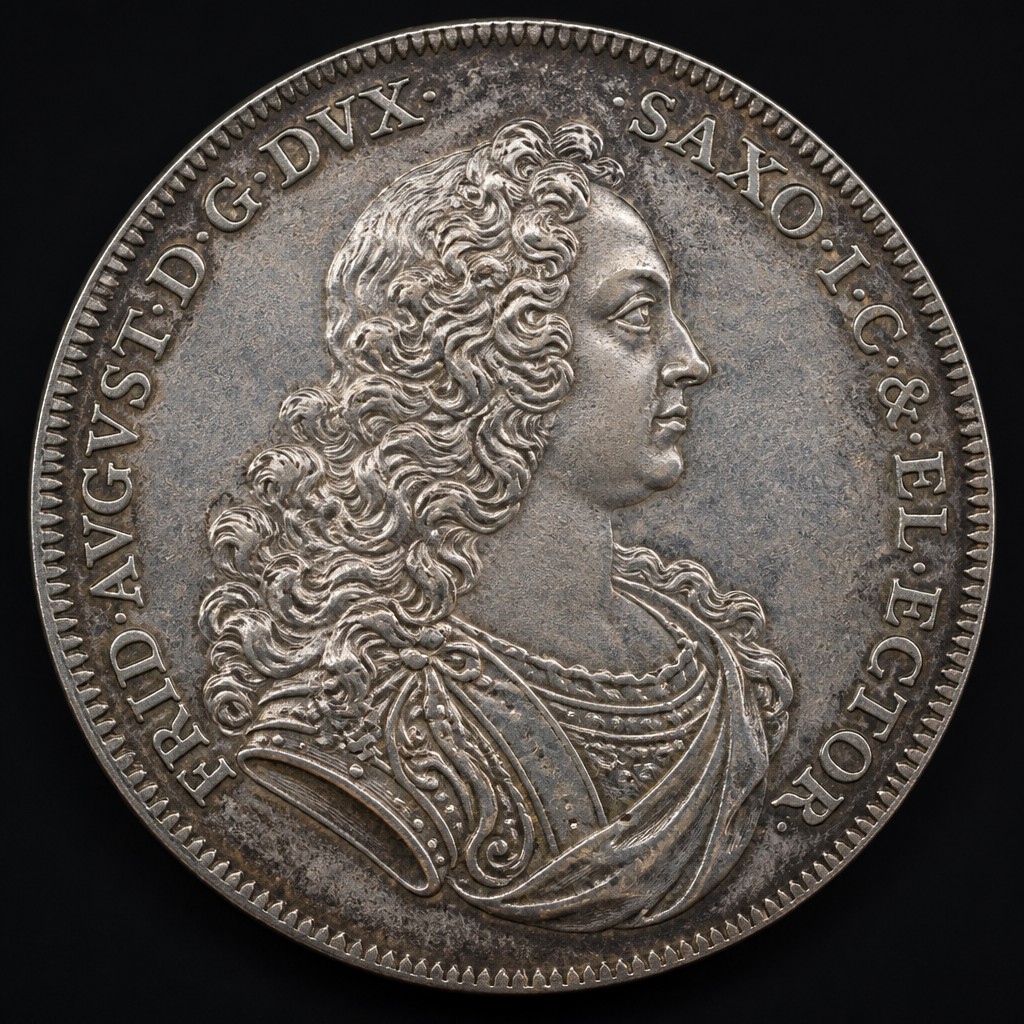
What This Coin Is
The Saxon Speciestaler is a large silver coin issued by the Electorate and later Kingdom of Saxony, one of the historic German states, struck to the full-weight "species" taler standard used across many Holy Roman Empire and later German territories. These coins were produced across several centuries under a succession of Saxon electors and kings, making the design and ruler portrait key to identifying the exact issue.
Obverse Design & Inscriptions
The obverse typically shows the profile portrait of the reigning Saxon elector or king, often in armor or formal dress, with a Latin legend around the border stating his name and titles, such as "FRIDERICUS AUGUSTUS" or similar depending on the specific ruler. The date frequently appears within the legend or at the base of the portrait.
Reverse Design & Inscriptions
The reverse commonly displays the elaborate Saxon coat of arms, often crowned and surrounded by mantling, sometimes with additional heraldic elements representing associated territories. A Latin motto or additional titulature encircles the arms, and "SPECIES" wording or full weight/fineness indications may appear in the finer print on certain issue types.
Size, Weight, Metal, and Edge
As a full species taler, this coin measures roughly 40-41 mm in diameter and weighs about 29 grams in .833 to .888 fine silver, depending on the exact period's Reichstaler or Conventionstaler standard in effect. The edge is generally lettered with an ornamental inscription, a common security feature on large German taler coinage.
Mint Marks and Where to Find Them
Small mint master or assayer's initials, rather than a full mint name, typically appear at the base of the coat of arms or near the portrait truncation on the obverse. These initials changed with each mint official and can help narrow the coin to a specific range of years within a longer reign.
Telling It Apart From Similar Coins
Other German state talers, such as those from Prussia, Bavaria, or Brunswick, share a similar large size and silver standard, so the specific Saxon coat of arms design and the ruler's Latin name in the legend are the clearest way to confirm origin. Comparing the portrait style and armor or clothing detail also helps date the piece to a particular Saxon elector or king's reign.
Judging Condition at a Glance
Check the fine detail in the ruler's hair, armor, or lace collar, along with the crown and mantling on the coat of arms, since these are the first areas to flatten with wear. A coin with sharp, well-defined edge lettering and strong central relief represents notably better condition than a smooth, worn example.
Authenticity Red Flags
Be wary of coins with an incorrect diameter or weight for the species taler standard, blurred or shallow edge lettering, or a grainy surface texture suggesting a cast reproduction rather than a hammered or milled strike. Confirm the portrait style and coat of arms details are consistent with the claimed ruler and date, since stylistic mismatches can point to an altered or fantasy piece.
Frequently asked questions
What does 'Speciestaler' mean?
It refers to a taler struck to the full official weight and fineness standard, as opposed to lighter-weight 'current' talers used for everyday circulation.
How heavy is a Saxon Speciestaler?
Approximately 29 grams, consistent with the standard full-weight taler specification of the period.
Where are the mint identifying initials located?
Small mint master or assayer's initials typically appear near the base of the coat of arms or the portrait truncation on the obverse.
How do I identify which Saxon ruler issued the coin?
Read the Latin name and title in the legend surrounding the portrait to identify the specific elector or king.