How to Identify the Saudi Arabian Silver Riyal
A collector's walkthrough for confirming a Saudi silver riyal by its size, silver weight, Arabic legends, Hijri date, and state seal.
Read the full Saudi Arabian Silver Riyal encyclopedia entry →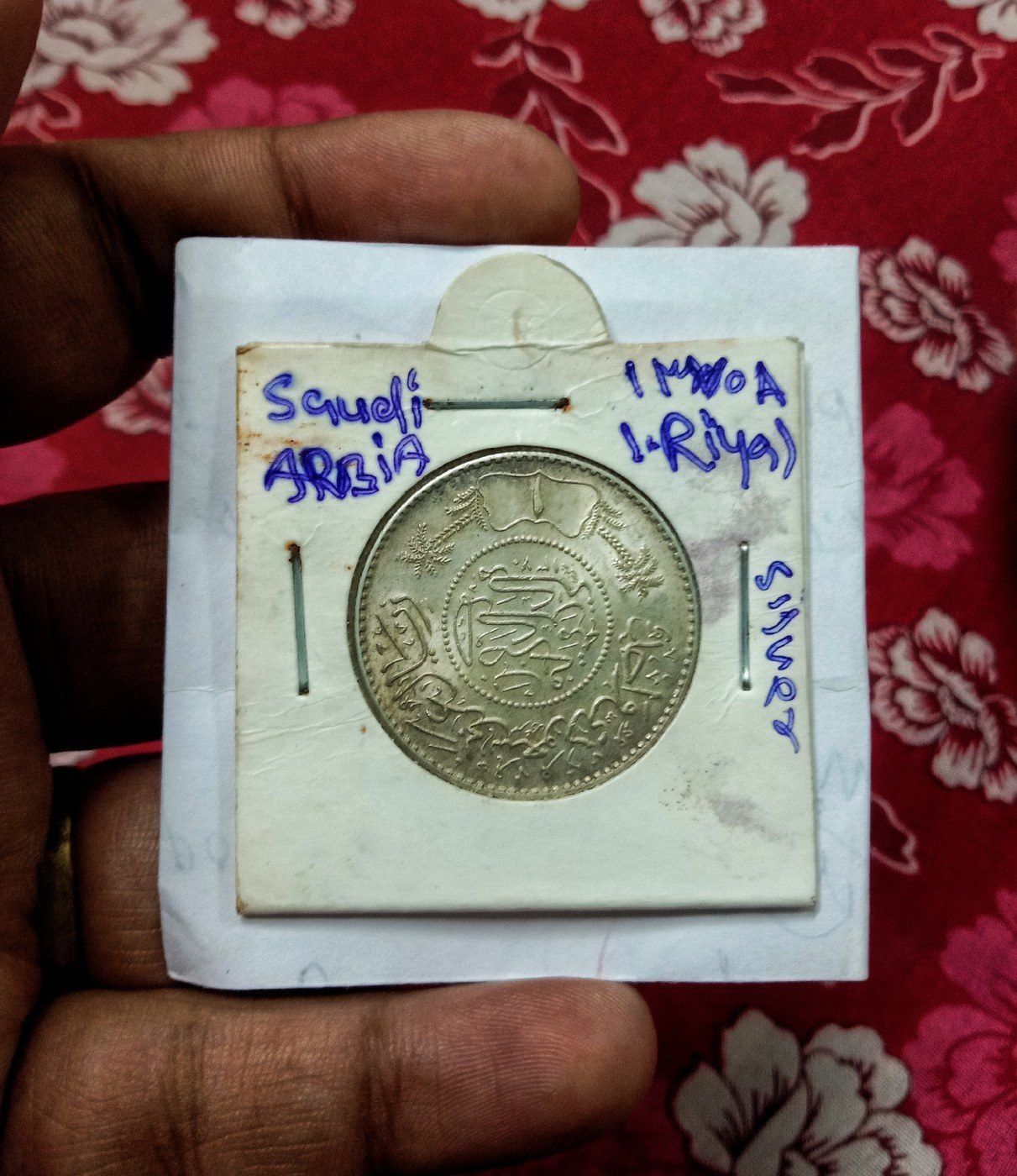
Start with the overall look: the Saudi riyal is an all-Arabic silver coin with no portrait, no Latin text, and no national arms in the Western style. Both faces are packed with script. If you see a monarch's head, a coat of arms with animals, or Roman lettering, you are not looking at this coin.
Check the two faces for their roles. One side generally carries the ruler's name and titles (Abdul Aziz ibn Saud / Al Saud) and the state name; the other carries the denomination, the Hijri (AH) date in Arabic-Indic numerals, and a state seal or emblem. Reading the AH date places the coin in time — early-20th-century riyals sit around AH 1340s–1370s.
Measure and weigh it. The full riyal is a crown-sized silver piece — noticeably large and heavy in hand — while the half and quarter riyals repeat similar legends at smaller diameters and lower weights. Weight and diameter that match published specifications for the specific date are among your best authentication checks; genuine silver will also give a clear ring and will not react to a magnet.
Beware of look-alikes. Other large Arabian and regional silver — Yemeni imadi riyals, Maria Theresa thalers, and various Ottoman and Egyptian silver pieces — circulated in the same markets and can be confused at a glance, but their legends, dates, and designs differ. When in doubt, compare the exact legends and date against a reference for the type.
Finally, watch for fakes. Cast copies, tooled dates, and underweight forgeries exist for popular Islamic silver. Verify weight, diameter, and edge; look for soft, mushy detail or seams that suggest casting; and for higher-value dates seek third-party authentication rather than relying on eye appeal alone.
Frequently asked questions
What's the fastest way to tell it's a Saudi riyal and not another Arabian silver coin?
Match the legends: the Saudi riyal names Abdul Aziz ibn Saud and the Saudi/Hejaz-Nejd state, whereas Yemeni riyals, Maria Theresa thalers, and Ottoman silver carry different rulers, arms, and inscriptions.
How can I confirm it's real silver?
Genuine examples match the published weight and diameter for the date, ring when tapped, and are non-magnetic. Weight and size that fall short of spec are a warning sign.
Do these coins have mint marks?
Production involved more than one mint over the series, and details vary by issue, so check the specific date's reference to interpret any marks or design differences rather than assuming a single standard.
Should I clean a corroded or toned riyal?
No. Cleaning silver removes original surfaces and lowers collector value. Leave toning intact and, for a valuable date, consult a dealer or grading service before doing anything.
Saudi Arabian Silver Riyal identified by the community
Recent Saudi Arabian Silver Riyal coins identified with Coin Identifier.