
How to Identify the Saudi Arabian Riyal (silver)
The early silver riyal of the Kingdom of Saudi Arabia, struck under King Abdulaziz with all-Arabic calligraphic design and no human imagery.
Read the full Saudi Arabian Riyal (silver) encyclopedia entry →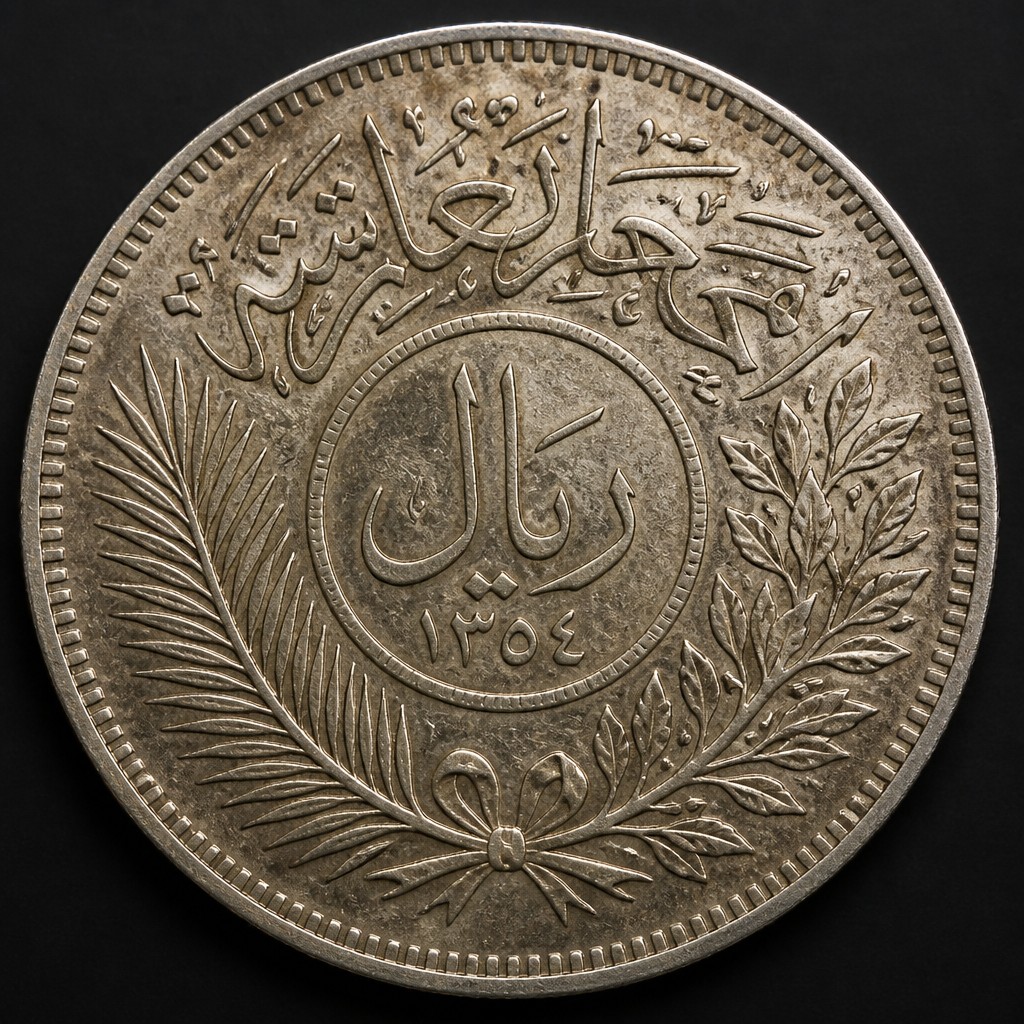
What It Is
The silver riyal was the principal coin of the newly unified Kingdom of Saudi Arabia, struck from the 1930s onward under King Abdulaziz (Ibn Saud) and continuing in later reigns with updated dates. It served as the everyday unit of currency, divided into smaller denominations such as the qirsh, and its design set the visual template that later Saudi coinage followed.
Obverse Design & Inscriptions
As with all Saudi coinage, there is no portrait. The obverse carries an Arabic inscription naming the Kingdom and the issuing authority, usually arranged in a circular band around a central line of text, with the Hijri date included in Arabic numerals.
Reverse Design & Inscriptions
The reverse generally repeats the calligraphic theme, often stating the denomination ("one riyal") along with a decorative border. Some varieties incorporate the national emblem of a palm tree above crossed swords, though earlier issues can be plainer and text-only.
Size, Weight, Metal & Edge
The coin is struck in silver, historically around .917 fineness, with a diameter and weight comparable to other contemporary Gulf silver riyals of roughly 11 to 12 grams. The edge is typically reeded. Exact weight and diameter can shift slightly between date ranges, so compare a specific example against reference figures for that year rather than assuming a single fixed spec across the whole series.
Mint Marks & Where to Find Them
There is no separate small mint-mark symbol; the mint authority is expressed through the full Arabic legend itself. Examine the inscription band for the country name and Hijri date rather than looking for a hidden letter or symbol.
Telling It Apart From Similar Coins
Because several Gulf states issued similar silver riyals with Arabic-only designs, confusion is common. Compare the specific wording of the legend and the emblem style: the Saudi coin's crossed-swords-and-palm motif and Kingdom name differ from the coats of arms or dhow ships used on Bahraini, Qatari, or Omani coinage of similar size and weight.
Judging Condition at a Glance
Look at the sharpness of the Arabic script: well-preserved coins show clean, unbroken letter strokes and a fully legible date, while worn examples show softened, rounded letters and a date that may be partly obscured. Silver coins also tone over time, developing gray, gold, or iridescent surfaces; even, attractive toning is normal, while dark, blotchy corrosion suggests improper storage or cleaning damage.
Authenticity Red Flags
Because older Saudi silver riyals can carry a premium over their metal value, check for: incorrect diameter or weight, a magnetic response (silver is not magnetic, so any pull toward a magnet indicates a base-metal fake), poorly formed or smudged Arabic characters, and a plated or two-tone appearance suggesting a copper or nickel core under a thin silver wash. Cleaned or polished coins that look unnaturally bright and scratched under magnification should also raise questions.
Frequently asked questions
Does the silver riyal have a portrait like Western coins?
No, it uses only Arabic calligraphy and, on many issues, the crossed-swords-and-palm emblem, with no human figure, consistent with Islamic design conventions of the period.
How do I read the date on the coin?
The date is written in Arabic numerals following the Hijri (Islamic) calendar, so it will not match the Gregorian year and requires conversion or a reference chart to interpret.
Is a magnetic response normal for this coin?
No. Genuine silver is not magnetic, so if a coin sticks to a magnet it is very likely a base-metal counterfeit or plated piece.
Why do surfaces on old silver riyals look tarnished?
Silver naturally tones over decades, producing gray, gold, or rainbow surface colors; this is normal aging and differs from the dark, uneven corrosion caused by poor storage or harsh cleaning.