
How to Identify the Saudi Arabian Gold Guinea (Sovereign)
A gold trade coin struck by the Kingdom of Saudi Arabia to match the weight and fineness of the British sovereign, used mainly for Hajj pilgrims and gold traders.
Read the full Saudi Arabian Gold Guinea (Sovereign) encyclopedia entry →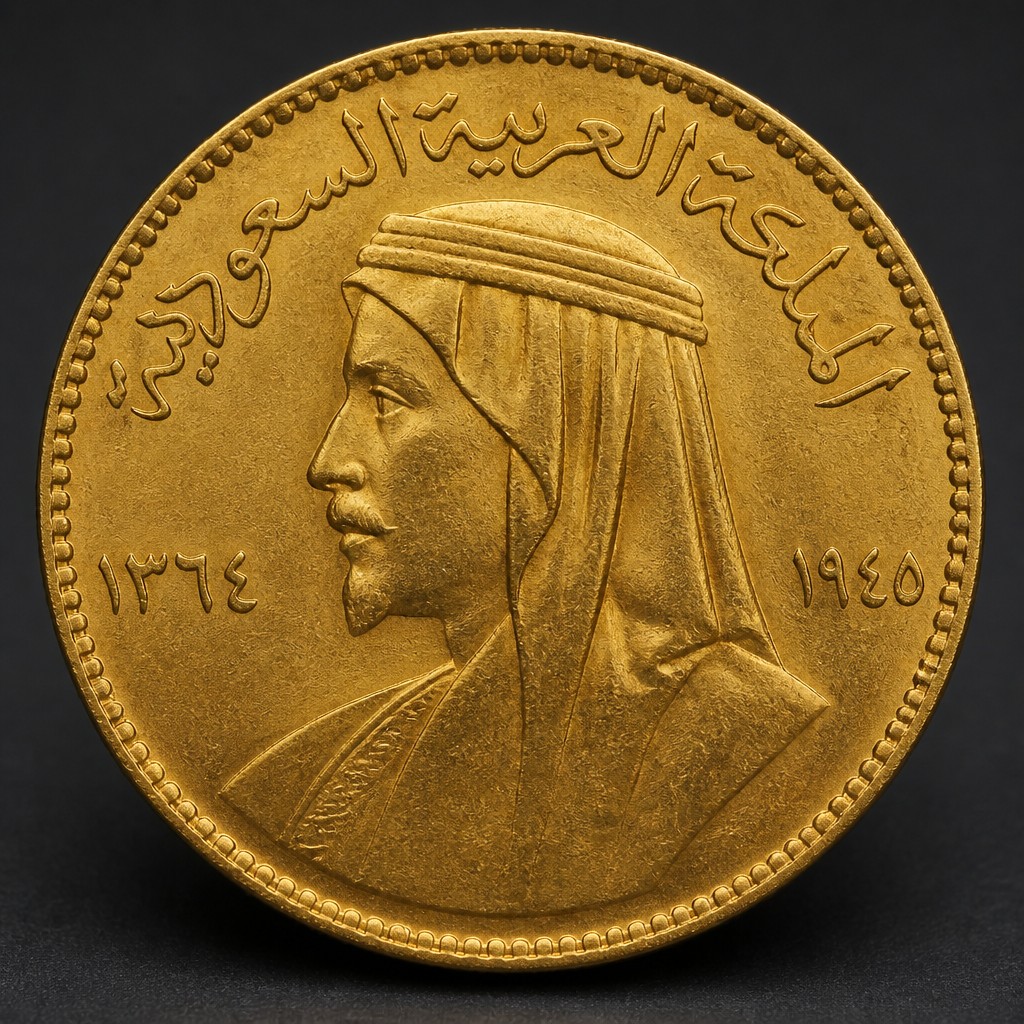
What It Is
The Saudi Arabian Gold Guinea, often called simply the Saudi Sovereign, was struck under King Abdulaziz (Ibn Saud) and continued under his successors to give the Kingdom its own internationally recognizable gold trade coin. It was deliberately produced to the same weight and gold content as the British sovereign so it could circulate freely among pilgrims and merchants who already trusted that standard. Dates are given in the Islamic (Hijri) calendar.
Obverse Design & Inscriptions
Following Islamic convention, the coin carries no portrait or human image. The obverse instead shows Arabic calligraphy identifying the Kingdom of Saudi Arabia, often naming the ruling king, arranged in a circular or banded inscription around the center field.
Reverse Design & Inscriptions
The reverse typically displays the national emblem of crossed swords beneath a palm tree, or a similar Arabic inscription giving the denomination and mint date in Hijri numerals. Some issues place the value and date entirely in text rather than numerals, so look for Arabic script rather than Western digits.
Size, Weight, Metal & Edge
The coin is struck in .917 fine gold (22 karat) and weighs approximately 7.32 grams with a diameter near 22 millimeters, matching the British sovereign almost exactly. The edge is typically reeded (milled), consistent with machine-struck gold trade coinage of the era.
Mint Marks & Where to Find Them
Unlike many Western coins, these pieces generally do not carry a separate small mint-mark letter; instead, the minting authority is spelled out in the Arabic legend itself. Check the inscription band closely rather than hunting for a tiny symbol, since the "mint mark" here is really the full Kingdom name and date.
Telling It Apart From Similar Coins
Because the weight and fineness copy the British sovereign, the two are easy to confuse by feel alone. The decisive difference is design: the British sovereign shows St. George slaying the dragon and a portrait of the reigning monarch, while the Saudi piece shows only Arabic script and the crossed-swords emblem, with no human or animal figures. Also compare against other Gulf gold trade coins of similar weight, which usually name a different country in their Arabic legend.
Judging Condition at a Glance
Because gold is soft, wear shows first on the highest points of the lettering and the central emblem, where strokes can blur or thin. A sharp, fully struck example will show crisp serifs on every Arabic letter and a well-defined palm tree and sword edges; heavy circulation flattens these details and can leave hairline scratches across the open fields.
Authenticity Red Flags
Because the coin's bullion value is high, counterfeits and later restrikes exist. Warning signs include: incorrect weight or diameter when checked against a scale and caliper, a dull or grainy surface inconsistent with struck gold, blurry or malformed Arabic characters, a color that looks too yellow or too pale for 22-karat gold, and edge reeding that looks cast rather than crisply milled. Always verify weight and diameter against known specifications before assuming authenticity.
Frequently asked questions
Does the Saudi Gold Guinea show a king's portrait?
No. In keeping with Islamic tradition, the coin has no human image on either side; identification relies on the Arabic inscriptions and the crossed-swords-and-palm emblem.
How can I tell it apart from a British sovereign at a glance?
Look at the design: a British sovereign shows St. George and the dragon plus a monarch's portrait, while the Saudi guinea shows only Arabic text and the national emblem, even though both are similar in size and gold content.
What calendar are the dates in?
Dates are given in the Hijri (Islamic lunar) calendar in Arabic numerals, not the Gregorian calendar, so the numbers will look unfamiliar to Western eyes.
What should make me suspicious of a fake?
Off weight or diameter, dull or grainy gold color, poorly formed Arabic lettering, and cast-looking rather than crisply milled edge reeding are all warning signs worth checking with a scale and caliper.