
How to Identify the Sarawak One Cent
Identify the Sarawak One Cent by its left-facing Brooke Rajah portrait, the SARAWAK ONE CENT wreath reverse, its copper metal, and the 1870 date.
Read the full Sarawak One Cent encyclopedia entry →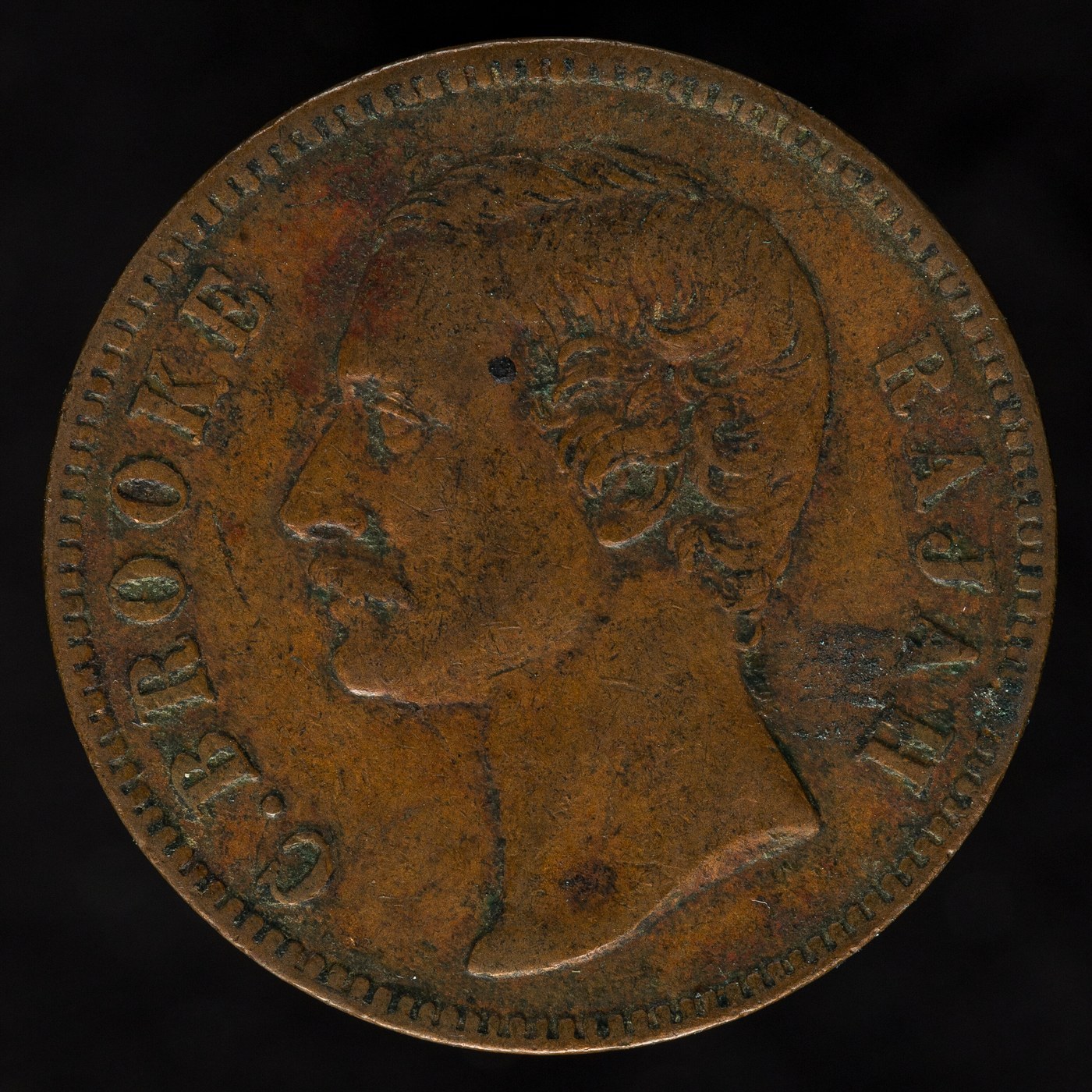
Start with the legends, which make this coin easy to attribute. The obverse names the ruler as BROOKE RAJAH around a left-facing portrait, and the reverse spells out SARAWAK ONE CENT in plain English. Together these two inscriptions confirm both the issuing state and the denomination without ambiguity.
Study the portrait and reverse design. The obverse bust faces left; the reverse places the value and the date 1870 inside a laurel wreath. The wreath-and-legend reverse follows the standard 19th-century colonial copper format, so it is the BROOKE RAJAH and SARAWAK wording — not the wreath itself — that distinguishes this coin from Straits Settlements, Hong Kong, or Indian coppers of similar size.
Check the metal and physical feel. This is a copper cent: brown in tone, solid, and about the size of other large one-cent coppers of the period. A genuine circulated example shows even wear and natural toning; a piece that is unusually bright, oddly light, or magnetic should be treated with suspicion.
Watch for look-alikes and dates. Sarawak issued cents under more than one Rajah and in more than one year, so read the date and the ruler's initial in the legend carefully rather than assuming any Brooke cent is the 1870 issue. Later Sarawak coinage of the 20th century carries different rulers and, in some issues, different metals.
Authenticate with care. Old copper is often cleaned, tooled, or artificially toned to hide problems, and corrosion can mask detail. Examine the sharpness of the lettering, the surfaces under magnification, and the overall wear pattern; for higher-value or uncertain pieces, rely on a reputable grading service rather than surface appearance alone.
Frequently asked questions
How do I know it is a Sarawak coin and not another colonial cent?
The legends settle it: the obverse reads BROOKE RAJAH and the reverse reads SARAWAK ONE CENT. No other colonial copper names a Brooke Rajah, so those inscriptions are the key diagnostic.
How can I confirm the date and ruler?
Read the year on the reverse — here 1870 — and the ruler's initial in the obverse legend, since Sarawak struck cents under different Rajahs and years. Do not assume every Brooke cent is the 1870 issue.
What should make me suspect a fake or altered coin?
Be cautious of a coin that is magnetic, unusually light or bright, or has mushy lettering. Cleaning, tooling, and artificial toning are common on old copper; check surfaces under magnification and certify valuable pieces.
Is the copper supposed to look brown?
Yes. Genuine circulated coppers of this age show brown toning and honest wear. A bright or pinkish surface often signals cleaning, which reduces collector value.