
How to Identify the San Francisco-Oakland Bay Bridge Half Dollar
A collector's checklist for confirming a 1936 Bay Bridge half dollar — the bridge span, the grizzly bear, silver specs, the S mint mark, and authentication cautions.
Read the full San Francisco-Oakland Bay Bridge Half Dollar encyclopedia entry →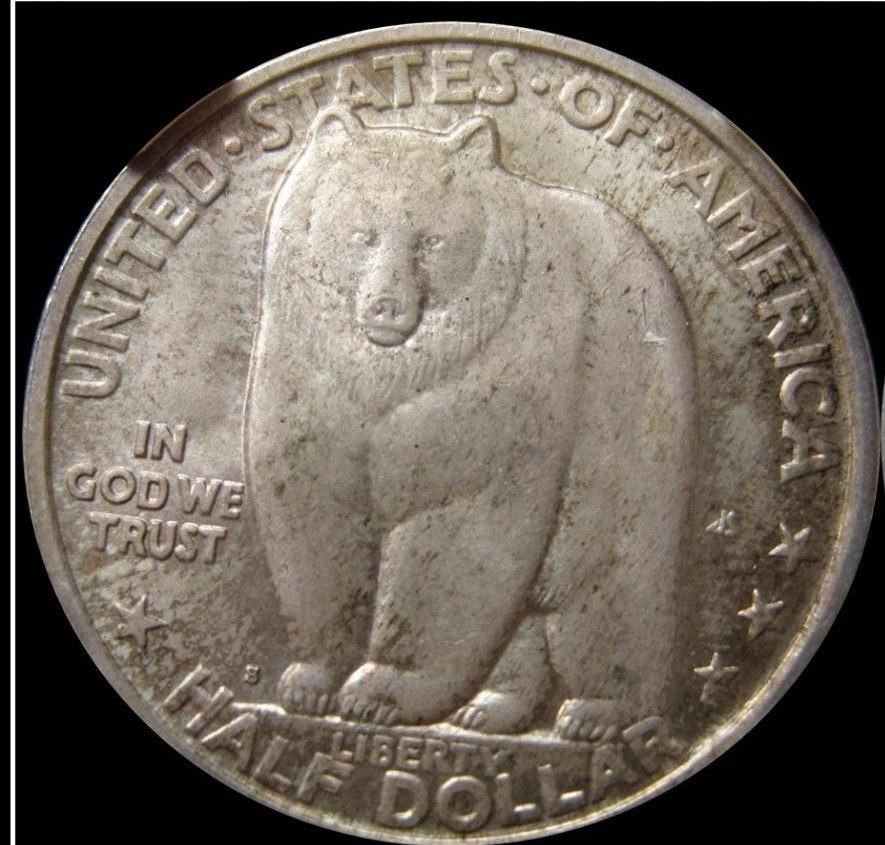
Start with the two designs, which are unmistakable. A genuine San Francisco-Oakland Bay Bridge Half Dollar shows the long bridge span with its towers and suspension cables carrying the roadway across the water toward a city skyline on one side, and a large standing California grizzly bear on the other. This pairing is the fastest way to separate it from the Walking Liberty half dollars circulating in the same period, which show a full Liberty figure and a perched eagle.
Read the inscriptions. The bridge side names the San Francisco-Oakland Bay Bridge and San Francisco Bay, and the coin is dated 1936. The grizzly bear side carries the denomination and national lettering. Matching both the imagery and this Bay Bridge-specific wording confirms the type rather than a medal or a look-alike token.
Verify the physical specifications. The coin is a standard half dollar: roughly 30.6 mm in diameter, about 12.5 grams, struck in 90% silver with a reeded edge. A calibrated scale and calipers are the best tools here; a piece that is off in weight, diameter, or edge reeding for a silver half dollar is a warning sign.
Check the mint mark and date. Every genuine example was struck at the San Francisco Mint in 1936 and carries an "S" mint mark. A coin dated other than 1936, or bearing a different mint mark, should be treated as suspect.
Be cautious with authentication, since popular commemoratives are targets for counterfeits and for cleaning that damages value. Watch for mushy or doubled lettering, incorrect weight, tooling in the fields, or a color that does not match 90% silver. For any higher-value or high-grade purchase, rely on reputable dealers and third-party grading (PCGS, NGC) rather than eye appeal alone.
Frequently asked questions
How can I distinguish it from an ordinary 1936 half dollar?
The commemorative shows the Bay Bridge span on one side and a standing California grizzly bear on the other, not the Walking Liberty design. Its bridge imagery and Bay Bridge lettering are unlike any circulating half dollar of the era.
What should a genuine example weigh and measure?
About 12.5 grams and roughly 30.6 mm in diameter, in 90% silver with a reeded edge. Figures that don't match those of a standard silver half dollar are a counterfeit warning sign.
Should the coin have a mint mark?
Yes. All were struck at the San Francisco Mint in 1936 and carry an "S" mint mark. A missing or different mint mark, or a date other than 1936, warrants caution.
Is it safe to clean the coin to make it look better?
No. Cleaning a silver commemorative typically leaves hairlines and reduces value. Collectors and grading services strongly prefer original, uncleaned surfaces.