
How to Identify the Ryal
The Ryal, most closely associated with 16th-century Scotland, was a large silver coin issued under Mary Queen of Scots, later nicknamed the 'Sword Dollar' for its distinctive reverse.
Read the full Ryal encyclopedia entry →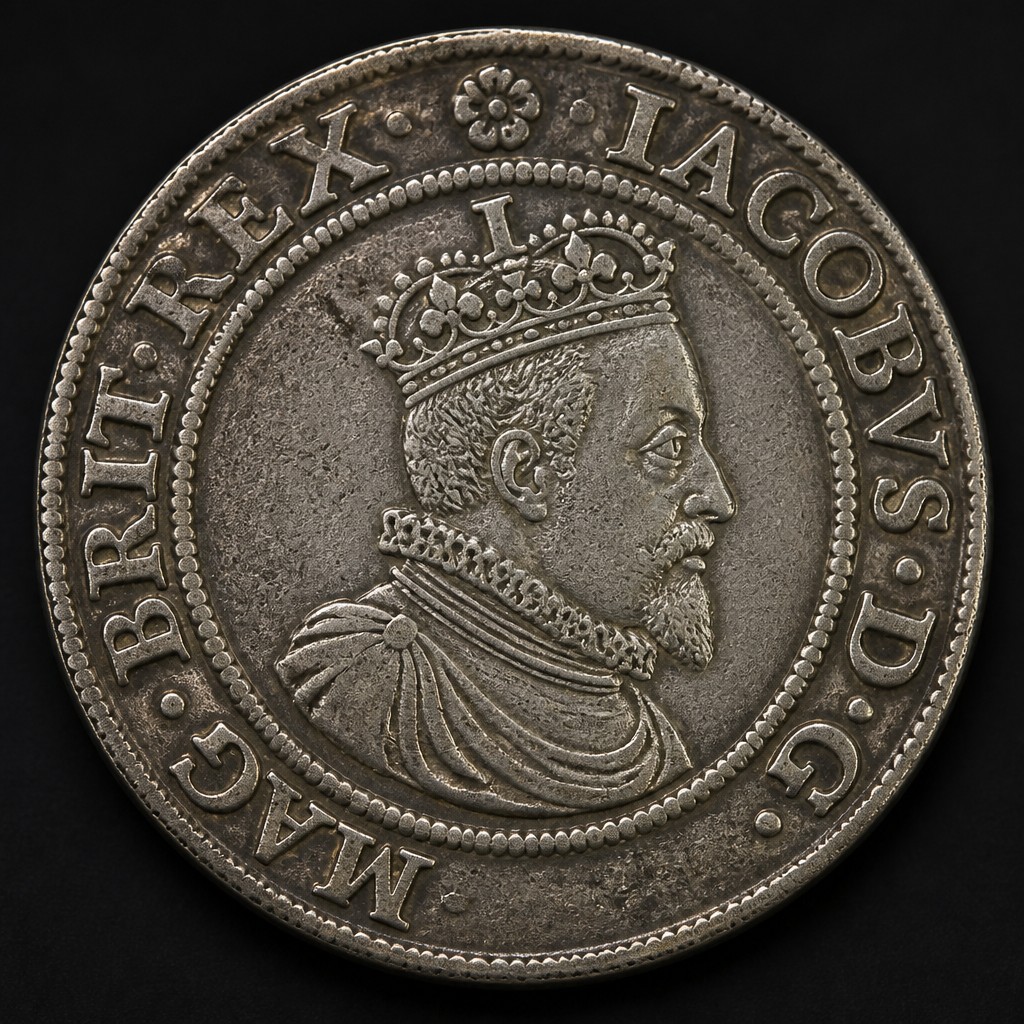
What It Is
While the name Ryal was historically also used for the English gold Rose Noble, it is most distinctly associated with the large Scottish silver coin issued under Mary Queen of Scots in the 1560s, valued at thirty shillings Scots. This Scottish Ryal is a separate and distinct coin from the earlier English gold piece of the same name, reflecting Scotland's own independent coinage traditions.
Obverse Design
Early Scottish Ryals show a crowned monogram or jugate busts of Mary and her husband Henry Darnley, reflecting their joint rule, along with a Latin legend naming both. Later issues under different rulers adapted the portrait accordingly to reflect the reigning monarch of the time.
Reverse Design
The reverse of the best-known type shows a crowned sword pointing upward through a crown, a striking design that earned the coin its popular nickname, the "Sword Dollar." Surrounding Latin text typically includes a date and religious or royal motto reflecting the political climate of the period.
Size, Weight, Metal & Edge
The Scottish Ryal is a large silver coin, considerably heavier than most English silver denominations of the period, weighing around 30 grams and measuring roughly 38-40mm across. As a hand-hammered coin, its edge is irregular rather than machine-milled, and its substantial size makes it stand out among smaller contemporary silver coins.
Mint Marks & Dating
Many Ryals carry a Latin-numeral or Arabic date directly in the legend, making them easier to date than many contemporary hammered coins. Mint marks or minor engraving variations can further help specialists pin down specific issues within a short date range.
Telling It Apart From Similar Coins
The Scottish Ryal should not be confused with the English gold Rose Noble, despite the shared name - the Ryal discussed here is silver, much larger and heavier, and carries entirely different imagery centered on Scottish royal iconography rather than a ship and sun motif. Its size also sets it apart from smaller Scottish silver denominations of the same era.
Grading at a Glance
Look at the clarity of the crowned sword on the reverse and the sharpness of the portrait or monogram on the obverse. Well-preserved examples show clean separation between the sword's blade and the crown; heavy wear tends to blur these central design elements first, along with the surrounding legend.
Authenticity Red Flags
Because of the coin's size and historical significance, be alert to examples with inconsistent weight for genuine silver, a design that doesn't match known Ryal types for the stated date, or an unnaturally smooth, machine-perfect edge inconsistent with hand-hammered production of the period. Given the coin's substantial silver content, weight verification is one of the fastest ways to flag a suspect piece.
Frequently asked questions
Is this the same coin as the English Rose Noble?
No, despite sharing the name Ryal, the Scottish silver coin is a distinct issue, much larger and heavier, with different imagery.
Why is it called the 'Sword Dollar'?
Because of its reverse design showing a crowned sword pointing upward through a crown, a nickname that stuck due to the coin's large, dollar-like size.
Who is shown on the obverse?
Depending on the issue, either a crowned monogram or the jugate busts of Mary Queen of Scots and Henry Darnley.
What metal is the Scottish Ryal made from?
Silver, distinguishing it clearly from the gold English Rose Noble of the same name.