How to Identify the Royal Mint £5 Crown Commemorative
The Royal Mint's £5 crown is a large commemorative coin issued for royal and historical anniversaries, identifiable by its size, £5 denomination, and changing thematic reverse designs.
Read the full Royal Mint £5 Crown Commemorative encyclopedia entry →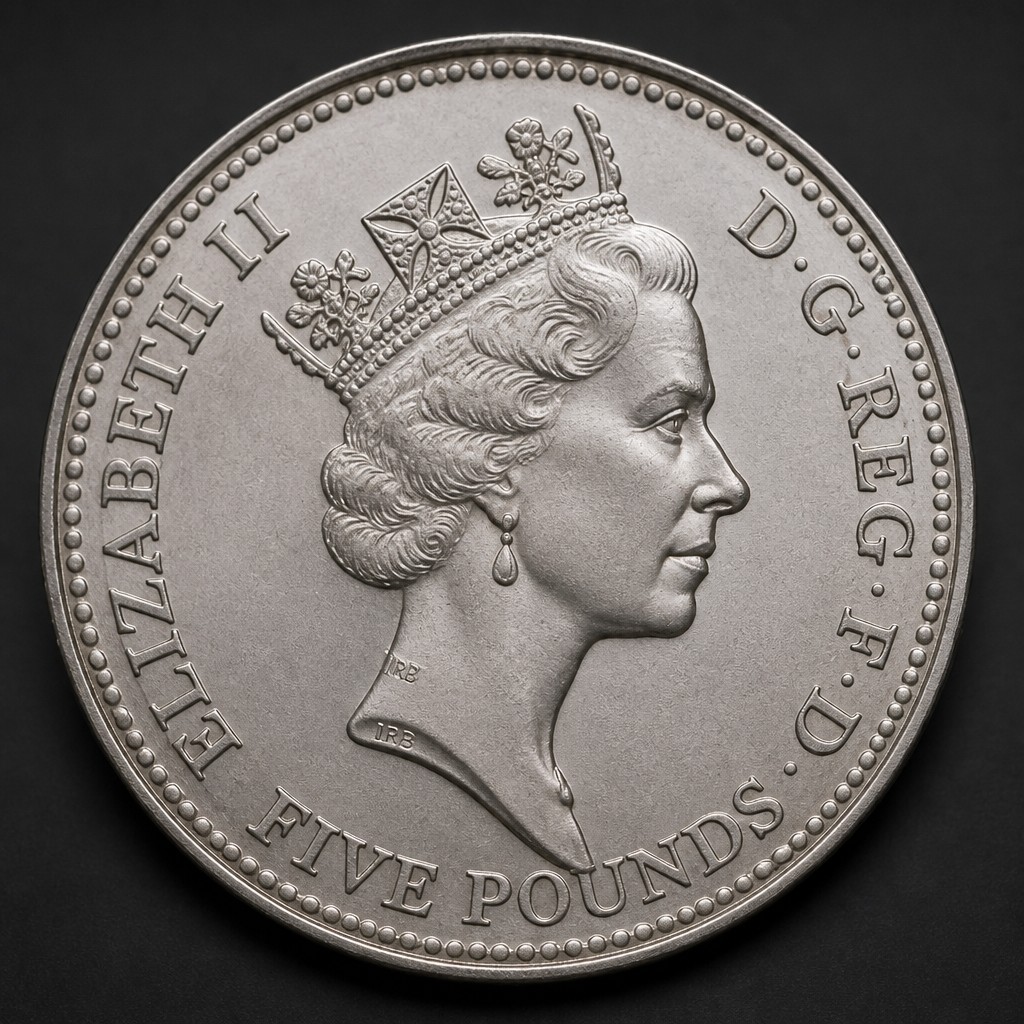
What It Is
The £5 crown is the modern successor to Britain's traditional crown coin, issued periodically by the Royal Mint to mark royal jubilees, weddings, births, coronations, and other historically significant events. Unlike everyday circulating coins, these are primarily commemorative pieces, though they remain legal tender at their face value of five pounds. The denomination replaced the older twenty-five pence crown in 1990, reflecting inflation and giving the coin a more substantial nominal value.
Obverse Design & Inscriptions
The obverse always carries the current monarch's official coinage portrait along with the denomination "FIVE POUNDS" and the year of issue. Over time the portrait has changed from various effigies of Queen Elizabeth II to the newer portrait of King Charles III, so the obverse alone can help date a piece.
Reverse Design & Inscriptions
The reverse changes with each commemorative theme, potentially showing royal family portraits, heraldic emblems, historical figures, or event-specific artwork tied to the anniversary being marked. Inscriptions typically name the occasion being commemorated alongside any artist's initials or design credit.
Size, Weight, Metal, and Edge
The standard £5 crown measures 38.61mm in diameter and weighs 28.28 grams, usually struck in cupronickel for circulation-quality versions, with proof editions available in sterling silver or gold. The edge is milled (reeded) on most issues.
Mint Marks and Where to Find Them
As a single-mint product of the Royal Mint, these coins generally lack a separate mint mark, though limited proof and precious-metal versions may carry small privy marks, hallmarks (for silver or gold content), or edge inscriptions noting the specific commemorative series. Standard circulation-quality issues instead rely on their denomination wording and design theme for identification rather than any mint symbol.
Telling It Apart From Similar Coins
The £5 crown's large size and denomination make it easy to distinguish from standard circulating British coins, but it can be confused with older pre-decimal crown coins (five shillings) from earlier reigns, or with the twenty-five pence crowns issued between 1972 and 1981. Checking the denomination wording ("FIVE POUNDS" versus "CROWN," "FIVE SHILLINGS," or "TWENTY-FIVE NEW PENCE") and the coin's date quickly clarifies which era it belongs to.
Judging Condition at a Glance
Since most £5 crowns are struck for collectors rather than heavy circulation, well-preserved specimens typically retain sharp relief details in the commemorative artwork and a clean, unmarked field. Cupronickel circulation-quality strikes may show more contact marks than the mirrored, cameo-finished silver or gold proof versions.
Authenticity Red Flags
Genuine cupronickel crowns are common and low-value, so counterfeiting is rare for those; more caution is warranted with precious-metal proof versions, where sellers should provide official Royal Mint certificates, correct hallmarks for silver or gold content, and packaging matching the stated commemorative series. Be suspicious of "silver" or "gold" crowns lacking any hallmark or with an incorrect weight for the claimed metal, and always cross-check the specific commemorative theme against the year and monarch shown on the obverse.
Frequently asked questions
Is the £5 crown coin used in everyday circulation?
Although it is legal tender, its large size and commemorative nature mean it circulates rarely and is mostly collected or kept as a keepsake.
What metal are £5 crowns usually made from?
Standard circulation-quality versions are struck in cupronickel, while special collector proof editions are also issued in sterling silver or gold.
How can I tell what event a £5 crown commemorates?
The reverse design and its accompanying inscription typically name or depict the specific royal event, anniversary, or historical occasion being marked.
How big is a £5 crown compared to regular coins?
It is significantly larger than everyday British coins, measuring 38.61mm across, noticeably bigger than a two-pound coin.
Royal Mint £5 Crown Commemorative identified by the community
Recent Royal Mint £5 Crown Commemorative coins identified with Coin Identifier.