
How to Identify the Roman Siliqua
A collector's guide to recognizing a late-Roman silver siliqua by its size, portrait, reverse, legends, and the clipping typical of the type.
Read the full Roman Siliqua encyclopedia entry →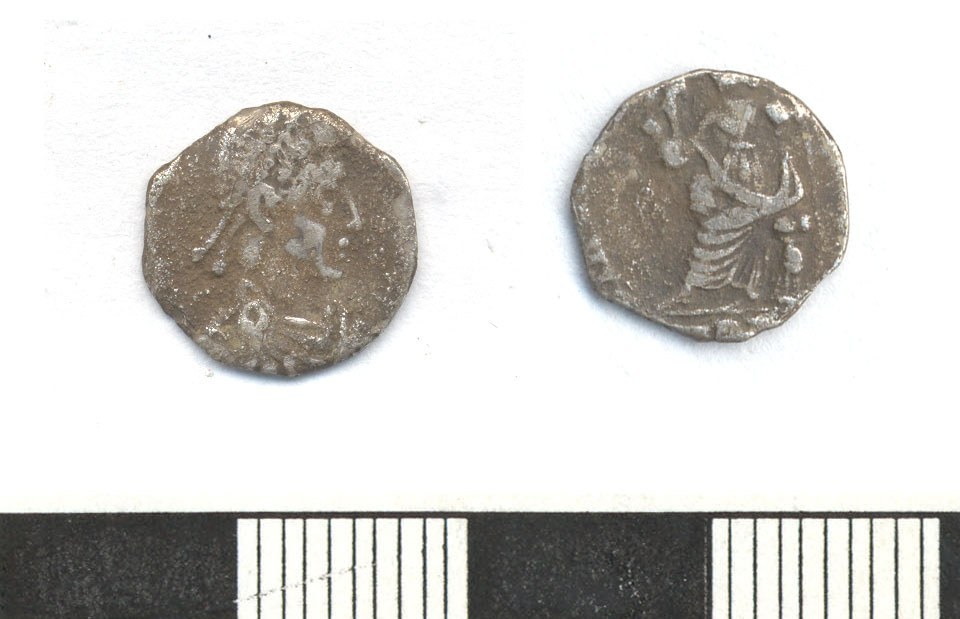
Begin with size and weight, the quickest test. A siliqua is a small, thin silver coin — usually only about 15-18 mm across and light for its size. If a supposed siliqua is large, thick, heavy, or clearly bronze or gold in color, it is a different denomination. The metal should read as silver: bright white to soft grey toning, not the red-brown of bronze or the yellow of gold.
Study the obverse portrait. Expect a right-facing imperial bust in the stiff, geometric late-Roman style, often diademed and draped or cuirassed, ringed by a Latin legend of the emperor's name and titles (frequently beginning DN for Dominus Noster). Reading that legend is the key to attributing the coin to a specific emperor, which in turn drives identification and value.
Turn to the reverse. On this coin it shows a standing figure in flowing robes, a personification such as Roma or a related late-Roman type; other siliquae instead carry a legend inside a wreath. Note the reverse legend and any letters in the field or in the exergue (the space below the design), where the mint mark normally sits — abbreviations like TR (Trier), LVG (Lyon), CON (Constantinople) and similar identify the striking mint.
Allow for the coin being hand-struck and ancient: irregular flans, off-center strikes, weak spots, and legends running off the edge are all normal. So is clipping — many genuine siliquae have had silver trimmed from the rim, cutting into the outer legend. Clipping does not make a coin a fake; it is a documented feature of late-Roman silver, especially from British hoards.
Finally, weigh authentication cautions. Ancient silver is faked, and cast copies show soft, mushy detail, seams, bubbles, and a wrong weight or a too-perfect round flan. Genuine siliquae have crisp struck detail and honest, slightly uneven surfaces. For any coin of value, buy from reputable sources and consider third-party authentication, since correct attribution to emperor and mint is essential to both identity and price.
Frequently asked questions
What is the fastest way to spot a siliqua?
Look for a small, thin silver coin, roughly 15-18 mm and light in weight, with a right-facing late-Roman emperor's bust and a Latin legend. Its small size and good silver separate it from larger bronze and gold coins of the era.
Where is the mint mark on a siliqua?
Check the exergue, the space below the reverse design, and the reverse fields for short letter groups such as TR, LVG, or CON. These abbreviations identify the mint city and help pin down the coin.
Does clipping mean the coin is damaged or fake?
Neither. Clipping — trimming silver from the rim — was common in the late-Roman West, so many genuine siliquae are clipped. It can lower value somewhat but is a normal, expected feature of the type.
How do I tell a genuine siliqua from a cast copy?
Genuine coins are struck, with crisp detail and honest, slightly uneven surfaces. Casts show soft, blurry design, edge seams, tiny bubbles, and often a wrong weight or an unnaturally perfect flan. When in doubt, seek authentication.