
How to Identify the Roman Sestertius (Uncertain Emperor)
A collector's guide to recognizing a large Roman bronze sestertius by size, metal, portrait, and the S C reverse mark when legends are worn away.
Read the full Roman Sestertius (Uncertain Emperor) encyclopedia entry →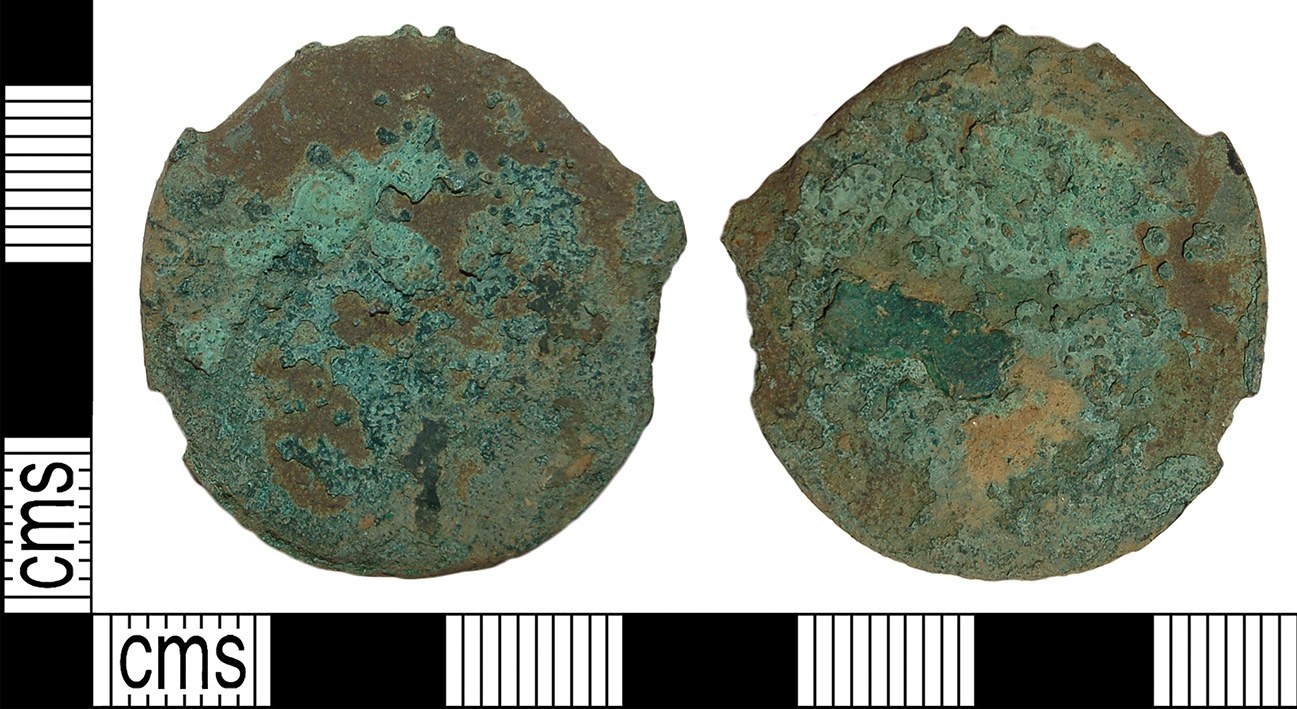
Start by confirming the denomination through size and weight. A sestertius is the largest routinely struck Roman imperial bronze, typically about 30–35 mm across and heavy in the hand. If a Roman bronze is markedly smaller, it is more likely a dupondius or as; the broad, substantial flan is your first and strongest indicator that you are holding a sestertius rather than a lesser bronze.
Examine the obverse portrait. Here it is a bearded male head facing right, the conventional format for an emperor. Bearded portraits point broadly toward the period from Hadrian onward through the Antonines and Severans and into the third century, which is consistent with a 2nd–3rd century AD dating. On a clearer coin, the legend ringing the head would spell out the ruler's name and titles; when that legend is lost to wear, portrait style, hair, and beard treatment become the main clues, though they rarely pin down a single emperor on their own.
Turn to the reverse and look for the letters S C, for Senatus Consulto, which appear on senatorial bronze coinage and are a useful confirmation of the denomination even when the main figure is unclear. Try to make out any standing figure, seated deity, or scene, since a recognizable reverse type is often the key to attribution. On a heavily patinated coin like this one, the reverse may simply be too indistinct to interpret, in which case an honest catalogue keeps the emperor uncertain.
Assess the metal and patina. Sestertii are orichalcum, a copper-zinc brass that shows a yellowish tone where patina wears thin, but most buried examples are covered in green, brown, or earthen surfaces. A smooth, even, hard patina is generally desirable and authentic; powdery bright-green spots can indicate active corrosion (bronze disease) that needs attention. Be cautious with cast fakes and tourist replicas: genuine ancient strikes show fine detail, natural flan irregularities, and struck (not seamed or bubbly) surfaces, whereas casts often have soft detail, a mold seam, or air pockets.
When legends and reverse remain unreadable, resist the temptation to force an attribution. The responsible identification is a generic 2nd–3rd century sestertius of an uncertain emperor. If you want to narrow it down, seek high-resolution raking-light photographs or a specialist's opinion before any cleaning, since conservative handling preserves both the evidence and the value.
Frequently asked questions
What does S C mean on the reverse?
S C stands for Senatus Consulto, 'by decree of the Senate,' and marks the bronze coinage. Spotting these letters in the reverse field helps confirm the coin is a senatorial bronze such as a sestertius, even when the rest of the design is worn.
How do I tell a sestertius from a smaller Roman bronze?
Go by size and weight. The sestertius is the largest common imperial bronze at roughly 30–35 mm and quite heavy, while the dupondius and as are noticeably smaller and lighter. The broad, thick flan is the clearest tell.
Can I identify the emperor from the beard alone?
Not reliably. A beard narrows the period to roughly Hadrian through the third century, but many emperors are bearded. A firm attribution normally needs a legible obverse legend or a recognizable reverse type, which this coin lacks.
How can I spot a fake sestertius?
Genuine coins are struck, showing crisp detail, natural flan edges, and a hard, integrated patina. Cast copies often reveal a mold seam, soft mushy details, tiny air bubbles, or an artificial-looking surface. When in doubt, get an experienced ancient-coin dealer's opinion.