
How to Identify the Roman Republic Denarius
Learn to recognize the silver denarius of the Roman Republic, introduced around 211 BC, by its helmeted Roma obverse, galloping Dioscuri reverse, and the huge variety of later moneyer designs.
Read the full Roman Republic Denarius encyclopedia entry →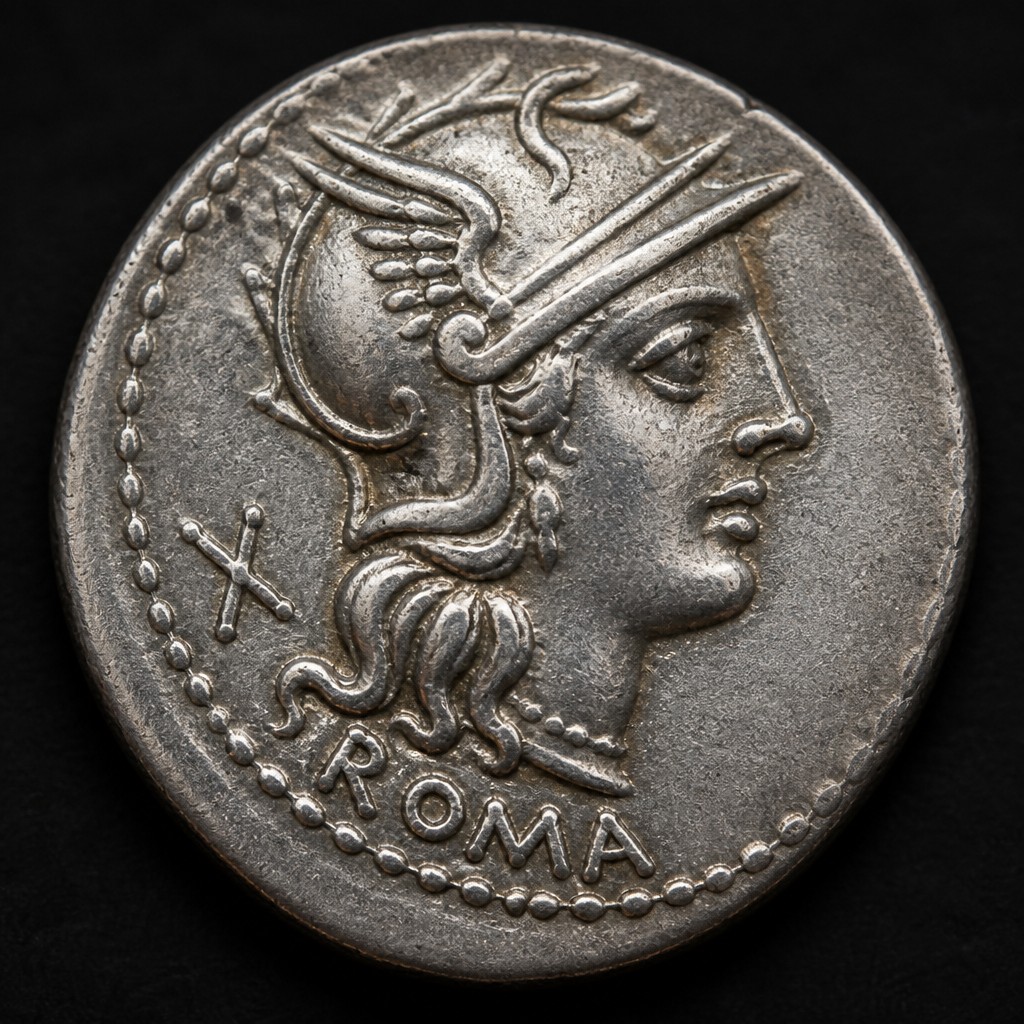
What This Coin Is
The denarius was Rome's principal silver coin from its introduction, traditionally dated to around 211 BC during the Second Punic War, through the end of the Republic. The name comes from the Latin for "containing ten," referring to its original value of ten bronze asses.
Obverse Design
The earliest denarii show a helmeted head of the goddess Roma facing right, with a small X (the value mark for ten asses) placed behind the head or below the chin. As the Republic progressed, moneyers introduced enormous design variety, featuring deities, family ancestors, and personifications tied to the issuing moneyer's own lineage.
Reverse Design
The classic early reverse shows the Dioscuri, the divine twins Castor and Pollux, riding galloping horses to the right with leveled spears and stars above their caps, with ROMA in the exergue. Later Republican issues diversify widely into scenes with chariots, standing figures, and the moneyer's name or initials worked into the design.
Size, Weight, Metal, and Edge
Denarii typically measure about 17-20mm across and were struck in silver at a nominal weight near 4.5 grams early on, drifting slightly over the following two centuries. They were hand-struck with plain, unreeded edges.
Identifying the Moneyer and Date
Look for a name or an abbreviated set of initials in the reverse field, legend, or exergue. This identifies the moneyer, the mint official responsible for that issue, and is the main tool numismatists use to classify and date individual Republican denarius types.
Telling It Apart From Similar Coins
Compare against the smaller, lighter quinarius (a half-denarius, sometimes sharing the Dioscuri design but with a different value mark) and the sestertius, which started as a small silver coin but later became a large bronze denomination under the Empire. Imperial denarii replace Roma's helmeted head with a living emperor's portrait, so a coin showing Roma or another deity rather than a ruler is a good sign of a Republican origin.
Grading at a Glance
Judge condition by centering, strike weakness (commonly seen on the horses' legs or Roma's helmet crest), and wear on the highest points of the design. Light gray to iridescent toning is a normal feature of old silver and not a flaw.
Authenticity Red Flags
Cast fakes typically show a seam line around the edge and a porous, grainy surface rather than the crisp flow lines of a struck coin. Underweight examples, blurry or mushy details compared to sharply cut genuine dies, and an unusual ring when gently tapped are all warning signs worth investigating further.
Frequently asked questions
What does the X on some early denarii mean?
It is a mark of value indicating the coin was worth ten bronze asses, which is also the source of the coin's name, denarius.
Why do Republican denarii look so different from one another?
Each issue was struck under a rotating moneyer who often chose designs celebrating his own family's history, producing hundreds of distinct types across the Republic's history.
How is this different from an Imperial denarius?
Republican denarii generally show Roma or another deity rather than a living ruler; once Julius Caesar and later Augustus placed their own portraits on coinage, depicting the reigning emperor became the standard.
Is the Dioscuri reverse the only type I'll see?
No, it is the classic early type, but by the 2nd and 1st centuries BC moneyers used a huge range of reverse scenes, so the absence of the Dioscuri does not rule out a Republican denarius.