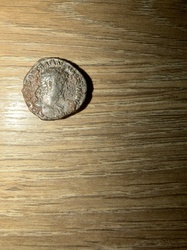
How to Identify the Roman Imperial Denarius (Unidentified)
A collector's guide to attributing a worn 2nd-century Roman silver denarius from its portrait, reverse type, size, legends, and authenticity signs.
Read the full Roman Imperial Denarius (Unidentified) encyclopedia entry →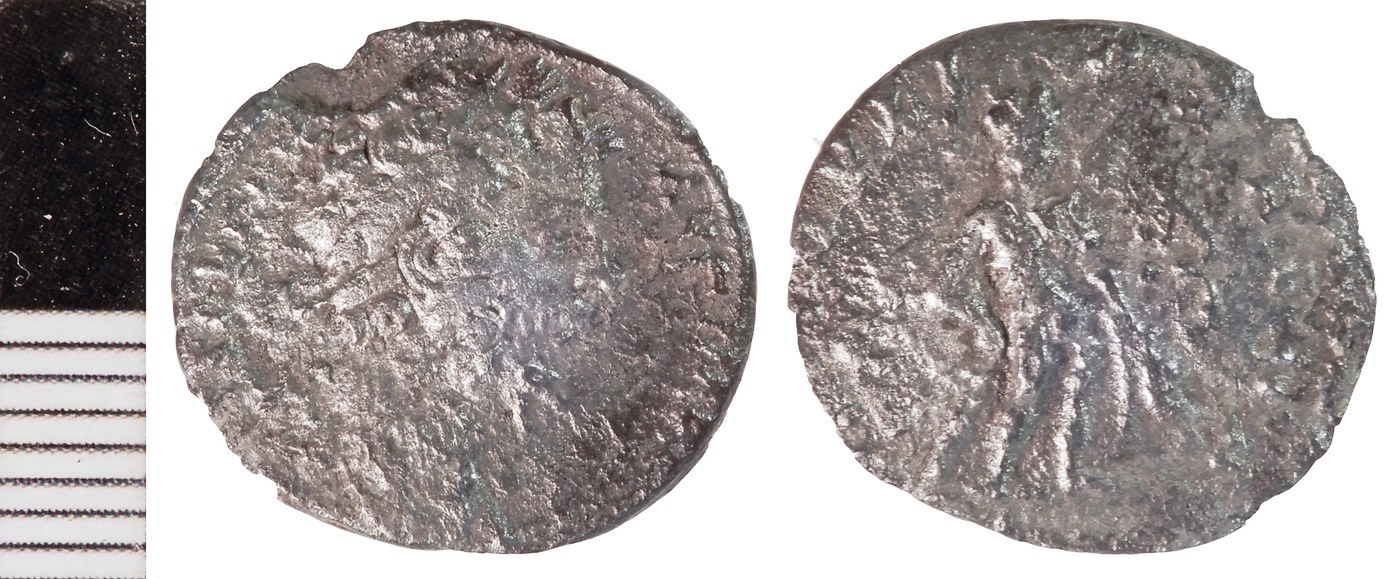
Begin by confirming the denomination and metal. A denarius is a small silver coin, generally 17-20 mm across and near 3 grams, hand-struck onto a slightly irregular flan. Machine-perfect roundness, a milled edge, or a brassy base-metal color point to a later coin or a replica rather than a Roman denarius.
Work the obverse portrait. The emperor's head is shown in profile — here facing right with curly hair — and the surrounding legend names and titles him. Even a few legible letters (fragments such as an emperor's name, or titles like IMP, CAES, AVG, PIVS, or TR P) can be matched against reference tables. Style is a dating clue: 2nd-century portraits are realistically modeled, and heavy beards suggest emperors from Hadrian onward.
Then read the reverse. Identify the standing figure and its attributes — a wreath, spear, cornucopia, patera, rudder, or military standard each points to a specific personification such as Victory, Pax, Fortuna, Providentia, or Roma. The reverse legend labels the type and, combined with the obverse, allows attribution to a catalogued issue in Roman Imperial Coinage (RIC). Note whether the figure faces left or right and what it holds; small differences separate otherwise similar types.
Watch for look-alikes and traps. Later Roman coins, provincial issues, and modern tourist replicas can resemble a denarius at a glance. A cast copy typically shows soft, mushy detail, a seam on the edge, and bubbles in the surface; a struck fake may look too crisp and uniform. Fourrées — ancient silver-plated copper counterfeits — also exist and may show copper breaking through worn high points.
Finally, respect the authentication cautions particular to ancient coins. Do not clean or scrape the surfaces to read a legend; you risk destroying detail and value. Provenance and expert opinion carry real weight in this field, so for anything beyond a common worn piece, seek a specialist dealer or a grading service experienced with ancient coins before assigning a firm identity or value.
Frequently asked questions
What's the quickest way to tell it's a denarius and not a later coin?
Check size, weight, and fabric: a denarius is a small hand-struck silver coin about 17-20 mm and roughly 3 grams with a slightly irregular flan. A larger, thicker, or brassy coin, or one with a perfectly round milled edge, is something else.
Which details actually let me attribute the emperor?
The obverse legend is decisive. Read whatever letters survive and combine them with the portrait style and the reverse figure's attributes, then match against a reference like RIC. Partial legends plus the reverse type are often enough.
How do I spot a fake or plated denarius?
Cast copies show soft detail, edge seams, and surface bubbles; modern struck fakes can look unnaturally crisp. Ancient fourrées reveal copper cores breaking through worn high points. Weight and magnetism are quick checks — silver is non-magnetic.
Should I clean it to read the legend?
No. Cleaning or scraping an ancient coin removes surface and detail and can sharply lower its value. Leave it as found and let a specialist assess it; proper attribution rarely requires cleaning.
Roman Imperial Denarius (Unidentified) identified by the community
Recent Roman Imperial Denarius (Unidentified) coins identified with Coin Identifier.