
How to Identify the Roman Follis (AE3)
A collector's guide to reading the Constantinian portrait, obverse legend, small bronze fabric, commemorative wreath and Victory reverses, and mint marks.
Read the full Roman Follis (AE3) encyclopedia entry →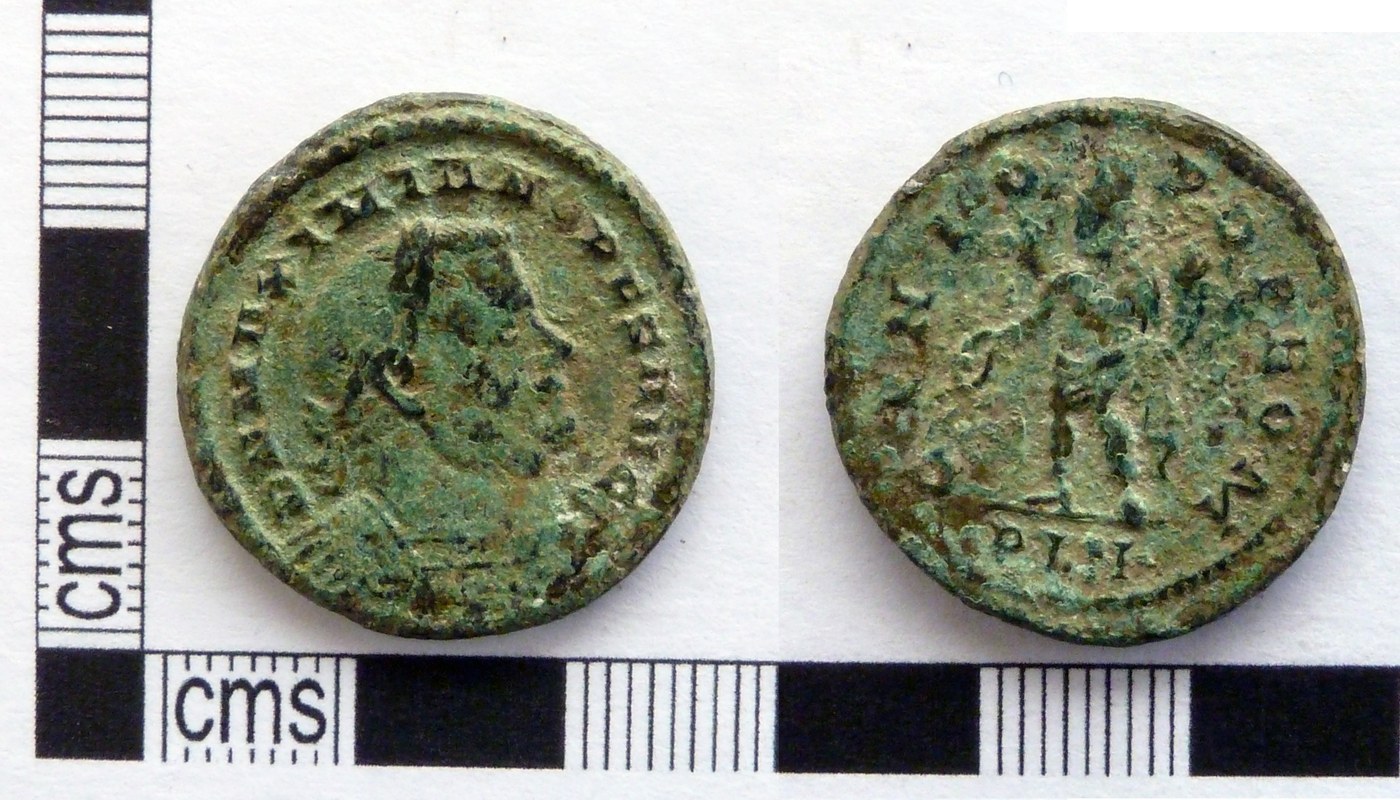
Begin with the size and metal, because they place the coin immediately. A follis of this period is a small bronze piece roughly 17-20 mm across and light in the hand, generally around 2-3.5 grams, with a brown, green, or earthen patina and no silvering. That compact module is what collectors label AE3 and distinguishes these later coins from the larger silvered folles of around AD 300.
Read the obverse to name the ruler. The bust is an emperor in profile facing right in the tight, geometric Constantinian style, laureate, diademed, or helmeted and usually cuirassed. Follow the legend around the edge: a name such as CONSTANTINVS AVG confirms Constantine I, while variants naming his sons identify one of the Caesars of the dynasty. Because the whole family shares the same portrait style, the legend, not the face, is what attributes the coin.
Use the reverse to fix the type. On this coin the design is commemorative, built around a wreath or a Victory. Match the legend to the image: a laurel wreath enclosing VOT XX or VOT XXX MVLT is a vota type marking imperial vow anniversaries; two Victories holding a shield with VICTORIAE LAETAE PRINC PERP and a single advancing Victory are also common in AD 320-330. Then check the reverse field and exergue for the mint mark, a short string of letters and symbols that names the mint and workshop and ties the coin to a city such as Trier, Arles, Siscia, Thessalonica, Constantinople, or Antioch.
Watch for look-alikes and cautions. The bronzes of Constantine's rivals and successors, including Licinius, Crispus, and Constantine's sons, share the same fabric and reverses, so always read the obverse name rather than assuming from appearance. Ancient barbarous imitations exist and are usually cruder in style and lettering, while modern cast forgeries can be spotted by a seam around the edge, a soft or grainy surface, bubbling, or a weight far outside the normal range. For an important purchase, seek attribution from a specialist in late Roman coinage or a coin with reputable provenance.
Frequently asked questions
What is the quickest way to recognise a Constantinian follis?
Look for a small bronze coin about 17-20 mm and 2-3.5 grams with a right-facing emperor in the tight Constantinian style, and read the obverse legend for a name such as CONSTANTINVS AVG. A commemorative wreath or Victory reverse with a mint mark in the exergue confirms the period.
How do I tell Constantine I from other emperors on these coins?
Read the obverse legend rather than the portrait. Constantine I is named CONSTANTINVS, while his sons and rivals such as Licinius, Crispus, Constantine II, Constantius II, and Constans carry their own names in the same style. The legend is the deciding factor.
Where do I find the mint mark, and why does it matter?
The mint mark sits in the exergue, the small space below the reverse design, and sometimes in the field. It is a short string of letters and symbols identifying the mint and workshop, letting you attribute the coin to a specific city such as Trier, Siscia, or Antioch, which can affect interest and value.
The coin has no silver colour and a green surface. Is that a problem?
No. By AD 320-330 the follis was a plain bronze coin, so a brown or green patina is entirely normal and often desirable. A bright, even, silvery surface would instead be a reason to look closely for cleaning or a modern reproduction.