
How to Identify the Roman Aureus of Augustus
How to recognize a gold aureus struck under Emperor Augustus by its portrait style, Latin legends, size and weight, and the range of reverse types used during his reign.
Read the full Roman Aureus of Augustus encyclopedia entry →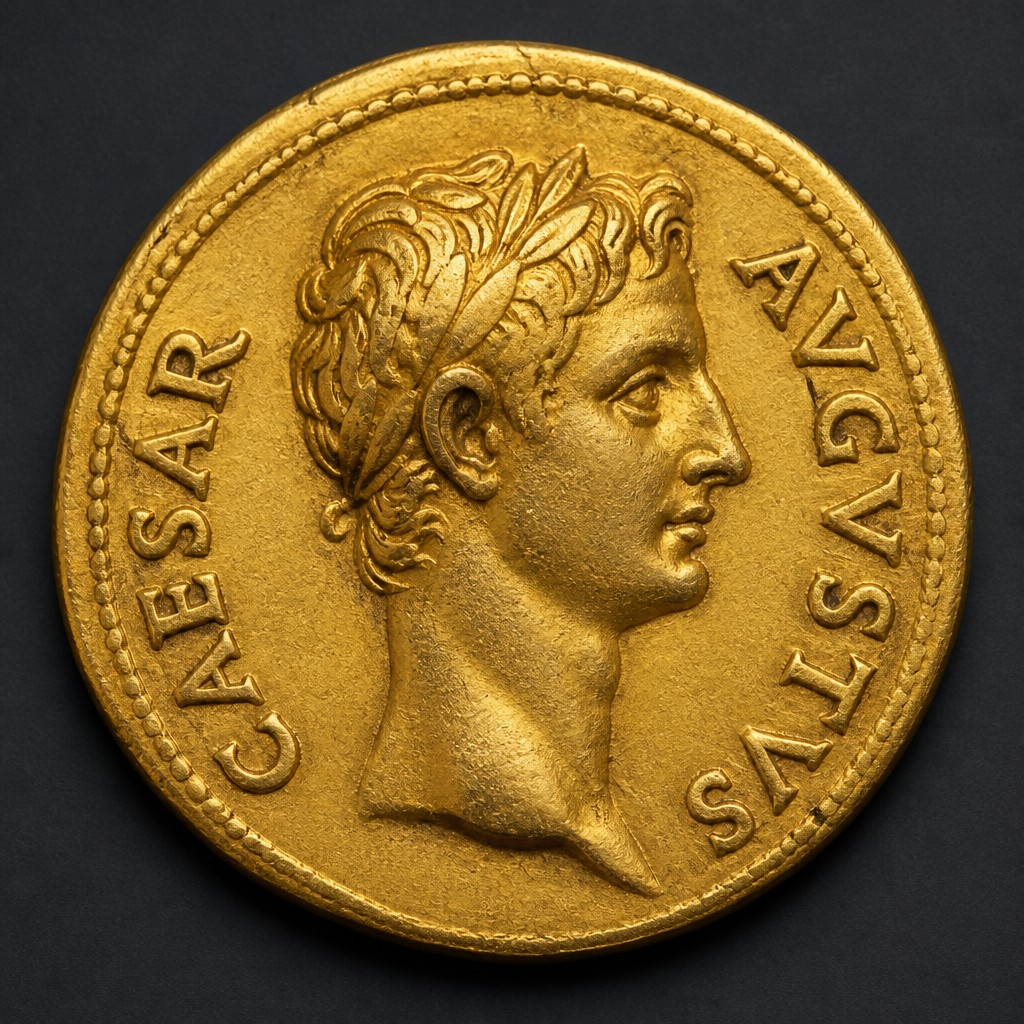
What It Is
The aureus was the principal gold coin of ancient Rome, and coins struck in the name of Augustus (reigned 27 BC - AD 14) mark the beginning of the imperial coinage system, replacing the more varied coinages of the late Roman Republic. Many mints across the empire produced aurei during his long reign, so designs and portrait styles vary somewhat by period and location.
Obverse (Front)
Most Augustan aurei show a right- or left-facing bare or laureate head of Augustus, surrounded by a Latin legend naming him, typically abbreviating titles such as "AUGUSTUS," "CAESAR," and "DIVI FILIUS" (son of the deified [Julius Caesar]), often with additional titles reflecting the year or specific honors.
Reverse (Back)
Reverse designs vary widely across his reign, including scenes of Augustus on horseback, a capricorn (his personal emblem), a comet or star symbolizing the deified Julius Caesar, an oak wreath referencing an honor voted by the Senate, or figures of Roman deities. The specific reverse type, combined with the obverse legend, is often what allows a coin to be dated to a particular period of the reign.
Size, Weight, Metal, and Edge
The aureus is struck in gold, roughly 19-20 mm in diameter with some variation, and weighs about 7.8-8 grams under the standard used during most of Augustus's reign. Ancient coins were hand-struck with dies and hammers, so they lack the perfectly uniform edge of modern coinage and often show slightly irregular, non-circular flans (blanks).
Mint Marks
Unlike modern coinage, ancient Roman coins generally do not carry a simple single-letter mint mark; instead, the mint of origin (which shifted over time between Rome and other cities such as Lugdunum in Gaul) is generally identified by die style, portrait treatment, and specific legend wording rather than an explicit mark on the coin.
Telling It Apart from Similar Coins
Coins of Augustus can be confused with those of his immediate predecessor Julius Caesar or his successor Tiberius; checking the specific legend wording (Augustus's coins consistently use "AUGUSTUS" and often "DIVI FILIUS," which would not appear on Julius Caesar's own lifetime coinage) and comparing portrait style helps distinguish them. Because so many reverse types exist across his reign, cross-referencing the exact combination of obverse legend and reverse design against a standard reference is the most reliable way to identify a specific issue.
Judging Condition at a Glance
Look at the sharpness of the portrait's features (the profile, hair, and any wreath) and the legend's legibility; ancient coins are graded partly on wear and partly on how well-centered and fully struck they were originally, since off-center or weakly struck examples are common even on essentially uncirculated coins due to the hand-striking process.
Authenticity Red Flags
Ancient gold coins are a common target for both cast forgeries and modern die-struck fakes. Cast fakes often show a slightly grainy, pitted, or waxy surface texture, a seam line around the edge, and soft or mushy detail compared to the crisp lines of a genuine hammer-struck coin. Genuine ancient coins typically show natural, uneven wear patterns and die characteristics consistent with known types; a coin with mismatched legend and portrait style, incorrect weight, or an unnaturally smooth, shiny surface should be reviewed carefully.
Frequently asked questions
What legend words typically identify a coin as belonging to Augustus?
Look for 'AUGUSTUS' or 'CAESAR AUGUSTUS' along with 'DIVI FILIUS' (son of the deified one), referring to his adoptive father Julius Caesar's deification.
Why don't these coins have a simple mint mark like modern coins?
Ancient Roman coinage generally identified its origin through die style and legend rather than an explicit mint-mark letter; the mint responsible is determined by numismatic study of the dies rather than a mark on the coin.
What is the capricorn symbol sometimes seen on these coins?
The capricorn was Augustus's personal astrological emblem and appears on some reverse types issued during his reign.
How heavy is a genuine aureus of this period?
Approximately 7.8 to 8 grams of gold, though hand-striking means individual examples can vary slightly.