
How to Identify the Rhodes Rose and Helios Tetradrachm
A guide to identifying Rhodian silver tetradrachms by the facing radiate head of the sun god Helios and the punning rose emblem on the reverse.
Read the full Rhodes Rose and Helios Tetradrachm encyclopedia entry →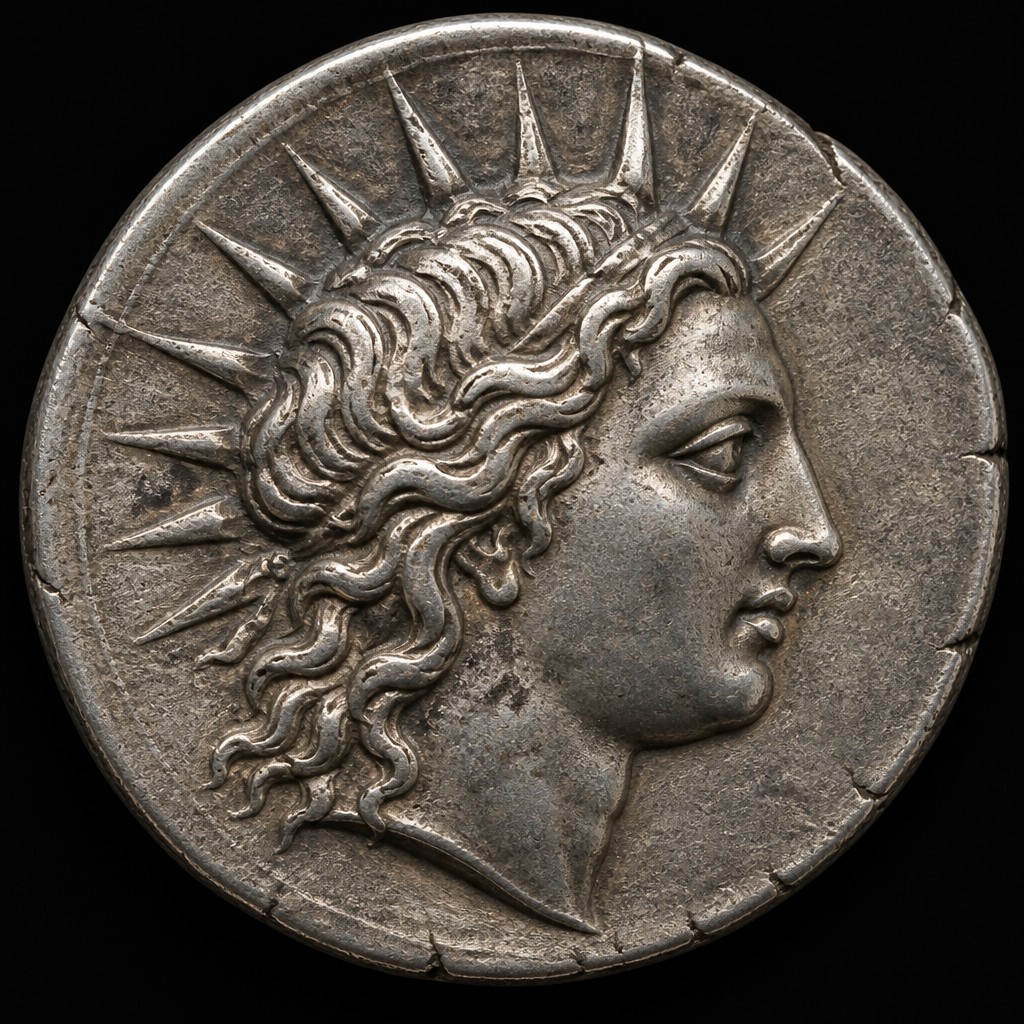
What It Is
Rhodes, the island city-state in the southeastern Aegean, struck silver coinage from the founding of the unified city in 408 BC onward, most famously featuring the sun god Helios, patron deity of Rhodes, paired with a rose, a pun on the city's Greek name (rhodon means "rose"). Tetradrachms are the largest common silver denomination of this coinage, though didrachms are more frequently encountered.
Obverse
The obverse shows the head of Helios facing forward or in a distinctive three-quarter turn, radiate with sunrays emanating from his hair, a striking departure from the strict profile portraits typical of most Greek coinage. The engraving quality on well-struck examples captures a sense of divine radiance and movement in the hair.
Reverse
The reverse depicts an open rose blossom, often with a small bud or leaf beside the main flower. The inscription ΡΟΔΙΟΝ (Rhodion, "of the Rhodians") usually arcs around the design, and a magistrate's name or monogram frequently appears in the field to mark the issuing official and year.
Size, Weight, and Metal
Rhodian silver was struck on its own reduced weight standard, which drifted downward over time; a tetradrachm weighs in the neighborhood of 13-15 grams depending on period, while the more common didrachm weighs roughly half that. The metal is silver with a typically broad, moderately thin flan.
Identifying the Mint and Date
Because Rhodes issued coinage continuously for centuries with rotating magistrates, individual issues are distinguished by the magistrate's name or monogram beside the rose, along with subtle stylistic differences in Helios's hair and facial rendering that specialists use to place a coin within the broader chronological sequence.
Telling It Apart From Similar Coins
The facing Helios head is distinctive enough that Rhodian coins are rarely mistaken for other cities' issues; profile-only sun-god types from other mints lack the three-quarter facing pose. Rhodian bronze coins carry the same rose and Helios themes at a much smaller scale and should not be confused with the larger silver denominations.
Grading at a Glance
Because the facing Helios head is struck in high relief on a curved die, look for full strike across the entire face without a flat or weak area on one side, which is common when the dies were not perfectly aligned. On the reverse, check that the rose's petals and the ΡΟΔΙΟΝ legend are fully legible.
Authenticity Red Flags
Because the facing portrait is difficult for forgers to render convincingly, look for a flat, lifeless, or asymmetrical face, blurred sunray tips, or an unnaturally smooth rose that lacks crisp petal lines, all of which point to a cast or tooled reproduction rather than a genuine struck coin. Confirm weight and diameter fall within the expected range for the period the coin claims to represent.
Frequently asked questions
Why does the Rhodes coin show a rose?
It is a visual pun on the city's name: rhodon is the Greek word for rose.
Why is the head on Rhodian coins facing forward instead of in profile?
Rhodian engravers favored a distinctive facing or three-quarter view of Helios, the island's patron sun god, setting the coinage apart from most profile-portrait Greek coins.
How can I tell which magistrate or year a Rhodian coin belongs to?
Look for a name or monogram in the reverse field beside the rose; Rhodes rotated issuing magistrates and marked each issue accordingly.
Is the tetradrachm the most common Rhodian silver coin?
No, the didrachm is more commonly encountered; full tetradrachms are a larger and less common denomination within the series.