
How to Identify the Republican Victoriatus
A lighter-weight silver coin of the Roman Republic, identified by its Jupiter head obverse and a reverse showing Victory crowning a trophy.
Read the full Republican Victoriatus encyclopedia entry →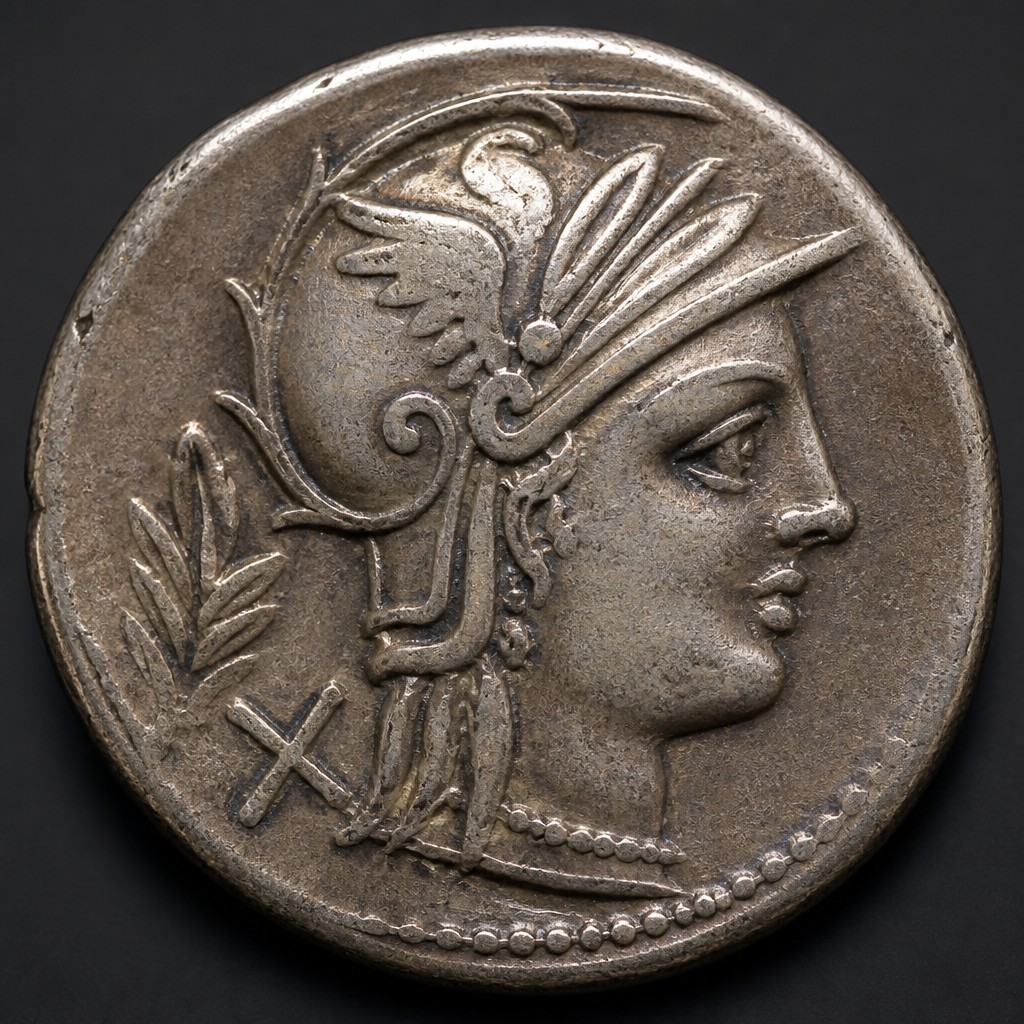
What This Coin Is
The victoriatus was a silver denomination introduced by the Roman Republic in the late 3rd century BC, struck at a lighter weight standard than the denarius and originally intended largely for circulation in southern Italy and trade with Greek-influenced regions. It circulated for several decades before being phased out as the denarius system became dominant.
Obverse Design & Inscriptions
The obverse shows a laureate head of Jupiter facing right. Unlike many later Republican denarii, there is usually no moneyer's name on the obverse of a typical victoriatus, keeping the design relatively simple and focused on the deity's portrait.
Reverse Design & Inscriptions
The reverse depicts Victory standing right, crowning a trophy of captured arms with a wreath. The legend ROMA appears below, often in raised or incuse letters on an exergual line. Some later or specific issues may include small control symbols or letters in the field identifying a particular moneyer or officina.
Size, Weight, Metal, and Edge
The victoriatus is silver, generally measuring around 15-18mm in diameter with a weight of roughly 2.5-3.4 grams, distinctly lighter than the standard denarius of the same broad era, which typically weighs close to 3.9-4.5 grams. The edge is plain.
Mint Marks and Where to Find Them
Unlike later, more standardized Republican and Imperial coinage, victoriati generally lack a dedicated mint-mark system; identification of moneyer or issue is instead based on small control marks, letters, or symbols found in the exergue or field near the ROMA legend, which specialists cross-reference to known issue series.
Telling It Apart From Similar Coins
The most important distinguishing feature from a standard Republican denarius is weight and, often, the absence of a moneyer's name on the obverse; a denarius from the same broad period usually carries a personal name and sometimes a mark of value (such as X for ten asses) near the portrait, features generally missing on the victoriatus. The reverse trophy-and-Victory scene is also distinct from the twin-horsemen (Dioscuri) reverse common on early denarii.
Judging Condition at a Glance
Look for a clear, well-centered Jupiter portrait with defined laurel leaves, and a legible ROMA legend beneath the trophy scene. Because these coins are over two thousand years old and were struck by hand with hammer dies, off-center strikes and die wear are common and do not necessarily indicate a lower-quality piece, though sharper, well-centered examples are more desirable to collectors.
Authenticity Red Flags
As with other ancient silver, be cautious of coins that feel unusually heavy or thick for the type, a common sign of a cast reproduction rather than a genuine struck flan. Check for a raised seam line around the edge, a grainy or pitted surface lacking crisp metal flow lines, and any softness or blurriness in the lettering that would be inconsistent with the sharp die-engraving typical of authentic Republican silver.
Frequently asked questions
What makes the victoriatus different from a denarius?
It was struck at a lighter silver weight standard, generally lacks a moneyer's name on the obverse, and features a Victory-crowning-trophy reverse instead of the common Dioscuri or chariot types seen on many denarii.
Why was the victoriatus introduced?
It was likely created to facilitate trade with southern Italian and Greek-influenced regions that used different weight standards than Rome's core silver coinage at the time.
How do I identify the specific moneyer or issue?
Because dedicated mint marks are generally absent, identification relies on small control symbols or letters near the ROMA legend, which specialists compare against known reference lists of issues.
What should I check for wear and grading?
Focus on the clarity of Jupiter's laurel wreath and facial features on the obverse and the legibility of the ROMA legend and trophy details on the reverse.