
How to Identify the Republican Quinarius
A half-value silver coin of the Roman Republic, similar in design to the denarius but smaller, often marked with a V or similar value symbol.
Read the full Republican Quinarius encyclopedia entry →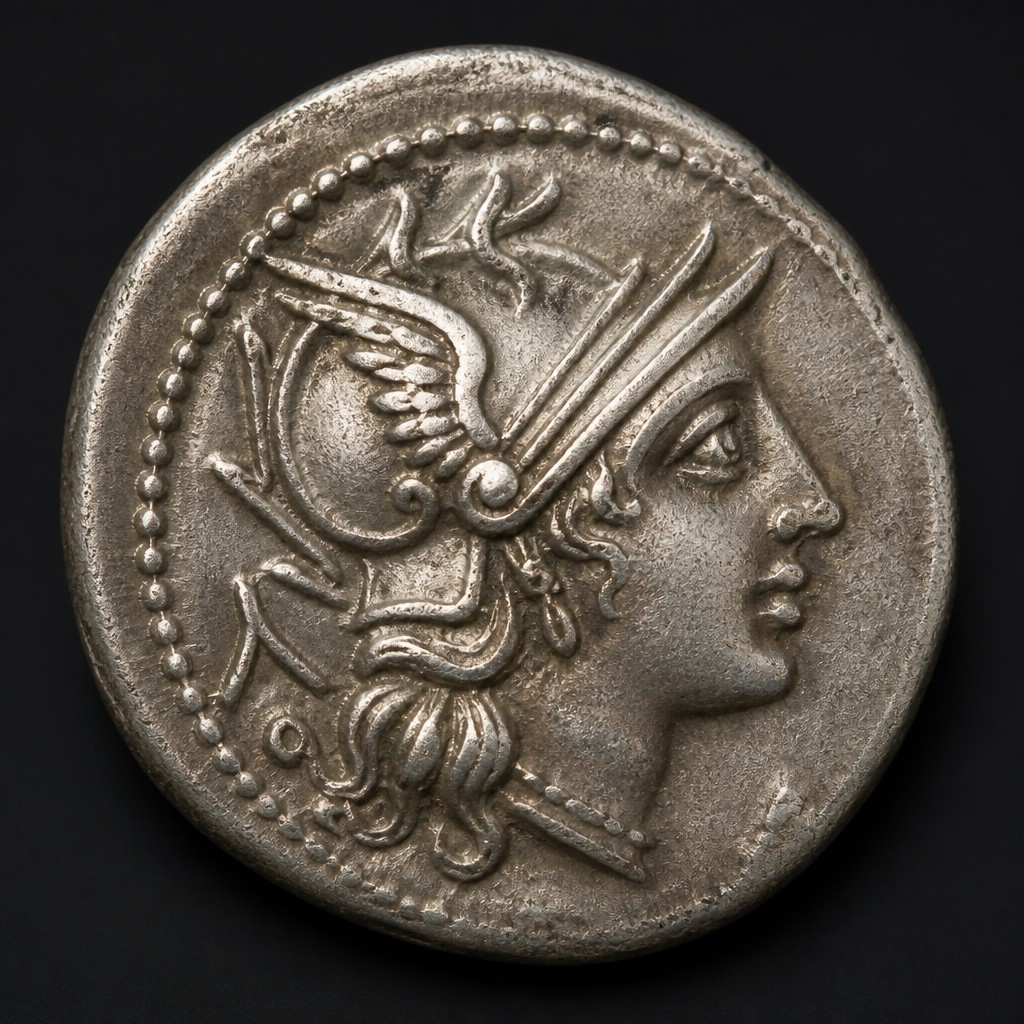
What This Coin Is
The quinarius was a Roman Republican silver denomination valued at half a denarius, struck intermittently alongside the more dominant denarius from the late 3rd century BC onward. Because it was issued less consistently than the denarius, surviving quinarii are generally scarcer and come from a narrower range of moneyers and periods.
Obverse Design & Inscriptions
Early quinarii often show a helmeted head of Roma facing right, similar in style to contemporary denarii, sometimes with a small value mark such as V (for five, referencing five asses) placed behind or below the portrait. Later Republican quinarii, especially those tied to specific moneyers, may feature varied portrait types reflecting that moneyer's family or political themes, similar to the diversity seen on late Republican denarii.
Reverse Design & Inscriptions
Early types commonly show the Dioscuri (the twin gods Castor and Pollux) on horseback riding right, with the legend ROMA below, echoing the classic early denarius reverse. Later issues vary more widely by moneyer, sometimes showing Victory, a biga or other chariot scene, or symbols tied to a specific family's traditions, always accompanied by the ROMA legend or the moneyer's name.
Size, Weight, Metal, and Edge
The quinarius is silver, roughly 13-16mm in diameter and weighing about 1.9-2.2 grams, noticeably smaller and lighter than the denarius, consistent with its status as a half-denomination. The edge is plain.
Mint Marks and Where to Find Them
As with denarii of the Republic, identification relies primarily on the moneyer's name or family symbols in the reverse field or exergue rather than a geographic mint-mark system, since Republican coinage was centrally struck at Rome (with occasional exceptions during civil conflict periods) under the authority of annually appointed moneyers.
Telling It Apart From Similar Coins
The clearest distinguishing feature from a denarius is size and weight, since the quinarius is noticeably smaller and lighter even though early types share the same Roma-head-and-Dioscuri design scheme. A V value mark, when present, is a strong confirming clue, since the denarius instead often carries an X (for ten asses) in its early form. Later, more individualized quinarius types must be compared to specific moneyer reference lists to confirm the denomination when the design departs from the classic early pattern.
Judging Condition at a Glance
Because of its smaller flan, look for full retention of the helmet plume detail on Roma and clear definition in the horses and riders on early Dioscuri-type reverses. A legible ROMA legend and well-centered strike are the main positive indicators; heavy circulation wear tends to flatten the horses' legs and Roma's helmet crest first.
Authenticity Red Flags
Look for the same general warning signs as with other Republican silver: an unusually thick or heavy flan for the denomination, a grainy or pitted surface inconsistent with struck silver, a raised seam suggesting casting, and blurred or doubled lettering that lacks the crisp engraving quality expected of genuine ancient dies. Because quinarii are less common and sometimes command a premium, verifying a purchase with a specialist is worthwhile when the price or rarity claim seems unusually high.
Frequently asked questions
How much was a quinarius worth compared to a denarius?
It was valued at half a denarius, reflected in its smaller size, lighter weight, and sometimes an explicit V value mark on early examples.
Why are quinarii less common than denarii?
The Roman Republic struck the denarius far more consistently and in much greater volume, while the quinarius was issued only intermittently by comparison.
What does the V mark indicate?
On early Republican coinage, a V denoted a value of five asses, matching the quinarius's status as a half-denarius denomination in the early bronze-and-silver value system.
How do later quinarii differ from early types?
Later issues tied to specific moneyers show more varied and personalized designs, similar to the diversity seen in late Republican denarii, rather than sticking to the classic Roma-head-and-Dioscuri pattern.