
How to Identify the Reichsthaler
A large silver coin used as a standard currency unit across German-speaking lands and the Holy Roman Empire for centuries, identified by its ruler's portrait or coat of arms and Latin titulature.
Read the full Reichsthaler encyclopedia entry →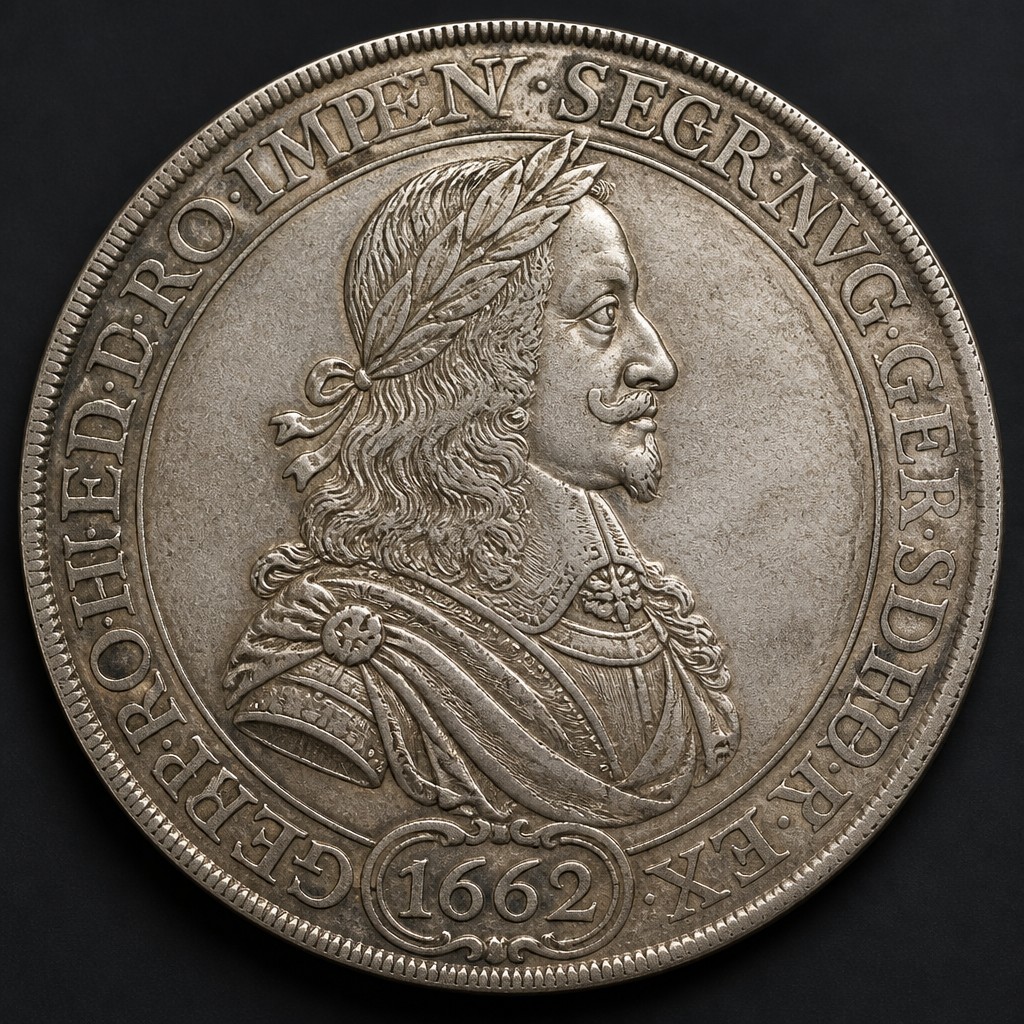
What It Is
The Reichsthaler was a standardized silver coin denomination used throughout the Holy Roman Empire and many German states from the 16th century into the 19th century, serving as a common trade and reference currency across a politically fragmented region of many individual mints. Because dozens of different states, cities, and rulers struck their own Reichsthaler coins over centuries, the design varies enormously from issue to issue, though the underlying weight standard kept the coins broadly comparable in value.
Obverse Design & Inscriptions
Most Reichsthaler coins show either a portrait bust of the issuing ruler (a prince, duke, elector, or bishop, depending on the territory) or a detailed coat of arms representing the issuing state or city. A Latin legend circles the border listing the ruler's name and titles, often abbreviated, such as "DEI GRATIA" (by the grace of God) followed by the specific territorial title.
Reverse Design & Inscriptions
The reverse commonly displays either the double-headed Habsburg imperial eagle (especially on coins referencing the broader Holy Roman Empire), a religious or heraldic emblem tied to the specific ruling house, or an elaborate coat of arms with supporters. The denomination is sometimes spelled out as REICHSTHALER or abbreviated, along with the date.
Size, Weight, and Metal
Reichsthalers are large silver coins, generally around 40-45 mm in diameter and roughly 28-29 grams, following the historic thaler weight standard from which the American "dollar" ultimately derives its name. Exact weight and fineness could shift somewhat by period and issuing authority, but the coin was intended to represent a substantial, trusted unit of silver value across the region.
Mint Marks
Because so many different territories struck their own Reichsthalers, mint identification usually comes from the ruler's name, coat of arms, or an issuing city's name spelled directly in the legend, rather than a small universal mint-mark system. Some issues also carry a mintmaster's initial near the date or on the edge, which specialists use to pin down the specific mint and period more precisely.
Telling It Apart From Similar Coins
Because "thaler" denominations were struck across so many German states as well as other European regions (with names like Reichsthaler, Kronenthaler, or Speciesthaler used for related but distinct standards), correctly identifying a specific piece usually requires matching the ruler's portrait or coat of arms and the legend text to the correct territory and reign. Reference works organized by German state and ruler are the standard tool collectors use to narrow down an unfamiliar Reichsthaler.
Judging Condition at a Glance
Look at the finest details, such as the ruler's facial features or the fine lines within a coat of arms, for strike sharpness, since these large silver coins wore down gradually but visibly with extended circulation. A well-preserved Reichsthaler retains crisp lettering all the way around the rim and clear detail in the central portrait or arms, while a heavily worn example shows a smoothed, low-relief design overall.
Authenticity Red Flags
Because Reichsthalers were struck over centuries by many different authorities, counterfeiting has occurred both historically (as a currency crime of the era) and in the modern collectibles market. Warning signs include a weight or diameter noticeably outside the range typical for the specific issuing territory and period, cast-looking surfaces with a grainy texture instead of crisp struck details, and a portrait or coat of arms design that doesn't match documented examples from the claimed ruler and date. Cross-referencing the legend, portrait, and arms against a specialized catalog of German states is the most reliable way to confirm a specific Reichsthaler's identity.
Frequently asked questions
What does 'Reichsthaler' mean and where does the term 'dollar' come from?
Reichsthaler refers to an imperial-standard silver thaler used across the Holy Roman Empire; the word 'thaler' is the historical root of the modern word 'dollar.'
Why do Reichsthaler coins look so different from one another?
Many separate German states, cities, and rulers each struck their own Reichsthaler coins, so the portrait, coat of arms, and legend vary depending on the specific issuing authority.
How big is a typical Reichsthaler?
Most examples are large silver coins around 40-45 mm in diameter and roughly 28-29 grams, though exact figures can vary by period and issuer.
Is there a standard mint mark system for Reichsthalers?
No single universal system exists; identification typically relies on the ruler's name, coat of arms, or city name in the legend, sometimes alongside a mintmaster's initial.
How can I identify which state or ruler issued my Reichsthaler?
Compare the portrait or coat of arms and the Latin legend text against a reference catalog organized by German state and ruling house, since these details pinpoint the specific issuing authority.