
How to Identify the Rama IV Siamese Baht (first machine-struck)
Siam's first machine-struck silver coinage under King Mongkut, identified by its royal crown obverse and chakra or elephant reverse.
Read the full Rama IV Siamese Baht (first machine-struck) encyclopedia entry →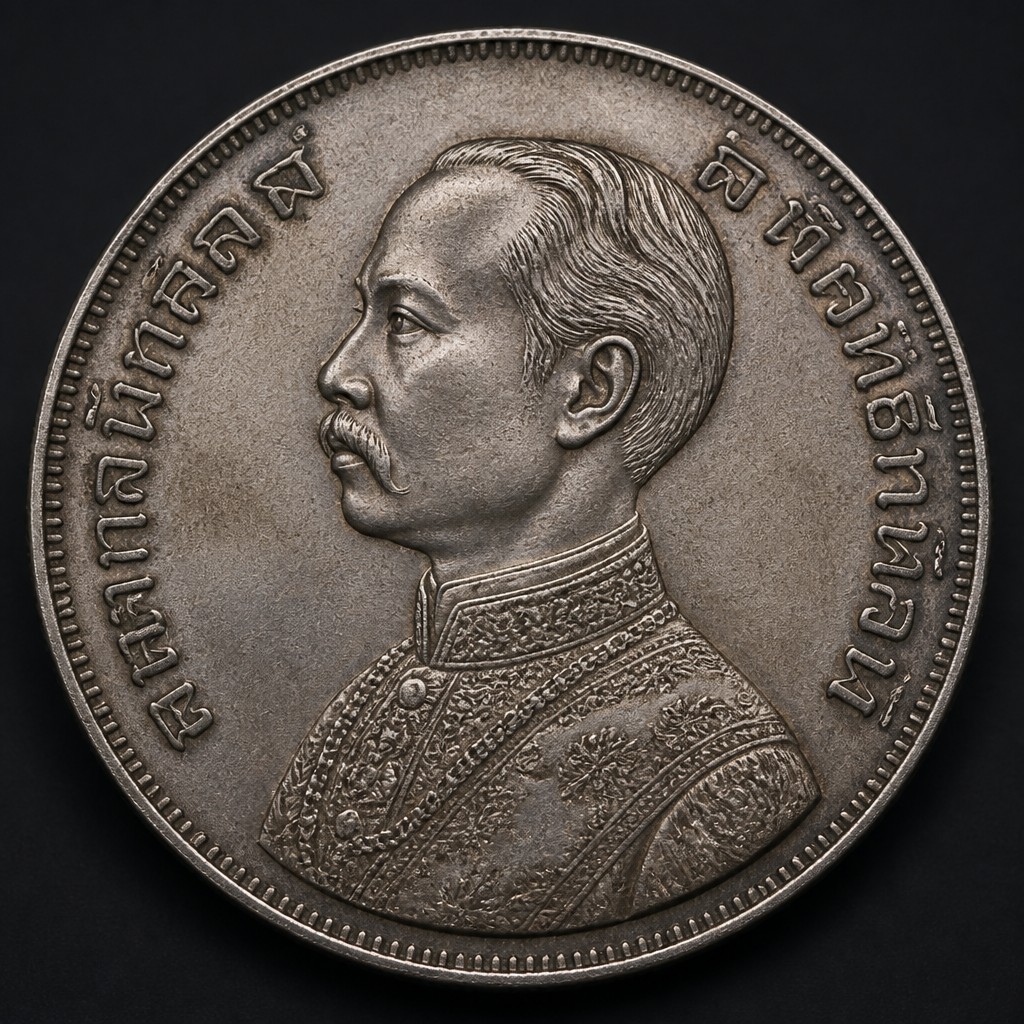
What It Is
Introduced under King Mongkut (Rama IV) around 1860, this coinage represented Siam's first machine-struck coins, replacing the older hand-made Pot Duang bullet money with modern round, flat coins produced on a newly imported minting press. The shift reflected Siam's broader effort under Rama IV to modernize its institutions and engage more directly with Western trading powers, and standardized, machine-made coinage was seen as an important step toward a more predictable and internationally legible currency system.
Obverse Design & Inscriptions
The obverse typically depicts the royal crown (a reference to the king's name Mongkut, meaning "crown") at the center, sometimes flanked by ceremonial umbrellas or fans, with a Thai-language inscription identifying the issuing authority.
Reverse Design & Inscriptions
The reverse commonly shows the sacred chakra (discus) emblem or, on certain denominations, an elephant, both traditional symbols of Siamese royal authority, along with additional Thai script indicating the denomination.
Size, Weight, Metal & Edge
It is struck in silver, with the full baht piece around 30mm in diameter and roughly 15 grams. Proportionally smaller fractional denominations — including the salung (half-baht), fuang (quarter-baht), and even smaller pieces — share the same basic design at reduced size and weight. Edges are milled and reeded, a new feature compared to the older bullet money.
Mint Marks & Where to Find Them
These coins were struck at the newly established royal mint in Bangkok. There is no separate letter mint mark, since production came from a single mint using imported machinery. Because all examples come from one mint using the same imported press, identification focuses more on comparing denomination size and design details than on searching for mint-location clues.
Telling It Apart from Similar Coins
Distinguish this first machine-struck series from later, more elaborate portrait-based Siamese coinage (which began featuring the king's actual portrait later in the 19th century under Rama V) by its crown-and-chakra or crown-and-elephant design rather than a royal portrait. Distinguish it from the earlier Pot Duang bullet money simply by its flat, round, machine-made form.
Judging Condition at a Glance
Check the fine details of the crown's tiers and the chakra or elephant's outline for wear, since these central raised design elements flatten first with circulation. The reeded edge is also a useful quick check, since a crisp, evenly spaced reeding pattern is typical of a well-preserved, lightly handled example.
Authenticity Red Flags
Verify weight and diameter against the known standard for each denomination, and look for crisp, evenly centered striking consistent with genuine mint output. Watch for cast copies showing soft details, incorrect edge reeding, or a surface texture inconsistent with a struck silver coin.
Frequently asked questions
Why is this coinage historically significant?
It was Siam's first machine-struck coinage, replacing the centuries-old hand-made Pot Duang bullet money with modern round, flat coins produced on an imported minting press.
Why does the design feature a crown?
The crown design references King Mongkut's name, which means "crown" in Thai, making it a fitting central emblem for his reign's new coinage.
What denominations were issued in this series?
The series included the full baht along with smaller fractional denominations such as the salung (half-baht) and fuang (quarter-baht), all sharing a similar design at reduced size.
How is this different from later Siamese coins with a royal portrait?
This early series uses symbolic imagery like the crown, chakra, and elephant rather than an actual portrait of the king, which appeared on Siamese coinage only later in the 19th century.
Where were these coins produced?
They were struck at the newly established royal mint in Bangkok using machinery imported specifically to modernize Siam's coinage.