
How to Identify the Ptolemy I Soter Tetradrachm
A guide to identifying tetradrachms of Ptolemy I Soter, founder of Ptolemaic Egypt, by his portrait obverse and the standing eagle reverse that became the dynasty's lasting emblem.
Read the full Ptolemy I Soter Tetradrachm encyclopedia entry →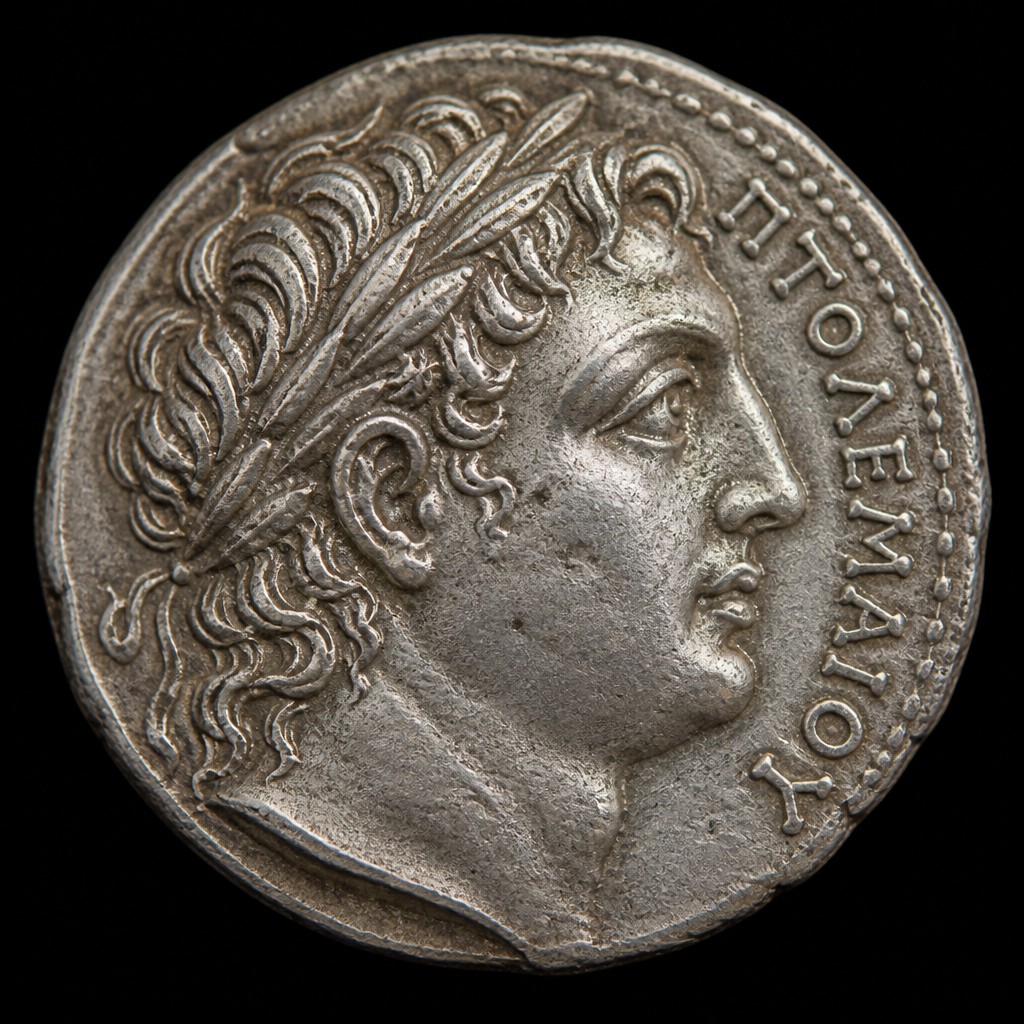
What It Is
Ptolemy I Soter was a general of Alexander the Great who became satrap, and later king, of Egypt, founding the Ptolemaic dynasty that ruled until Cleopatra VII. His tetradrachms, struck primarily at Alexandria beginning in the early 3rd century BC, established a portrait-and-eagle design format that every subsequent Ptolemaic king continued for roughly three centuries, distinguished mainly by the changing royal portrait.
Obverse
The obverse shows the diademed head of Ptolemy I facing right, depicted with strong, individualized features, including a prominent nose and jawline, wearing a diadem (a plain fabric band) tied around his hair. Later issues struck after his death present him as deified, sometimes with a subtly more idealized appearance.
Reverse
The reverse shows an eagle standing left on a thunderbolt, wings closed or slightly spread, with the inscription ΠΤΟΛΕΜΑΙΟΥ ΒΑΣΙΛΕΩΣ ("of King Ptolemy") arranged around the design. A small control mark or monogram often appears in the field beside the eagle's legs, identifying the specific issuing officine or date.
Size, Weight, and Metal
Ptolemaic Egypt used its own reduced "Ptolemaic standard" rather than the heavier Attic standard used elsewhere in the Greek world; a tetradrachm weighs approximately 14.2 grams of silver, noticeably lighter than a contemporary Attic-standard tetradrachm of about 17.2 grams despite being the same denomination name.
Identifying the Mint
Most Ptolemy I tetradrachms were struck at Alexandria, though other mints in the Ptolemaic realm (including Cyprus and various Levantine cities under Ptolemaic control) also produced this type with their own distinguishing control marks or monograms placed near the eagle on the reverse.
Telling It Apart From Similar Coins
Because every later Ptolemaic king continued the same basic eagle-on-thunderbolt reverse design, the obverse portrait is the key to identifying which specific Ptolemy issued a given coin; Ptolemy I's portrait is typically more rugged and individualized compared to the softer, more idealized or heavier-set portraits used by several of his successors. The reduced Ptolemaic weight standard also helps distinguish this coinage at a glance from heavier Attic-standard tetradrachms of other Hellenistic kingdoms.
Grading at a Glance
Look for crisp detail in Ptolemy's facial features and diadem, and clear feather detail on the eagle's wings and legs on the reverse. Because Alexandria's mint produced enormous quantities over a long period, well-centered, sharply struck examples are more desirable than the more common softly struck or off-center pieces.
Authenticity Red Flags
Watch for a portrait that looks generic or does not match the individualized style typical of Ptolemy I specifically, a garbled or misspelled ΠΤΟΛΕΜΑΙΟΥ ΒΑΣΙΛΕΩΣ legend, and weight that matches the heavier Attic standard rather than the lighter Ptolemaic standard, which can indicate a coin has been misattributed or is a modern reproduction. Cast surface graininess and an eagle with indistinct or melted feather detail are further signs of a fake.
Frequently asked questions
Why do so many Ptolemaic coins look similar?
Every Ptolemaic king continued the same basic eagle-on-thunderbolt reverse design established under Ptolemy I, so the changing royal portrait on the obverse is what distinguishes one king's coinage from another's.
What is the Ptolemaic weight standard?
It is a reduced silver standard used only in Ptolemaic Egypt, giving a tetradrachm a weight of about 14.2 grams, lighter than the roughly 17.2-gram Attic standard used elsewhere.
Where was this tetradrachm mainly struck?
Primarily at Alexandria, though other mints within the Ptolemaic realm, such as Cyprus, also produced the type with their own control marks.
How can I tell a Ptolemy I portrait from a later Ptolemy?
Ptolemy I's portrait tends to be more rugged and individualized, while several later Ptolemies show softer or more heavyset, idealized features; comparing the portrait style alongside any control marks helps narrow down the specific ruler.