
How to Identify the Prussian Thaler
The Prussian Thaler was the standard silver coin of the Kingdom of Prussia, featuring the king's portrait and the Prussian eagle across more than a century of issues.
Read the full Prussian Thaler encyclopedia entry →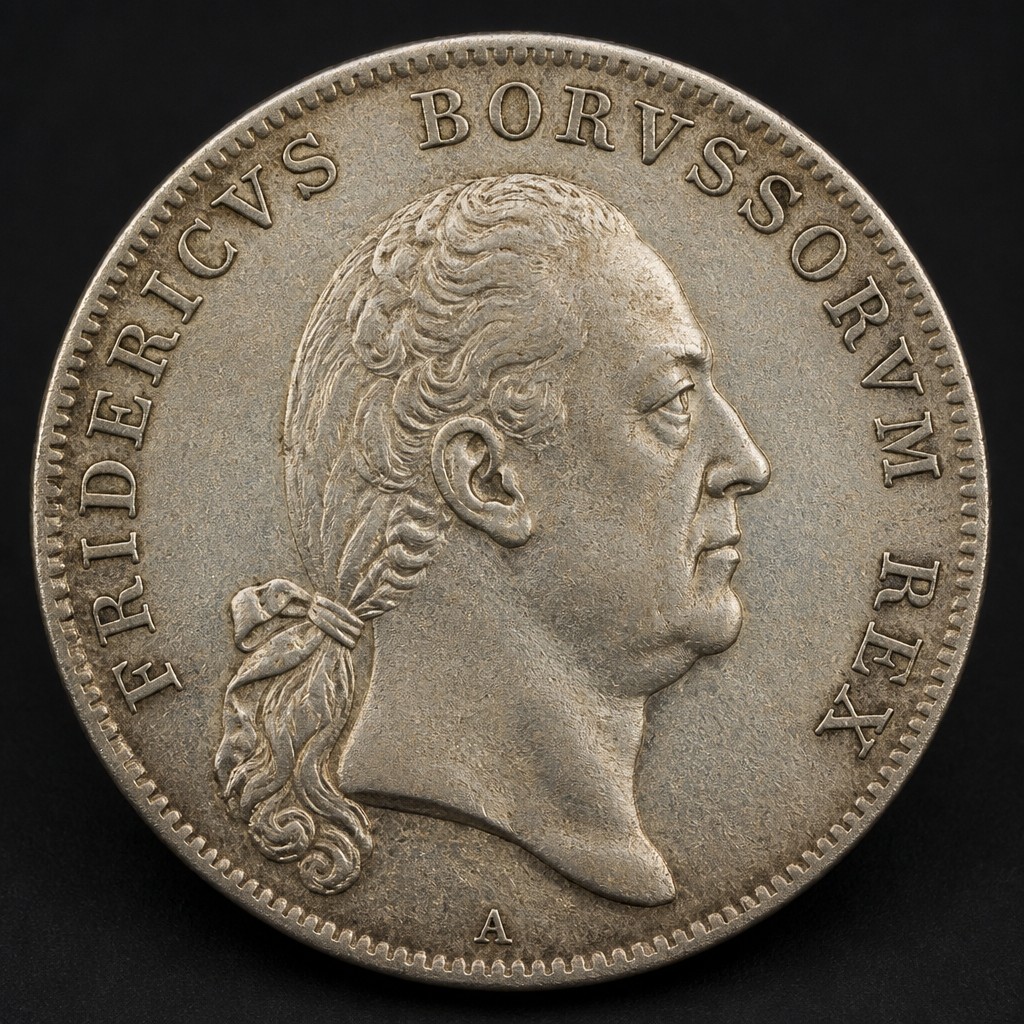
What Is the Prussian Thaler
The thaler was the primary silver currency of the Kingdom of Prussia from the mid-1700s until Germany's mark system replaced it in the 1870s. After 1857 it was struck to the shared "Vereinsthaler" standard agreed upon by several German states, replacing earlier, less consistent regional thaler weights used across the various German kingdoms and principalities before that reform.
Obverse Design and Inscriptions
The obverse shows a profile portrait of the reigning King of Prussia — Frederick the Great, Frederick William III, Frederick William IV, or Wilhelm I, depending on the date — with a legend such as "WILHELM KOENIG VON PREUSSEN" (William, King of Prussia).
Reverse Design and Inscriptions
The reverse displays the Prussian eagle with spread wings, often crowned and sometimes set within a wreath, with the denomination "EIN THALER" or "VEREINSTHALER" and the date around or below it. The eagle's pose and shield detailing were refined over the decades, so small stylistic differences can help narrow down the specific issuing period within a broader reign.
Size, Weight, Metal, and Edge
Vereinsthaler-standard coins were struck in .900 fine silver, about 33mm in diameter and roughly 22.2 grams. The edge may be lettered with a motto or reeded depending on the specific issue.
Mint Marks and Where to Find Them
A single letter mint mark sits at the bottom of the reverse near the date, identifying mints such as A (Berlin) or B (Breslau), consistent with standard 19th-century German mint lettering.
Telling It Apart From Similar Coins
Compare the ruler's name in the legend to distinguish a Prussian thaler from those of other German states, such as Saxony or Bavaria, which used a similar portrait-and-eagle format but named different monarchs and used distinct heraldic details. The specific eagle style used by Prussia, with its particular wing shape and shield placement, is also a helpful visual cue once you become familiar with comparing several state issues side by side.
Judging Condition at a Glance
Check the king's hair and coat details plus the eagle's feather tips for wear. A well-struck coin shows sharp feather separation, while a worn example flattens these fine details first. Look also at the rim and legend lettering, since a well-centered strike keeps every letter fully legible, while off-center or weakly struck examples can lose part of the legend even without heavy circulation.
Authenticity Red Flags
Cast counterfeits often show a grainy surface, incorrect edge lettering, or a slightly wrong diameter and weight. Genuine thalers ring clearly when tapped and match the expected weight for .900 fine silver. Comparing the portrait style against known, well-documented examples of the same ruler and date can also help catch subtle die differences sometimes seen on reproductions.
Frequently asked questions
What years were Prussian thalers minted?
Prussia struck thalers through the 18th and 19th centuries, with the shared Vereinsthaler design used from 1857 until German unification's currency reform in the 1870s.
How heavy is a Prussian thaler?
Vereinsthaler-standard coins weigh about 22.2 grams in .900 fine silver.
What does 'Vereinsthaler' mean?
It refers to the 'Union Thaler,' a standardized silver coin agreed upon by several German states in 1857 for cross-border consistency.
How do I know which Prussian king is shown?
The legend around the portrait spells out the king's name and title, which can be matched to known Prussian monarchs and their reign dates.
Why do some thalers have lettered edges?
Lettered edges served as a security feature to help deter clipping or shaving silver from the coin's rim.