
How to Identify the Probus Antoninianus
An identification guide to Probus's antoninianus (276-282 AD), notable for its unusually varied and elaborate imperial portrait styles alongside standard reverse types.
Read the full Probus Antoninianus encyclopedia entry →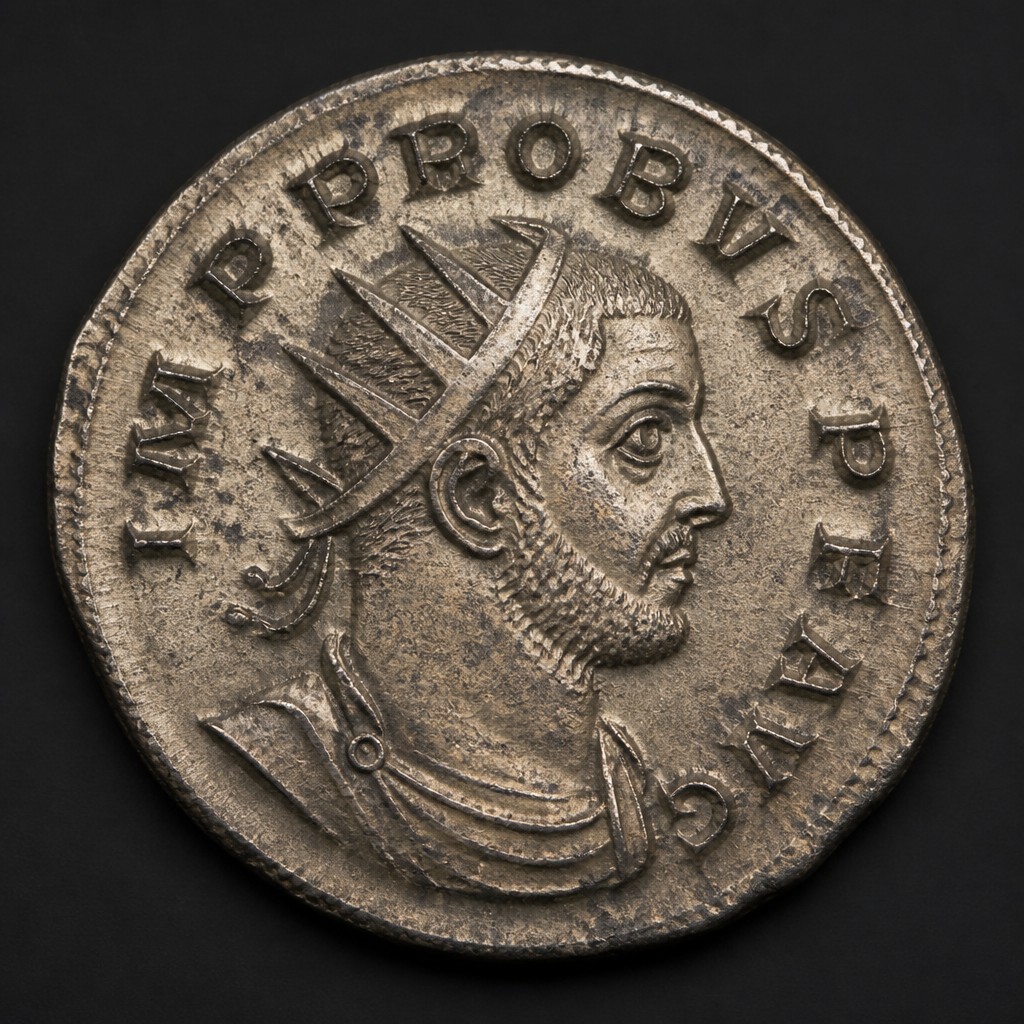
What Is the Probus Antoninianus?
Probus ruled from 276 to 282 AD, continuing Aurelian's currency reforms and working to secure the empire's frontiers. His coinage is noted for an unusually wide range of obverse portrait styles, including consular and military dress variations, making it a favorite among collectors interested in portrait variety.
Obverse Design and Inscriptions
The obverse shows a radiate bust in several forms - draped, cuirassed, or in ornate consular robes holding an eagle-tipped scepter; some issues show the emperor helmeted and holding a shield and spear. The legend reads IMP C PROBVS AVG or close variants.
Reverse Design and Inscriptions
Sol-themed types are especially abundant, continuing Aurelian's solar emphasis, alongside Adventus showing the emperor on horseback, Fides Militum, Concordia Militum, and Roma Aeterna seated in her temple.
Size, Weight, and Metal
The coin follows Aurelian's reformed standard, measuring roughly 21-23mm and weighing about 3.5-4.5 grams.
Mint Marks and Where to Find Them
An extensive network of mints operated under Probus, including Rome, Ticinum, Siscia, Serdica, Cyzicus, Antioch, and Lugdunum, each with its own exergue abbreviation plus officina letters or numerals, continuing the alloy-mark system introduced under Aurelian.
Telling It Apart from Similar Coins
Compare to his eventual successor Carus, whose portrait style is broadly similar in the reformed-era fashion; the legend name is the reliable way to tell them apart. Within Probus's own coinage, the many elaborate bust varieties are themselves a point of interest, and comparing a given bust type against catalogued varieties helps confirm it fits a documented style.
Judging Condition at a Glance
Because of the more elaborate portrait busts used in this reign, check whether fine details such as consular robe folds or shield decoration survive, as these add real interest even to an otherwise average-condition coin.
Authenticity Red Flags
The rarer, more elaborate bust varieties are more likely to attract altered or tooled fakes that convert a common bust type into a scarcer one. Compare any unusually unique bust details against documented bust-type varieties and check for tooling marks around the shoulders and arms, where alterations of this kind tend to occur.
Frequently asked questions
Why is Probus's coinage known for varied portraits?
His reign produced an unusually wide range of obverse bust styles, including consular robes, military dress, and helmeted types, more varied than most other third-century emperors' coinage.
What reverse theme is most common on Probus's coins?
Sol-themed reverses are especially abundant, continuing the solar emphasis introduced under Aurelian.
How do I tell Probus's coin apart from his successor Carus's coin?
Both share a broadly similar reformed-era portrait style, so the obverse legend naming the emperor is the reliable way to distinguish them.
What should make me suspicious about an unusual bust variety?
Compare it against documented bust-type varieties for Probus, and check for tooling marks around the shoulders or arms, since rare bust types are sometimes created by altering a common one.