
How to Identify the Prince Edward Island One Cent
Confirm an 1871 Prince Edward Island cent by its large-cent size, bronze color, left-facing Victoria obverse and a reverse naming the island with the date 1871.
Read the full Prince Edward Island One Cent encyclopedia entry →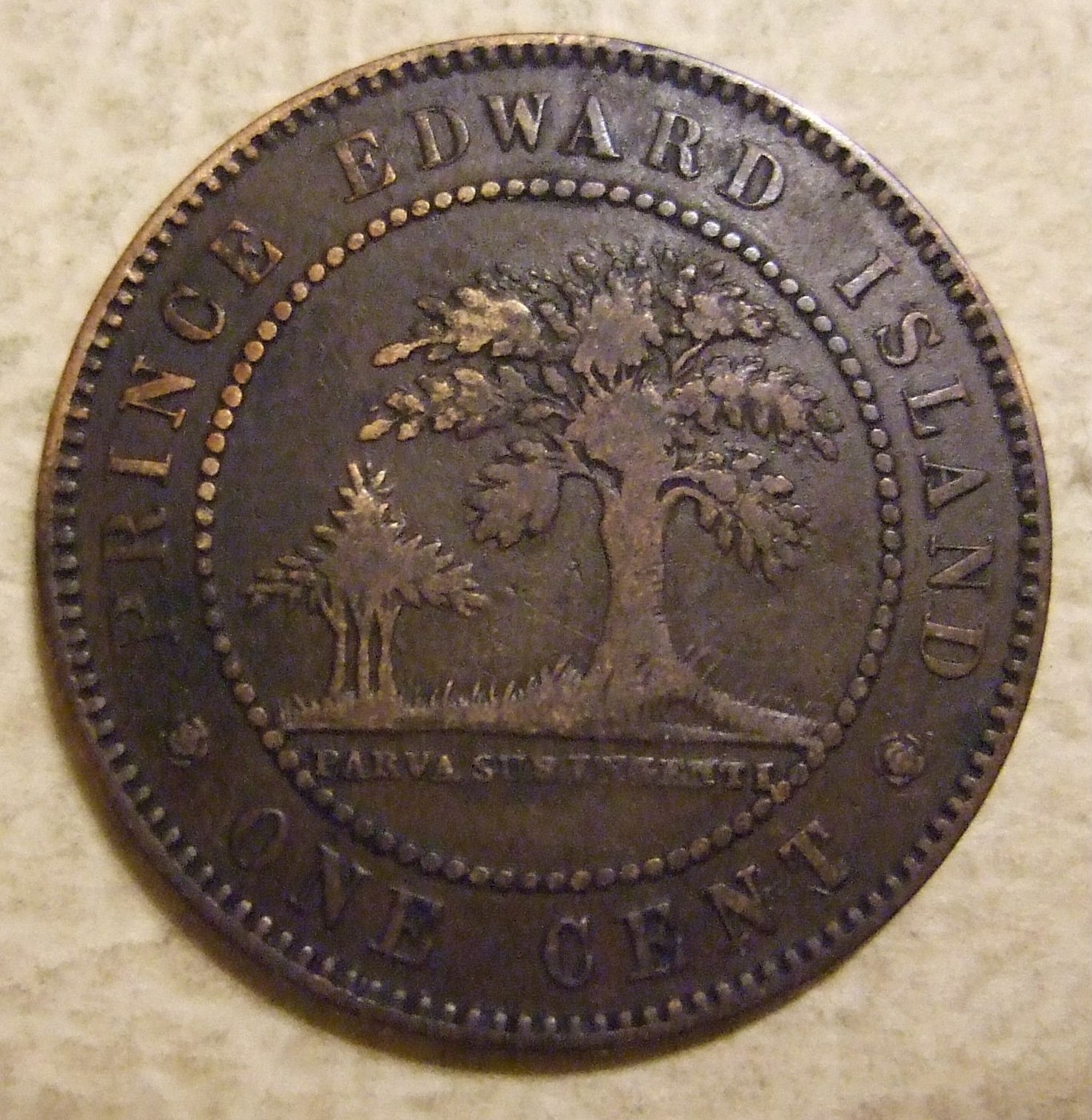
Start with size and metal. This is a bronze coin roughly 25 mm in diameter—the scale of a Victorian large cent, noticeably bigger than a modern small penny. Original surfaces show a warm brown or chocolate bronze tone rather than the white of silver or the yellow of brass. If a coin naming Prince Edward Island is much smaller or a different color, reconsider the identification.
Read the obverse. You should see a bust of Queen Victoria facing left, encircled by a legend styling her as queen; on this example it reads VICTORIA D.G. REGINA. The Victorian portrait fixes the coin firmly in the nineteenth century and rules out later monarchs.
Confirm on the reverse, which is the clinching diagnostic. The words PRINCE EDWARD ISLAND appear together with the date 1871 and an ornamental emblematic design around the denomination. Because the coin was struck in only one year, a genuine piece always shows 1871—there is no run of dates to distinguish. The explicit island name is the single most reliable identifier and separates this coin from Canadian, Nova Scotia, New Brunswick and Newfoundland cents of the same era.
Watch for look-alikes. Other pre-Confederation and early Dominion bronze cents share Victoria's portrait and a similar large-cent size, so it is easy to confuse them at a glance; the PRINCE EDWARD ISLAND legend on the reverse is what tells them apart. Do not rely on the portrait alone, since the same style of Victoria bust appears on several contemporary issues.
For authentication, measure the diameter against the large-cent standard, confirm the coin is bronze, and check that both the VICTORIA obverse legend and the full PRINCE EDWARD ISLAND / 1871 reverse legend are present and consistent. Look for even, age-appropriate wear rather than tooled or artificially reddened surfaces, and treat any piece that looks unusually pristine or that carries an unexpected date as a candidate for a specialist opinion before assuming it is genuine or high grade.
Frequently asked questions
What single feature confirms this coin?
The reverse legend PRINCE EDWARD ISLAND together with the date 1871. That island name is the most reliable diagnostic and separates it from other Victorian bronze cents of the period.
How do I tell it from a Canadian large cent?
Both are bronze and about the same size with a Victoria portrait, but only the Prince Edward Island cent names the island on its reverse and is dated 1871. Read the reverse legend rather than judging by size alone.
Should every genuine example be dated 1871?
Yes. The coin was struck in a single year, so a real piece always shows 1871. Any other date on a coin claiming to be this type is a warning sign to examine closely.
How can I check the metal and size?
It should be bronze with a warm brown tone and a diameter close to a large cent, about 25 mm. A white or brass-yellow color, or a much smaller size, points to a different coin.