
How to Identify the Poseidonia (Paestum) Poseidon Stater
An archaic incuse-style silver stater from Poseidonia (later Paestum) showing Poseidon striding with raised trident, one of the classic 'incuse' coinages of South Italy.
Read the full Poseidonia (Paestum) Poseidon Stater encyclopedia entry →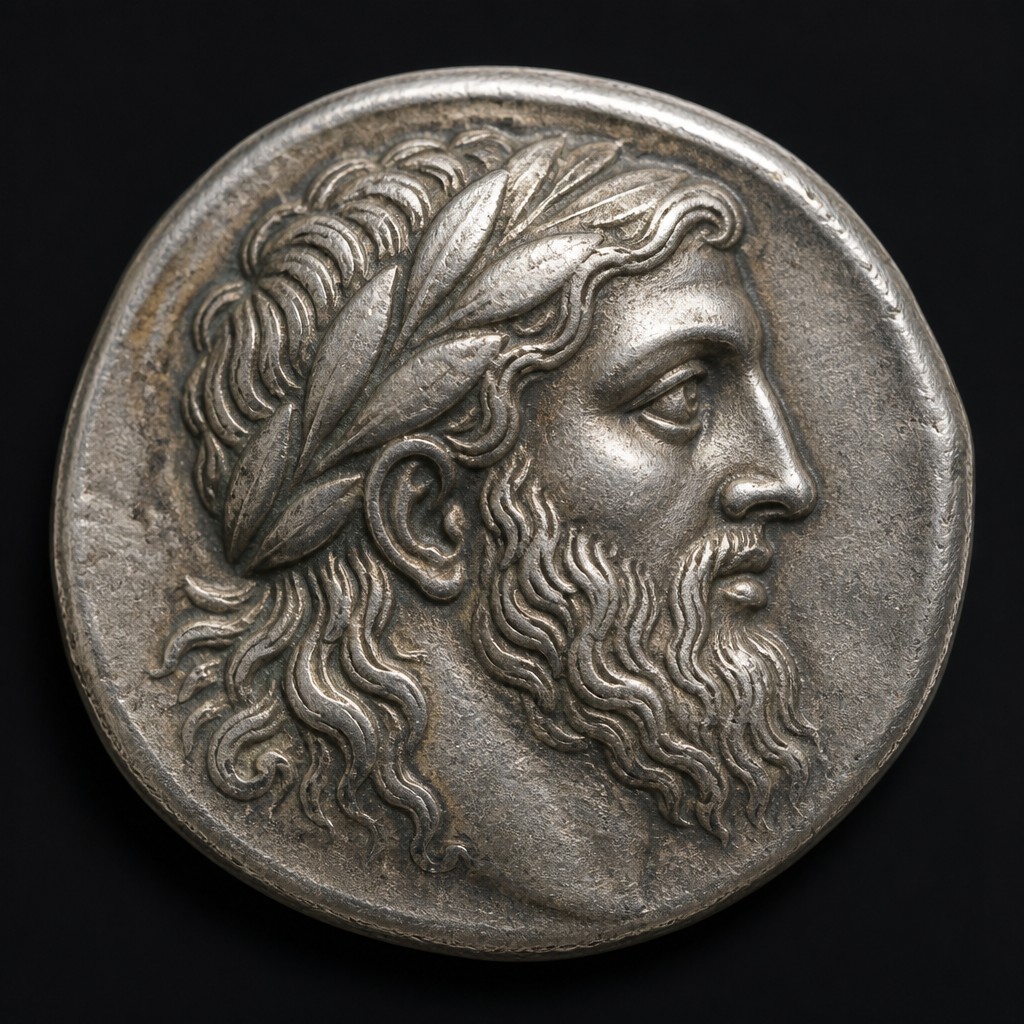
What the Coin Is
Poseidonia, later renamed Paestum by the Romans, was a Greek colony in Lucania named for its patron god Poseidon. Its earliest coinage, struck around the late sixth and early fifth centuries BC, belongs to the distinctive "incuse" fabric shared by several South Italian Achaean colonies, in which the reverse design is a mirror-image depression of the obverse relief rather than an unrelated separate type.
Obverse Design
The obverse shows Poseidon striding to the right, nude but for a chlamys (short cloak) draped over his extended left arm, with his right arm raised overhead brandishing a trident. The pose is dynamic and was engraved with considerable skill even on these early flans, capturing motion in a way typical of archaic Greek art.
Reverse Design
On the earliest "incuse" issues, the reverse is essentially the same striding Poseidon design rendered as an intaglio (sunken) mirror image, produced by the way the coin was struck between two dies of opposing relief. On later issues, as the mint moved toward normal relief coinage, the reverse instead carries a separate type such as a bull or dolphin, though these are less common than the classic incuse Poseidon staters.
Size, Weight, and Metal
These are silver staters (also referred to as nomoi) on the Achaean or Italiote standard, generally weighing in the range of 7.5 to 8 grams. The flans are broad, thin, and slightly dish-shaped or cupped, a physical byproduct of the incuse striking technique that collectors specifically look for as a sign of the correct fabric.
Mint Marks and Legends
Legends are typically abbreviated forms of the city's name, such as letters resembling POS or a similar short form, positioned around the figure. There is no separate mint mark system; the combination of the incuse fabric, the Poseidon pose, and the partial legend together confirm attribution.
Telling It Apart from Similar Coins
The incuse technique was shared by several nearby Achaean colonies including Sybaris, Kroton, Metapontion, and Kaulonia, so the key identifier is the specific subject: only Poseidonia uses the striding Poseidon with raised trident. Later Paestum coinage under Roman influence uses entirely different, non-Greek-style designs and should not be confused with this earlier Greek incuse series.
Judging Condition at a Glance
Because incuse coins are struck on thin, cupped flans, they are prone to bending, flan cracks, and edge splits, all of which reduce both the visual appeal and the completeness of the design. Look for a well-centered strike where both the raised obverse figure and the sunken reverse counterpart are clearly visible, since off-center strikes often lose part of the trident or the figure's legs.
Authenticity Red Flags
Modern casts of incuse coins are relatively common due to the design's fame, and they often fail to replicate the correct dish-shaped, cupped fabric accurately, appearing instead flat or oddly thick. Check for a crisp mirror relationship between the obverse relief and reverse incuse; a mismatch, blurriness, or a reverse that looks like a flat, undefined depression rather than a sharp negative image is a strong sign of a modern fake.
Frequently asked questions
What does 'incuse' mean on this coin?
It means the reverse design is a sunken, mirror-image version of the raised obverse design, produced by the unique two-die striking method used by several early South Italian Greek mints.
Why is Poseidon shown with a trident and cloak?
Poseidon was the city's namesake deity, and the raised trident and billowing cloak emphasize his role as god of the sea in a dynamic striding pose typical of archaic Greek engraving.
How can I tell this apart from other incuse coins like Sybaris or Kroton?
Check the central figure: only Poseidonia's incuse coinage shows the striding Poseidon with a raised trident, while Sybaris uses a bull and Kroton uses a tripod.
Why are these coins often bent or cracked?
The thin, cupped flans required by the incuse striking technique make these coins more fragile than typical relief-struck coins, so bending and edge cracks are common even on genuine ancient examples.