
How to Identify the Portuguese Real
Portugal's centuries-old currency unit used from the medieval period until 1911, identified by Roman numeral values and the crowned Portuguese shield.
Read the full Portuguese Real encyclopedia entry →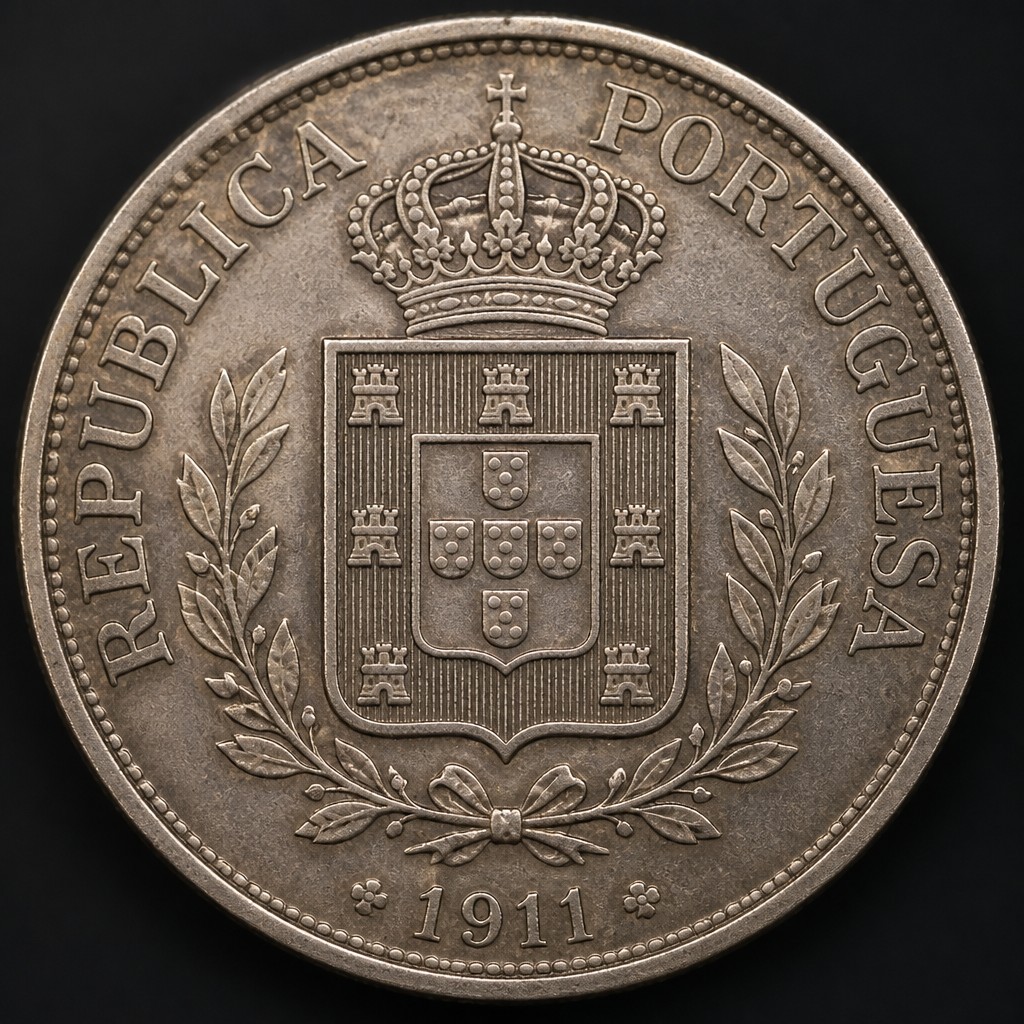
What Is the Portuguese Real?
The Real (plural: réis) was Portugal's monetary unit for roughly seven centuries, from the medieval period until it was replaced by the escudo in 1911. Because of this extraordinarily long production span, "real" coinage covers an enormous range of rulers, metals, sizes, and design styles, from small copper pieces to larger silver and gold issues.
Obverse Design
Most real-denominated coins display the Portuguese royal coat of arms — a shield charged with smaller shields (quinas), often crowned, and in many periods surrounded by a border of castles representing the historic kingdoms united under the Portuguese crown. The reigning monarch's name and title frequently appear in the legend around the shield.
Reverse Design
The reverse commonly shows either a plain cross, an armillary sphere (a navigational instrument that became a strong symbol of Portugal's Age of Discoveries, especially prominent under King John V), or simply the denomination spelled out in Roman numerals, such as "X" for 10 réis or "XX" for 20 réis, depending on the era.
Size, Weight & Metal
Because the real was minted for so long and in so many denominations, coins vary dramatically — from small, thin copper pieces of a few grams to substantial silver and gold issues. There is no single standard size or weight; always check the specific denomination and approximate date range against reference sources for that exact type.
Mint Marks
Portuguese real coinage was produced both in mainland Portugal (primarily Lisbon) and, for some periods, at colonial mints such as Rio de Janeiro during the era of Portuguese Brazil, when Brazilian réis coinage paralleled the mainland system. A mint mark or its absence, combined with the ruler's name and title, helps narrow down where and when a coin was struck.
Telling It Apart from Similar Coins
Because réis values were often expressed as very large numbers by the time of denomination reforms (for example, coins marked in thousands of réis), collectors sometimes confuse Portuguese real coins with Brazilian réis coinage from the same broad family, which shares design conventions but carries distinct Brazilian imperial or republican symbols after Brazil's independence in 1822. Always check the ruling authority named in the legend and any national emblem shown to confirm the country of origin.
Judging Condition at a Glance
On portrait or arms-based designs, check the crown detail and the fine lines of the shield's quinas — these are usually the highest-relief points and wear first. On cross or armillary sphere reverses, look at the fine lines of the design for sharpness versus a smoothed, rounded appearance indicating heavier circulation.
Authenticity Red Flags
Given the huge span of dates and types in this series, verify that the design elements, denomination format, and legend style are consistent with the specific period claimed — a coin combining features from different eras is a warning sign. Watch also for suspiciously uniform, artificially aged patinas on copper issues, which can be used to disguise modern casts or reproductions.
Frequently asked questions
How long was the real used in Portugal?
Roughly from the medieval period until 1911, when it was replaced by the escudo — one of the longest-running currency units in European history.
What does the armillary sphere on some réis coins represent?
It symbolizes Portugal's Age of Discoveries and became a prominent design element, especially under King John V.
How is the denomination shown on real coins?
Typically in Roman numerals, such as 'X' for 10 réis or 'XX' for 20 réis, depending on the specific coin.
Is there a single standard size for real coins?
No — because the currency was used for centuries across many denominations and metals, sizes and weights vary widely by specific type and date.
How do I tell a Portuguese real coin from a Brazilian réis coin?
Check the ruling authority and national emblem in the legend, since Brazilian réis coinage developed distinct imperial and republican symbols after Brazil's 1822 independence.