
How to Identify the Portuguese 1000 Reis
A silver crown-sized coin from the Kingdom of Portugal bearing the king's portrait and royal arms, commonly struck in the 19th century before decimalization.
Read the full Portuguese 1000 Reis encyclopedia entry →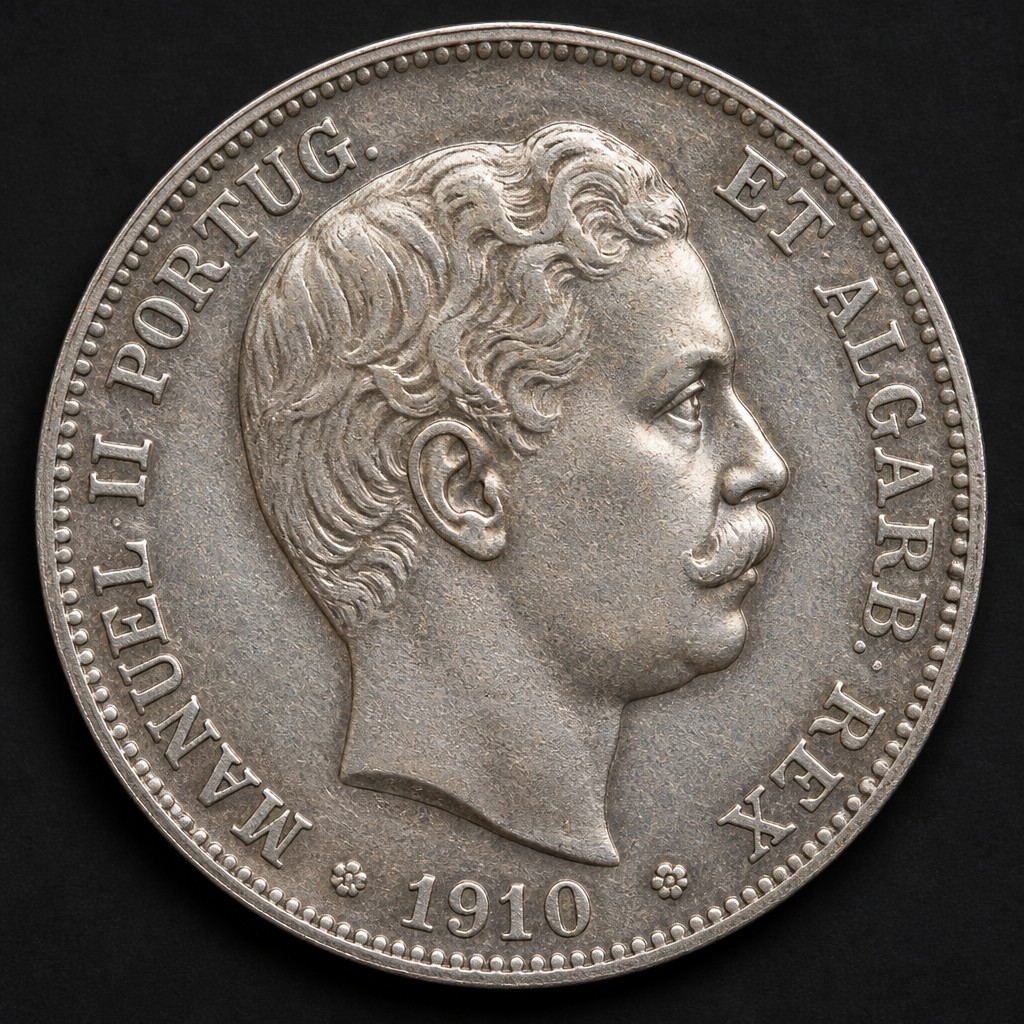
What This Coin Is
The Portuguese 1000 Reis is a silver coin issued by the Kingdom of Portugal, most commonly seen from the reigns of Pedro V, Luis I, and Carlos I in the second half of the 19th century. "Reis" was the old Portuguese monetary unit before the 1911 decimal reform introduced the escudo, and the 1000 Reis denomination represented the largest common silver coin of the pre-reform monarchy.
Obverse Design & Inscriptions
The obverse bears the profile portrait of the reigning king, generally bare-headed, encircled by his name and title in Latin form, such as "CAROLUS I D.G. PORTUGALIAE ET ALGARBIORUM REX." The date usually appears at the base of the portrait or in the legend.
Reverse Design & Inscriptions
The reverse displays the crowned Portuguese national shield with its distinctive quinas (small shields) and castle border, surrounded by a wreath, with "1000 REIS" spelled out or shown in numerals. Some earlier types show the arms within an ornate cartouche rather than a wreath.
Size, Weight, Metal, and Edge
These coins are substantial silver crowns, roughly 37 mm in diameter and weighing about 25 grams, in .916 fine silver for most 19th-century issues. The edge is typically reeded, though some series use a lettered edge; always compare edge style against the specific date and ruler.
Mint Marks and Where to Find Them
Most Portuguese 1000 Reis coins were struck at the Lisbon mint and carry no separate mint letter, but a small privy mark or assayer's symbol can appear near the date. Colonial Portuguese mints occasionally struck related denominations with distinct local marks, so confirm the legend reads "Portugaliae" for the mainland type.
Telling It Apart From Similar Coins
Spanish and other Iberian crowns of similar size can look superficially alike; the Portuguese shield with its unique quinas pattern and the "Reis" denomination are the clearest distinguishing features. Compare the specific king's name and portrait style to pin down the exact reign and approximate date range.
Judging Condition at a Glance
Examine the king's hair and the fine lines of the crown atop the shield, since these are the first points to wear smooth. A coin with strong, unbroken luster in the open fields and crisp lettering around the rim represents a higher grade than one with a flat, worn portrait, and collectors also check the small castle details on the shield border for sharpness.
Authenticity Red Flags
Be wary of coins with blurred or uneven lettering, incorrect weight, or a grainy surface suggesting a cast copy rather than a struck coin. Also check that the portrait style and legend wording are consistent with the stated king and date, since mismatches can indicate an altered or fantasy piece.
Frequently asked questions
What does 'Reis' mean on this coin?
Reis was the monetary unit of Portugal before the 1911 decimal reform replaced it with the escudo.
Which kings appear on the 1000 Reis coin?
Common portraits include Pedro V, Luis I, and Carlos I, identifiable by the name in the Latin legend around the bust.
What metal is the coin made of?
Most 19th-century 1000 Reis coins are struck in .916 fine silver.
How can I confirm the coin is genuine?
Check the weight against the roughly 25 gram standard and look for crisp, well-defined lettering rather than soft or blurry details typical of cast fakes.