How to Identify the Polish-Lithuanian Thaler
A large silver coin struck for the Polish-Lithuanian Commonwealth from the 16th through 18th centuries, identified by its royal portrait, combined Polish-Lithuanian coat of arms, and Latin royal titulature.
Read the full Polish-Lithuanian Thaler encyclopedia entry →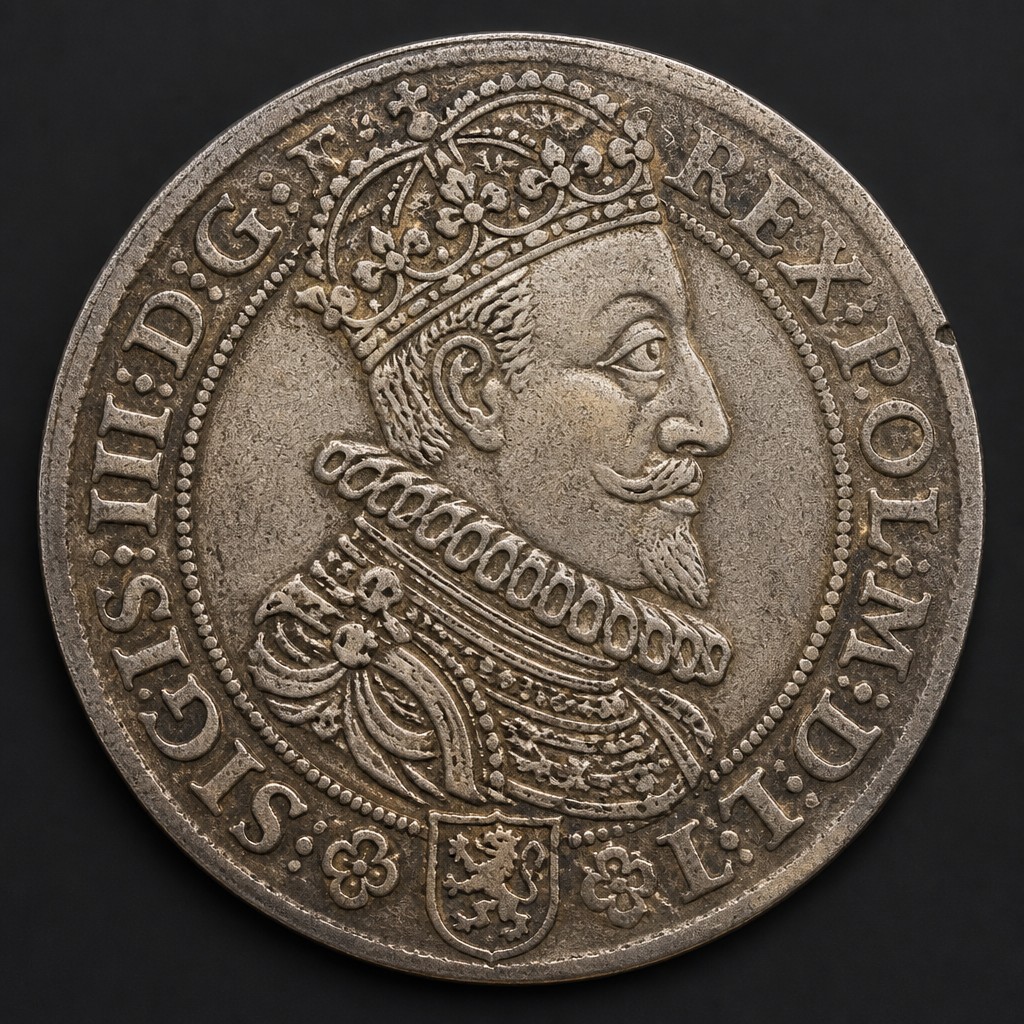
What It Is
The Polish-Lithuanian Thaler was the large silver coin denomination struck for the Polish-Lithuanian Commonwealth, the union of the Kingdom of Poland and the Grand Duchy of Lithuania, spanning roughly the 16th through 18th centuries. As with other European thalers of the era, it served as a trusted, high-value trade coin, struck under the authority of the reigning king, who ruled over both constituent states simultaneously.
Obverse Design & Inscriptions
The obverse typically shows a portrait bust of the reigning king in armor or ceremonial dress, facing left or right depending on the era and mint, surrounded by a Latin legend listing his name and royal titles, such as references to being King of Poland and Grand Duke of Lithuania together.
Reverse Design & Inscriptions
The reverse commonly displays a combined coat of arms representing the union, most notably featuring the Polish eagle alongside the Lithuanian mounted knight (the "Vytis" or "Pogon" symbol), often arranged together within a single elaborate shield or side by side. Additional legend text around the border continues the king's titulature or notes the mint and date.
Size, Weight, and Metal
These are large silver coins, generally comparable to other European thalers of the period at roughly 40-45 mm in diameter and around 28-29 grams, reflecting the broader thaler weight standard used across much of Europe for trusted, high-denomination trade coinage.
Mint Marks
Specific mints within the Commonwealth, such as Krakow, Vilnius (Wilno), Bydgoszcz, or Gdansk (Danzig), often placed identifying initials, small symbols, or the city name itself within the coin's legend or design field. A mintmaster's initials may also appear near the date, helping specialists pin down exactly where and under whose supervision a given piece was struck.
Telling It Apart From Similar Coins
Because the Commonwealth included semi-autonomous cities like Danzig (Gdansk) and Thorn (Torun) that struck their own city-specific thalers under royal authority, correctly identifying a specific piece often requires checking whether the design shows the full combined Polish-Lithuanian arms or a city's own municipal arms alongside the king's portrait. Comparing the exact coat-of-arms arrangement and legend wording to a reference catalog is the standard method for pinning down the precise issuing authority.
Judging Condition at a Glance
Examine the king's facial features and the fine details of the eagle and mounted knight for strike sharpness, since these raised elements are the first areas to smooth out with circulation wear. A well-preserved example shows a crisp, high-relief portrait and legible full legend around the rim, while a heavily circulated piece will show a flattened, low-relief design overall.
Authenticity Red Flags
As with other historic European thalers, both period counterfeits and modern reproductions of Polish-Lithuanian thalers exist in the collectibles market. Warning signs include weight or diameter that falls outside the expected range for genuine thalers of the claimed period, surfaces with a grainy or bubbled cast texture rather than crisp struck detail, and portrait or coat-of-arms styling that doesn't match documented examples from the specific king and mint claimed. Cross-checking the ruler's portrait style, the arms arrangement, and the legend wording against a specialized reference for Polish-Lithuanian coinage is the most reliable non-technical way to evaluate an unfamiliar piece.
Frequently asked questions
What union does this coin represent?
It represents the Polish-Lithuanian Commonwealth, the union of the Kingdom of Poland and the Grand Duchy of Lithuania under a single reigning king.
What symbols appear on the reverse?
The Polish eagle and the Lithuanian mounted knight (Vytis or Pogon) typically appear together, representing the joint union of the two states.
How big is a typical Polish-Lithuanian Thaler?
Most examples are large silver coins around 40-45 mm in diameter and roughly 28-29 grams, in line with the general European thaler standard.
Why might a coin from this period show only municipal arms instead of the full union arms?
Semi-autonomous cities like Danzig (Gdansk) and Thorn (Torun) struck their own thalers under royal authority, sometimes featuring their own city arms alongside the king's portrait rather than the combined Polish-Lithuanian arms.
How do I identify the specific mint of a Polish-Lithuanian Thaler?
Look for a mint city name, small identifying symbol, or mintmaster's initials within the coin's legend or design field, then compare against a specialized reference catalog.
Polish-Lithuanian Thaler identified by the community
Recent Polish-Lithuanian Thaler coins identified with Coin Identifier.