How to Identify the Philippines One Peso
A collector's guide to the U.S.-Philippine silver peso: the standing-Liberty obverse, eagle-and-shield reverse, the two size types, mint marks and fakes.
Read the full Philippines One Peso encyclopedia entry →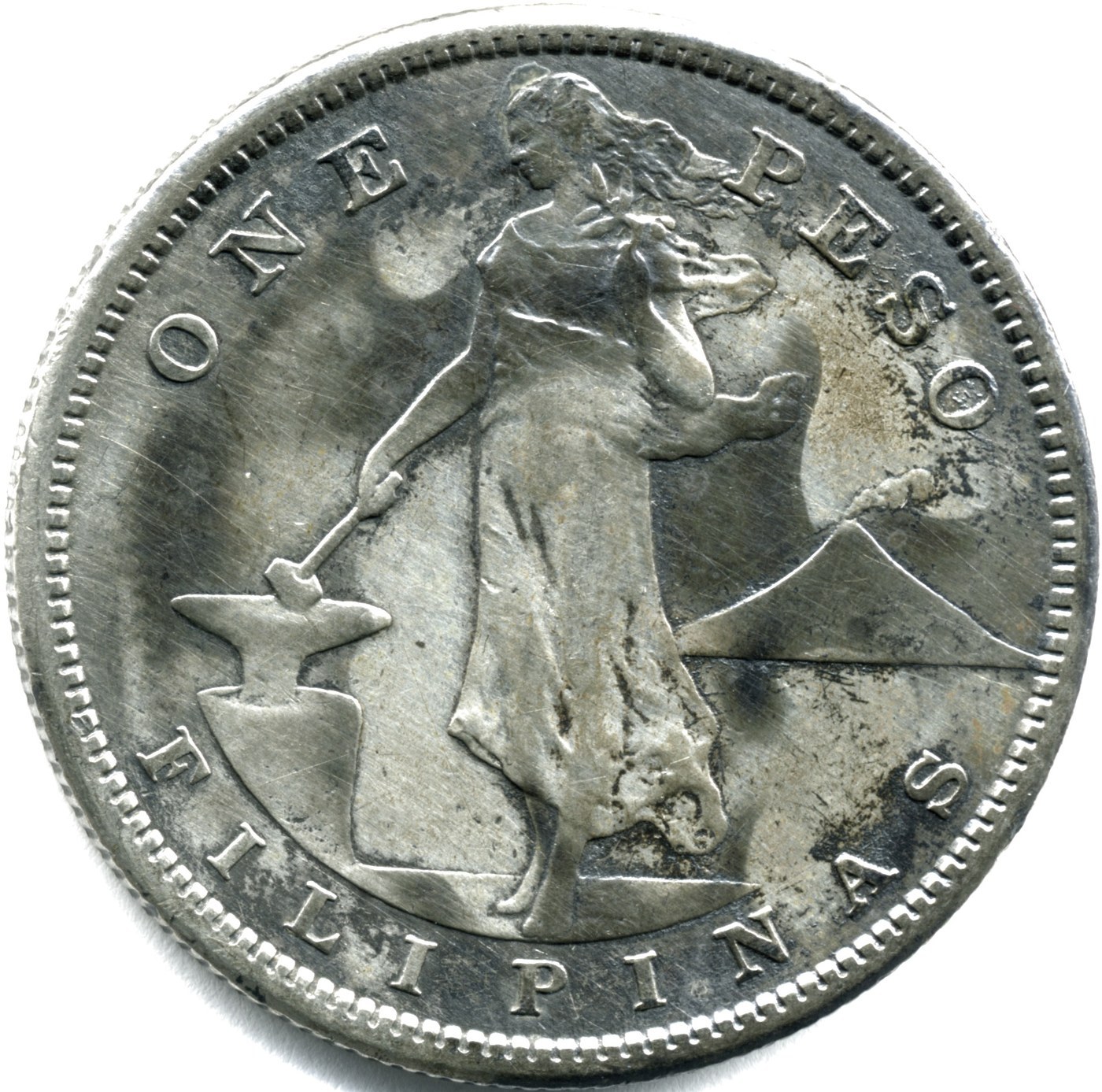
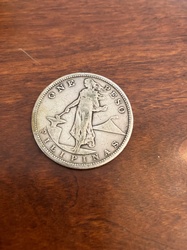
Start with the design pairing, which identifies the type at a glance. The obverse shows a standing female Liberty holding a torch aloft with a hammer and anvil at her side and a volcano behind, lettered "ONE PESO" and "PHILIPPINE ISLANDS" with the date. The reverse shows an eagle perched on a striped shield, ringed by "UNITED STATES OF AMERICA." A standing Liberty on one side and an eagle-over-shield on the other, at a one-peso value, points squarely to the U.S.-administration Philippine peso.
Determine which of the two size types you have, because it changes weight, diameter and silver content. Coins dated 1903 through 1906 are the larger, heavier, higher-fineness pesos; coins dated 1907 and later, like the photographed example, are visibly smaller and lighter with reduced fineness. Comparing the coin's diameter and weight against published figures for each type is the fastest way to place it and to sense-check authenticity.
Locate the date and mint mark. The date sits within the obverse legend. The mint mark, when present, is on the reverse near the eagle: "S" for San Francisco or "M" for Manila, with Philadelphia coins carrying no mark. Reading date and mint mark together is essential, since scarcity and value in this series depend heavily on the specific date-and-mint combination rather than the design alone.
Separate the peso from its look-alikes. The same standing-Liberty and eagle designs appear on the smaller silver denominations of the series—the fifty, twenty and ten centavos—so confirm the "ONE PESO" legend and the crown-sized diameter rather than relying on the imagery. Later Commonwealth-era Philippine coins and unrelated world crowns can also be confused at a glance; the "PHILIPPINE ISLANDS" plus "UNITED STATES OF AMERICA" legends and a date of 1903–1912 pin down this specific type.
Apply authentication cautions appropriate to a silver crown. Because the peso is silver and collectible, it is a target for counterfeits and alterations, including cast copies, added or altered mint marks and dates, and cleaned or artificially toned surfaces. Genuine coins are sharply struck with crisp lettering and a proper reeded edge; watch for casting seams, surface bubbles, soft detail, incorrect weight or diameter, and off-color metal. For scarce dates or high-value examples, third-party authentication and comparison with a standard reference are strongly advised.
Frequently asked questions
How do I tell the peso from the smaller centavo coins?
Read the denomination and check the size. The fifty, twenty and ten centavos share the same standing-Liberty and eagle designs but are smaller and are lettered with their centavo values. Only the peso reads "ONE PESO" and is crown-sized, so confirm both the legend and the diameter.
Where is the mint mark and what do the letters mean?
The mint mark sits on the reverse near the eagle. "S" indicates San Francisco and "M" indicates Manila, while coins with no mint mark were struck at Philadelphia. The date-and-mint combination often matters more to value than the design itself.
My 1907 peso looks smaller than another Philippine peso—why?
The series has two sizes. The 1903–1906 pesos are larger and heavier with higher silver fineness; the 1907–1912 pesos were deliberately reduced in size, weight and fineness after silver prices rose. A smaller 1907 coin is normal for the later type, not a sign of a fake.
How can I spot a counterfeit peso?
Genuine pesos are struck silver with sharp lettering and a clean reeded edge. Be wary of casting seams, surface bubbles, mushy detail, wrong weight or diameter, and added or altered dates and mint marks. For scarce dates or costly examples, use third-party authentication and compare against a reliable catalog.
Philippines One Peso identified by the community
Recent Philippines One Peso coins identified with Coin Identifier.