
How to Identify the Philippine Peso (US Administration, 1903)
A silver peso struck for the Philippines under United States administration, identified by an American eagle obverse and a reverse showing a standing figure with a hammer beside a volcano.
Read the full Philippine Peso (US Administration, 1903) encyclopedia entry →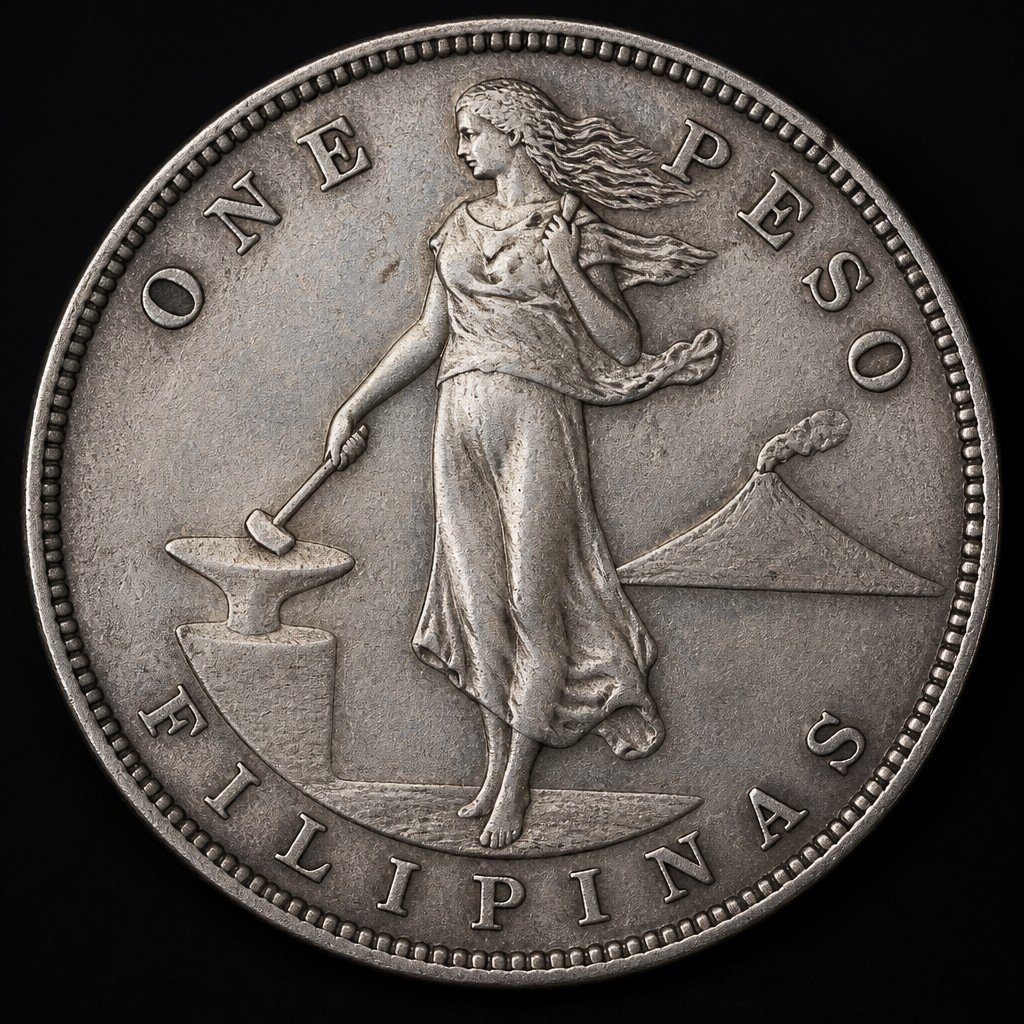
What This Coin Is
This peso was struck for circulation in the Philippines after the islands came under United States administration following the Spanish-American War, part of a coinage system introduced in the early twentieth century that combined American sovereignty symbols with imagery meant to represent the Philippines. It replaced earlier Spanish colonial peso coinage.
Obverse Design
The obverse features an American eagle with wings spread, perched above a shield, surrounded by the legend "UNITED STATES OF AMERICA," reflecting the islands' status as a US territory at the time.
Reverse Design
The reverse depicts a standing male figure, meant to symbolize the Filipino people, positioned near a volcano (representing Mount Mayon) with a hammer and anvil at his side, symbolizing labor and industry. The denomination and the Spanish-language designation for the Philippines appear around the design, reflecting the continued use of Spanish alongside English during the transitional colonial period.
Size, Weight, Metal, and Edge
The peso was struck in silver, sized similarly to other large silver dollar-type coins of the early twentieth century, with a reeded edge typical of machine-struck coinage of the period. Silver fineness was adjusted in later years of the series as global silver prices fluctuated, so coins from different years within the broader series can vary somewhat in specification.
Mint Marks and Where to Find Them
Coins in this series were struck at United States mint facilities (including the Philadelphia and San Francisco mints) as well as at a Manila mint established later in the series' run, with a small mintmark indicating the producing facility placed near the date on the reverse.
Telling It Apart from Similar Coins
This peso is distinguished from earlier Spanish-Philippine coinage by its American eagle obverse and English-language legend, and from later Philippine Commonwealth-era coinage (which shows different design updates reflecting evolving political status) by its specific "United States of America" wording and design details tied to the early administration period.
Grading at a Glance
On well-preserved coins, the eagle's feather detail and the standing figure's musculature and tool detail remain sharp, with a strong, even strike across the volcano and figure. Circulated examples show wear first on the eagle's breast and wing tips and on the highest points of the standing figure's body.
Authenticity Red Flags
Watch for coins with soft, indistinct detail in the eagle or standing figure, incorrect weight for the specific date and silver standard of that year, or a surface that looks cast rather than crisply struck. Because this series is popular with collectors, verifying the mintmark and specific date against known genuine combinations for the series is a useful identification step.
Frequently asked questions
Why does this coin show an American eagle?
The Philippines was under United States administration at the time this coinage was introduced, so US sovereignty symbols like the eagle appear on the obverse.
Who is the figure on the reverse supposed to represent?
A standing male figure symbolizing the Filipino people, shown with a hammer and anvil near a volcano to represent labor and industry.
Where were these pesos minted?
They were produced at United States mint facilities and, later in the series, at a mint established in Manila, indicated by a small mintmark near the date.
Does the silver content stay the same across the whole series?
No, the silver fineness was adjusted at points during the series' run in response to changing silver prices, so specifications can vary by year.