
How to Identify the Philippine 50 Centavos (Commonwealth, 1936)
A silver commemorative 50-centavo coin marking the 1935 establishment of the Commonwealth of the Philippines, featuring paired portrait busts on the obverse and an eagle-and-shield design on the reverse.
Read the full Philippine 50 Centavos (Commonwealth, 1936) encyclopedia entry →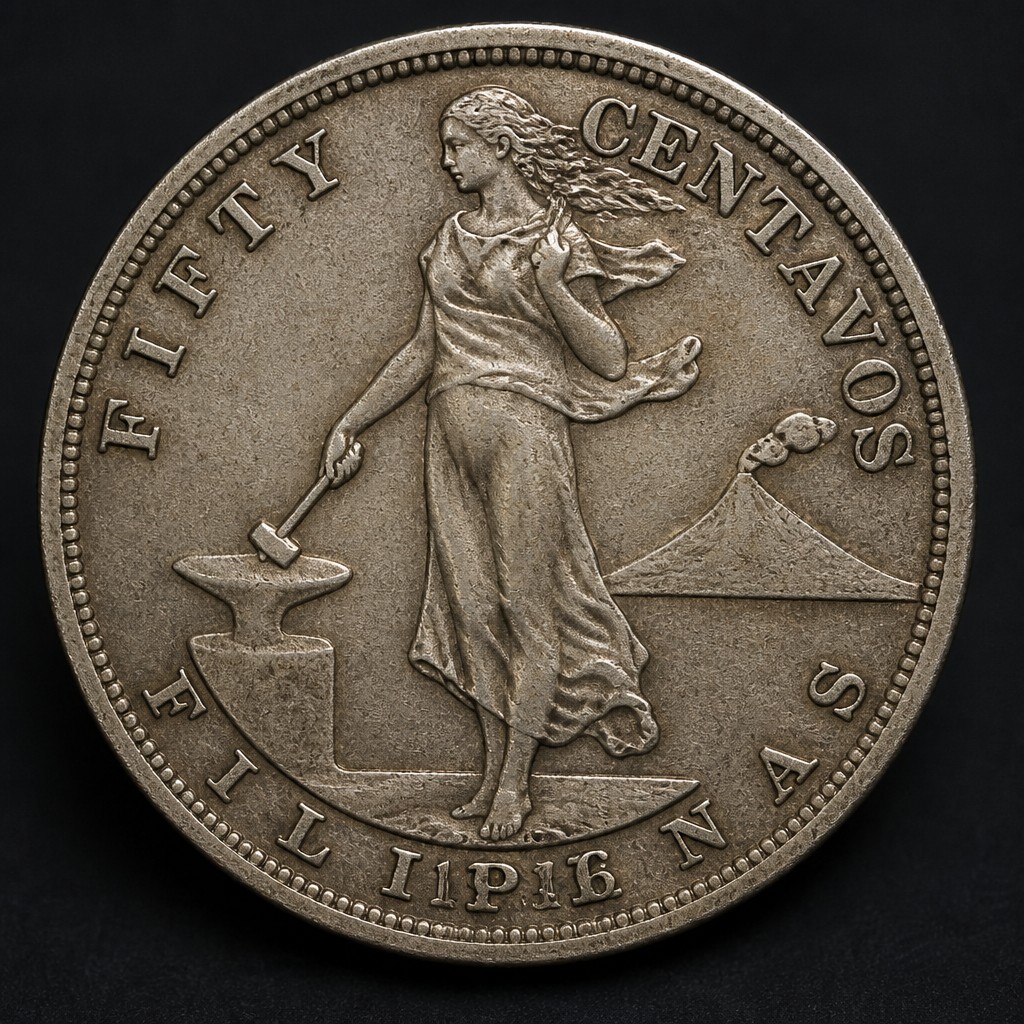
What It Is
This 50-centavo piece belongs to the special silver commemorative coinage dated 1936 that marked the establishment of the Commonwealth of the Philippines, a transitional self-governing status under continued American oversight that had been formally inaugurated in November 1935. Unlike the regular circulating coinage that followed later in the Commonwealth period, this issue was struck specifically to commemorate that political milestone.
Obverse Design & Inscriptions
The obverse features paired portrait busts of prominent leaders associated with the Commonwealth's founding — Philippine President Manuel L. Quezon paired with an American official of the period — arranged side by side, surrounded by lettering identifying the individuals and the commemorative occasion.
Reverse Design & Inscriptions
The reverse displays an eagle with wings either spread or at rest above or behind a shield, a design element shared with the broader family of Commonwealth-era Philippine coinage, along with the denomination, date, and "COMMONWEALTH OF THE PHILIPPINES" lettering around the border.
Size, Weight & Metal
As a silver 50-centavo piece, the coin is moderate in size, struck in silver at a fineness typical of Philippine silver coinage of the period, with a reeded edge consistent with contemporary machine-struck silver coins.
Mint Marks & Where to Find Them
Coins from this commemorative issue were struck at a U.S. mint facility, and where present, a small mint mark letter appears near the date on the obverse or reverse, following standard American minting conventions of the era since the Philippines was under U.S. sovereignty at the time.
Telling It Apart from Similar Coins
This commemorative issue is distinguished from the regular Commonwealth circulating 50-centavo coinage (which features different design elements, such as a standing or working figure motif rather than paired portrait busts) by its dual-portrait obverse and explicit commemorative wording. Comparing the obverse imagery directly is the fastest way to separate this special issue from ordinary circulating Commonwealth coinage of later years.
Judging Condition at a Glance
On well-preserved examples, the facial features of both portrait busts remain sharp and clearly separated, and the eagle's feather detail on the reverse is crisp. Circulated coins show smoothing on the highest points of the portraits' faces and the eagle's breast and wingtips, along with overall dulling of the surface.
Authenticity Red Flags
Because commemorative silver issues can attract counterfeiting, verify correct weight, diameter, and edge reeding against known specifications, and look closely at the portrait engraving quality — genuine strikes show fine, well-separated detail in the busts, while cast fakes often show mushy, indistinct facial features and a slightly grainy surface.
Frequently asked questions
What event does this coin commemorate?
It commemorates the establishment of the Commonwealth of the Philippines, inaugurated in November 1935 as a transitional self-governing status under U.S. oversight.
How is this different from the regular Commonwealth 50-centavo coin?
The regular circulating Commonwealth 50-centavo coinage uses a different obverse design rather than the paired portrait busts found on this special 1936 commemorative issue.
Whose portraits appear on the obverse?
The obverse pairs a portrait of Philippine President Manuel Quezon with an American official of the period associated with the Commonwealth's establishment.
Where would a mint mark appear on this coin?
If present, a small mint mark letter appears near the date, following standard U.S. minting practice since the coin was struck at an American mint facility.