
How to Identify the Philip the Arab Antoninianus
An identification guide to Philip the Arab's antoninianus (244-249 AD), including his Millennium 'Saeculares' animal reverse types and how to spot his family's related coins.
Read the full Philip the Arab Antoninianus encyclopedia entry →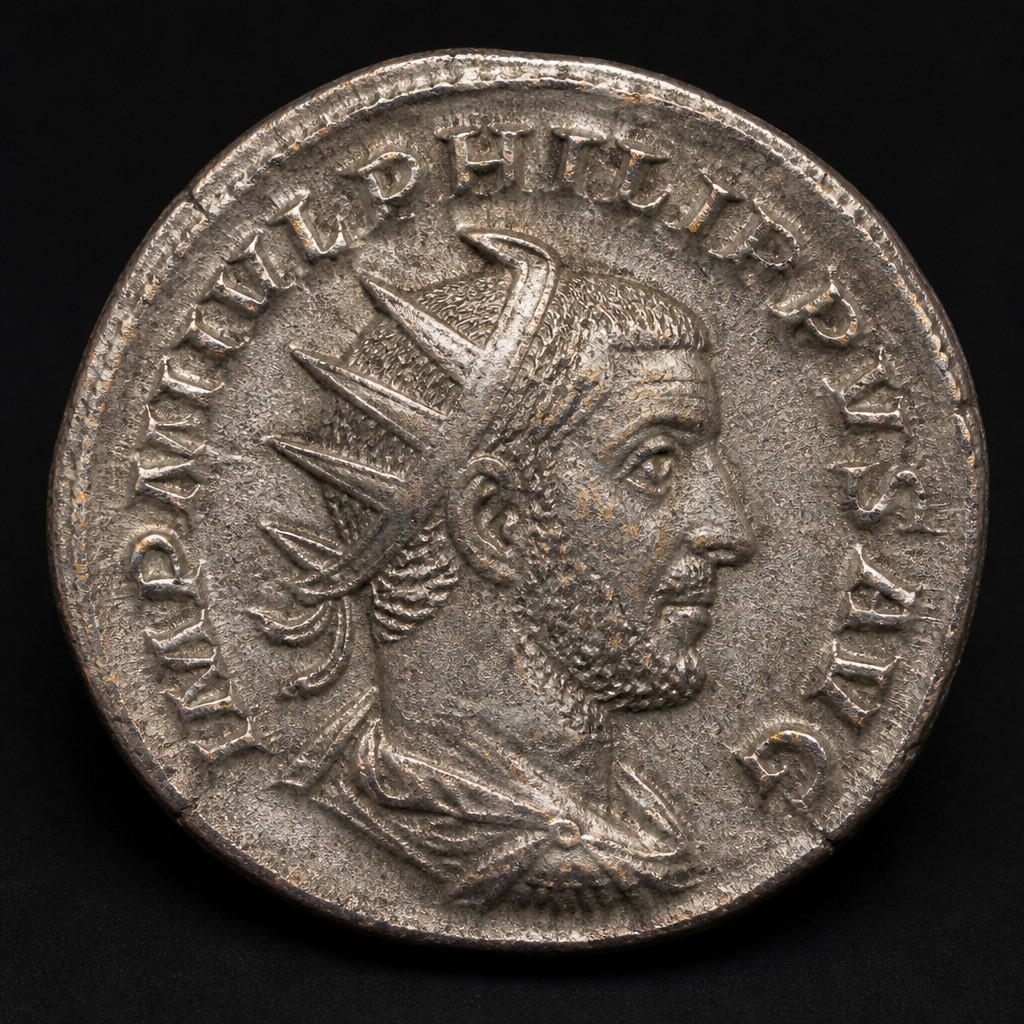
What Is the Philip the Arab Antoninianus?
Philip I, nicknamed "the Arab" for his origins in the Roman province of Arabia, ruled from 244 to 249 AD after the death of Gordian III. His reign is notable for Rome's grand Millennium celebrations (Ludi Saeculares) held in 248 AD to mark the city's traditional thousandth anniversary, which produced a distinctive and popular series of commemorative coin types.
Obverse Design and Inscriptions
The obverse shows a radiate, draped or cuirassed bust right with a mature, bearded face, quite different from the youthful Gordian III before him. The legend reads IMP M IVL PHILIPPVS AVG or the shorter IMP PHILIPPVS AVG.
Reverse Design and Inscriptions
The Saeculares Augg series is especially sought after, depicting a lion, elephant, antelope, hippopotamus, or the she-wolf suckling the twins Romulus and Remus. Other common reverses include Roma Aeterna seated in her temple, Annona standing with grain ears, Aequitas holding scales, and Pax.
Size, Weight, and Metal
The coin measures roughly 21-23mm and weighs about 4 grams, with silver content similar to Gordian III's issues, in the 40-50% range.
Mint Marks and Where to Find Them
Coins were struck at Rome and at Antioch; Antioch issues often show a slightly more angular portrait style, which can help distinguish mint of origin even without an explicit mint letter.
Telling It Apart from Similar Coins
His son Philip II shares similar features but is shown younger and beardless, with the legend M IVL PHILIPPVS CAES while serving as junior Caesar, later reading as Augustus once elevated - checking portrait age alongside the title (CAES versus AVG) helps sort father from son. His wife Otacilia Severa's coins show a diademed female bust resting on a crescent, an easy visual distinction. Compare the bearded, mature look to the following emperor Trajan Decius, whose coins are otherwise similar in style; the legend name is the deciding factor.
Judging Condition at a Glance
Wear appears first on the cheek, the tips of the beard, and the points of the radiate crown. On Saeculares reverses, check the animal's legs and head for detail loss.
Authenticity Red Flags
The popular Saeculares animal reverses are occasionally targeted by forgers producing cast or transfer-die copies; check for correct weight, natural sharp relief rather than a mushy cast texture, and accurate legend spelling, since forgers sometimes make small lettering errors.
Frequently asked questions
What makes Philip the Arab's coinage distinctive?
His Saeculares Augg series, struck for Rome's Millennium celebrations in 248 AD, features unusual animal reverses such as a lion, elephant, antelope, and hippopotamus, which are especially popular with collectors.
How do I tell Philip I's coin from his son Philip II's coin?
Check the title in the legend - PHILIPPVS CAES marks the son as junior Caesar, while PHILIPPVS AVG marks the senior emperor (or the son once he was elevated); the son is also shown younger and beardless.
Is the Otacilia Severa coin easy to confuse with Philip's?
No, her coins show a female diademed bust set on a crescent moon, a clear visual difference from either Philip's male portrait.
Why are the Saeculares animal reverses sometimes faked?
They are popular and visually striking, making them attractive forgery targets; check weight, strike sharpness, and legend spelling to help confirm genuineness.