
How to Identify the Philip II of Macedon Gold Stater
An ancient Macedonian gold coin struck under Philip II, identified by a laureate Apollo head on the obverse and a two-horse chariot with the king's name below on the reverse.
Read the full Philip II of Macedon Gold Stater encyclopedia entry →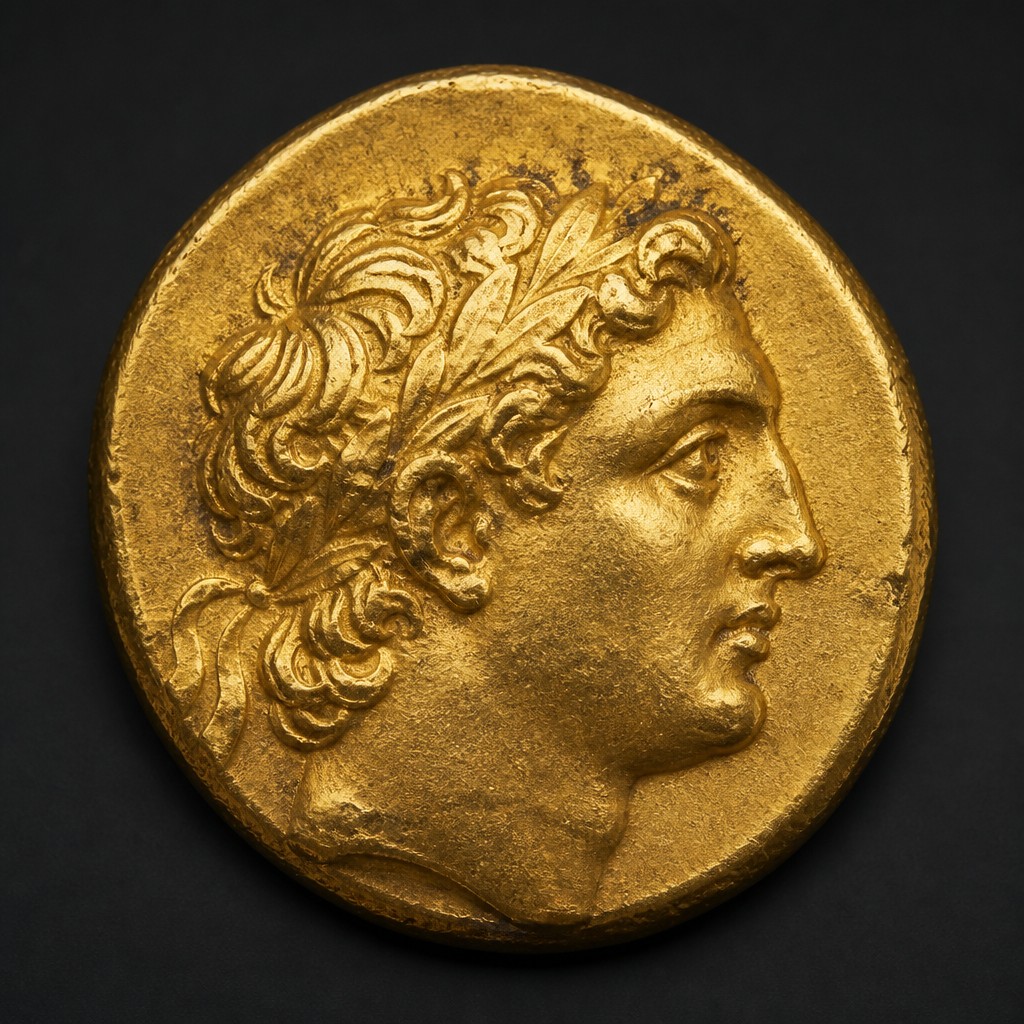
What This Coin Is
The gold stater of Philip II of Macedon was introduced during the reign of Philip II (359-336 BC), father of Alexander the Great, and financed by Macedon's newly acquired gold mines near Mount Pangaion. This coin type proved so influential and widely trusted that it continued to be struck by various mints, sometimes for decades after Philip's death, as a stable international trade currency across the Greek world.
Obverse Design
The obverse depicts the laureate head of the god Apollo facing right, rendered with a wreath of laurel leaves in his hair, reflecting Apollo's associations with prophecy, music, and the sun. The style is idealized and classical, consistent with high-quality Greek die engraving of the period.
Reverse Design
The reverse shows a two-horse chariot (a biga) driven by a charioteer, often interpreted as referencing Philip's own victories in chariot racing at the Olympic Games. Below the chariot appears the inscription "ΦΙΛΙΠΠΟΥ" (Greek for "of Philip"), and small control marks, letters, or monograms often appear in the field, representing different mints or officials responsible for that particular striking.
Size, Weight, and Metal
The coin is struck in gold, with a weight of approximately 8.6 grams, following the standard Attic weight system for gold staters of the period, and a diameter of roughly 18mm. As with other ancient hand-struck coins, there is no engineered edge design, and coins may show minor irregularities in shape from the striking process.
Identifying the Mint and Date
Because Philip II gold staters were struck at multiple mints across Macedon and, after his death, continued to be issued by his successors and other rulers who valued the design's trusted reputation, small control symbols, letters, or monograms in the reverse field are the primary tool for narrowing down where and roughly when a specific example was struck. There is no mint mark system like modern coinage — attribution relies on comparing these small field symbols and overall die style to catalogued examples.
Telling It Apart from Similar Coins
Alexander the Great's own gold staters (introduced later in his reign) typically show the head of Athena on the obverse and a standing Nike figure on the reverse, distinguishing them from his father's Apollo-and-chariot design. Because Philip II-type staters continued to be struck long after his death by other issuers who found the design useful as a recognized trade coin, style and control-mark analysis is often needed to determine whether a given example is an original Macedonian striking or a later, related issue.
Judging Condition and Authenticity
Condition is judged by the sharpness of Apollo's facial features and laurel wreath detail on the obverse and the clarity of the horses and chariot wheel on the reverse, along with overall centering within the flan. Given the value and historical importance of this coin type, and its long production history across multiple mints, authenticity should be verified through weight, gold purity, and die-style comparison with known genuine examples, ideally through a qualified ancient coin specialist before purchase.
Frequently asked questions
Why was this coin so influential?
Its gold content and consistent design made it a trusted international trade currency across the Greek world, leading other mints to continue striking the same type even after Philip II's death.
What god is shown on the obverse?
Apollo, depicted with a laureate (laurel wreath) head, reflecting his associations with prophecy, music, and the sun.
How is this different from an Alexander the Great gold stater?
Alexander's gold staters show Athena on the obverse and a standing Nike on the reverse, while Philip II's show Apollo and a two-horse chariot.
What do the small symbols on the reverse mean?
They are control marks, letters, or monograms identifying the specific mint or official responsible for that striking, since there was no formal mint mark system in antiquity.
What metal and weight should I expect?
Gold, weighing approximately 8.6 grams and measuring about 18mm in diameter, following the Attic weight standard for gold staters.