
How to Identify the Peruvian Libra de Oro (Gold Pound)
A Peruvian gold coin modeled directly on the British sovereign's weight and fineness, identified by its seated Liberty obverse and national coat-of-arms reverse.
Read the full Peruvian Libra de Oro (Gold Pound) encyclopedia entry →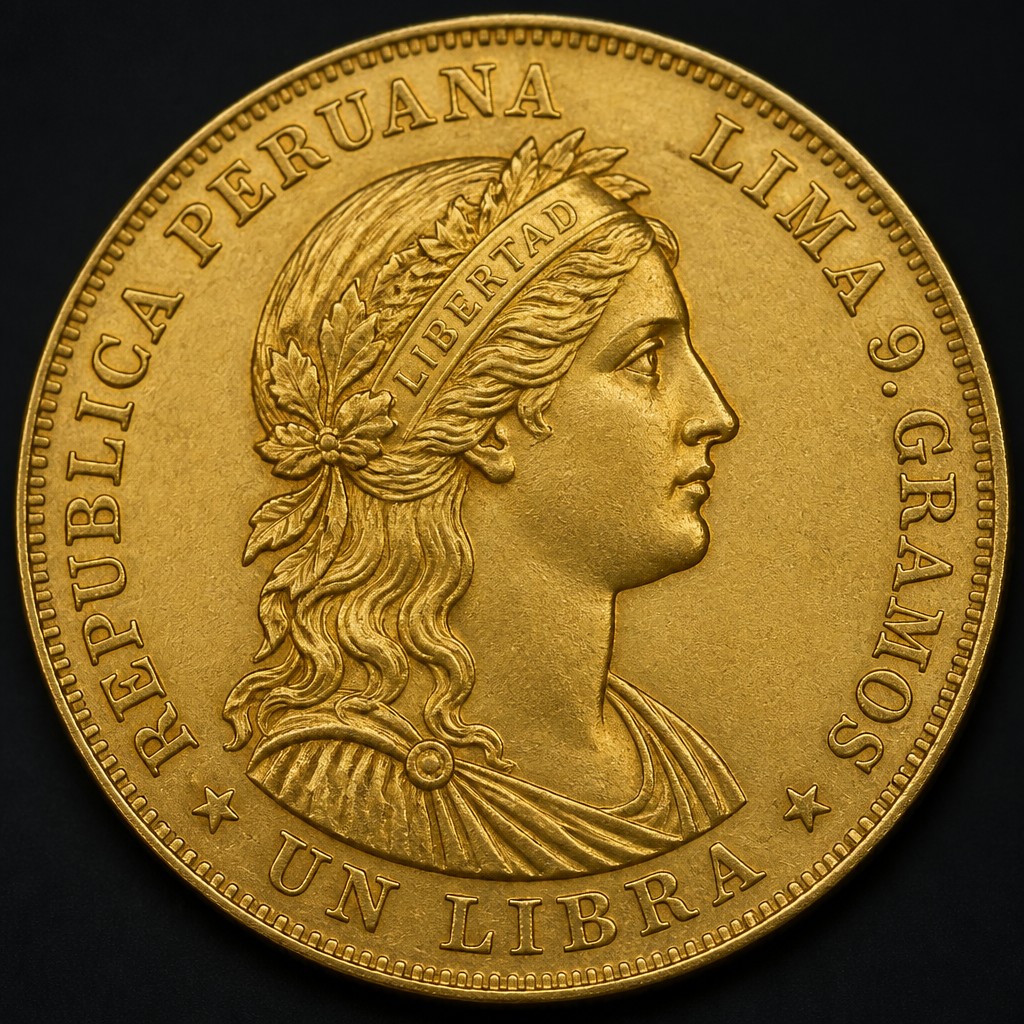
What It Is
The Libra de Oro, or Peruvian gold pound, was created to facilitate international trade by matching the exact weight and fineness of the British gold sovereign, a widely trusted trade coin at the time. It was struck from the late nineteenth century into the mid-twentieth century.
Obverse Design
The obverse features the same seated allegorical Liberty figure used on Peru's silver sol coinage, shown resting on a shield and holding a liberty pole, with the surrounding legend naming the Peruvian republic and the denomination.
Reverse Design
The reverse carries Peru's national coat of arms, showing the shield divided into sections representing a vicuña, a cinchona tree, and a cornucopia, often flanked by small flags, with "UNA LIBRA" and the date completing the design.
Size, Weight, and Metal
Matching the British sovereign standard exactly, this coin weighs about 7.99 grams in .917 fine gold, with a diameter of approximately 22 millimeters and a reeded edge.
Mint Marks
Because this coin was produced at a limited number of facilities (including striking arrangements tied to its sovereign-matching design), there is typically a single small mint identifier or none at all depending on the exact striking arrangement; the date and denomination wording are the primary identification points.
Telling It Apart from Similar Coins
Given its intentional similarity in size and fineness to the British sovereign, the clearest way to distinguish this coin is by its reverse design, the Peruvian coat of arms, rather than the sovereign's Saint George and dragon reverse. Checking the obverse legend for Peruvian wording also confirms the coin's origin.
Judging Condition
On sharply struck examples, the folds of the seated figure's robe and the fine lines of the coat of arms remain crisp. Because this coin was often held for its gold value rather than circulated extensively, many surviving examples show only light handling wear rather than heavy wear patterns.
Authenticity Red Flags
Given its gold content and resemblance to the widely counterfeited sovereign format, verify the exact weight, diameter, and edge reeding against the official specification. A coin that is slightly off in weight or diameter, or that shows soft, indistinct detail on the coat of arms or seated figure, should be treated with caution and checked further before assuming authenticity.
Historical Background
Peru was one of several nations in the late nineteenth and early twentieth centuries that created a gold coin matched to the British sovereign standard, a practical strategy for participating smoothly in international gold-based trade without needing separate conversion calculations. This shared standard means the Libra de Oro can sometimes be found in old accumulations of world sovereign-equivalent coins from several different countries.
Frequently asked questions
Why does this coin match the British sovereign so closely?
It was deliberately designed with the same weight and fineness as the British gold sovereign to make it easily accepted in international trade alongside that widely trusted coin.
How can I tell a Peruvian gold pound from a British sovereign?
Check the reverse design: the Peruvian coin shows the national coat of arms, while the British sovereign instead shows Saint George slaying a dragon.
What is the gold content of this coin?
It contains about 7.99 grams of .917 fine gold, matching the British sovereign standard.
Why do many surviving examples look lightly worn?
Because the coin was often saved for its gold value rather than used in everyday transactions, many pieces show only light handling wear rather than heavy circulation wear.