
How to Identify the Peru 8 Reales (Lima Mint)
A colonial Spanish silver 8 reales struck at the Lima mint, recognizable by its pillars-and-globes or royal portrait design along with distinctive Lima mint lettering.
Read the full Peru 8 Reales (Lima Mint) encyclopedia entry →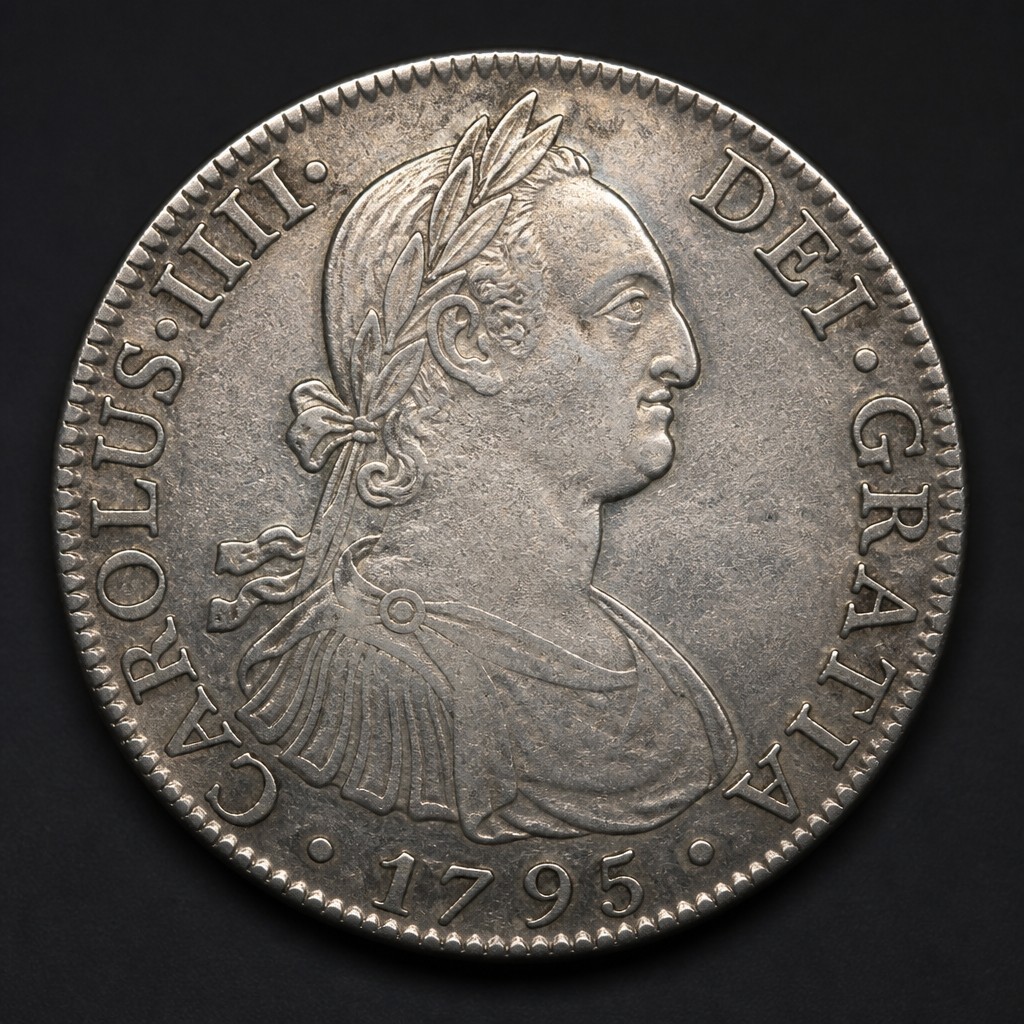
What It Is
The Lima mint was one of the principal Spanish colonial mints in South America, producing 8 reales silver coins for well over a century under Spanish rule, spanning both the earlier "pillar dollar" style and the later portrait-bust style before Peruvian independence.
Obverse Design
Earlier Lima 8 reales carry the crowned Spanish royal arms flanked by the Pillars of Hercules, a design often called the "pillar dollar." Later issues instead show a profile portrait bust of the reigning Spanish king, with his name and royal title in the surrounding legend.
Reverse Design
On pillar-type coins, the reverse shows twin crowned pillars flanking two globes above ocean waves, with a banner between them and a Latin motto referencing the reach of Spain's dominions across both hemispheres. On later bust-type coins, the reverse instead carries the crowned Spanish shield, with the mint and denomination indicated in the surrounding legend.
Size, Weight, and Metal
The coin is silver, weighing close to 27 grams, with a diameter around 38 to 40 millimeters depending on exact type and era. Fineness varied somewhat by period but generally falls in the range typical of Spanish colonial silver coinage of the time.
Mint Marks
Look for "LIMA" or an abbreviated Lima mint mark such as "LM" in the legend, paired with assayer initials that changed periodically. These marks confirm Lima as the mint of origin, distinguishing the coin from otherwise similar 8 reales struck at Mexico City, Potosí, or other colonial mints.
Telling It Apart from Similar Coins
Because Spain operated several colonial mints producing very similar 8 reales designs, the mint mark lettering is the definitive way to confirm a Lima origin rather than another mint. Collectors should also distinguish the earlier pillar-and-globes design from the later king's-portrait design, since both were used at different points within the same overall Lima 8 reales series.
Judging Condition
On well-preserved pillar-type coins, the crowns, pillars, and wave lines remain crisp, while on portrait-type coins, the king's facial features and hair detail are the focal points for grading. Circulated examples frequently show smoothing on the highest points of the crowns or the portrait's cheek and hair.
Authenticity Red Flags
Given the long-standing popularity and value of colonial 8 reales, check for correct weight, a legible and correctly formatted Lima mint mark, and design details that closely match reference examples. Blurry lettering, incorrect weight, or a design that mixes elements from different eras inconsistently are signs that a coin should be examined more closely before assuming authenticity.
Frequently asked questions
How do I confirm my 8 reales was struck at the Lima mint?
Look for 'LIMA' or the abbreviated 'LM' mint mark within the coin's legend, distinguishing it from coins struck at other Spanish colonial mints.
What is the difference between the pillar and portrait types?
Earlier Lima 8 reales show crowned pillars and globes on the reverse, while later issues instead show a portrait bust of the Spanish king, reflecting a design change over the coin's long production history.
Why do assayer initials matter?
Assayer initials changed periodically at each mint, so they help narrow down the specific period of striking alongside the mint mark.
How heavy is a genuine Lima 8 reales?
It typically weighs close to 27 grams in silver, though slight variation exists depending on the exact type and period.