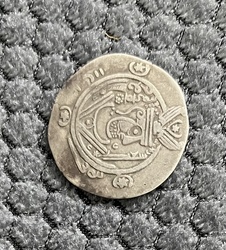
How to Identify the Persian Sassanid Silver Drachm
An ancient silver coin of the Sassanian Empire (224-651 CE), identified by its distinctive royal crown portrait, fire-altar reverse, and thin, wide-flan style.
Read the full Persian Sassanid Silver Drachm encyclopedia entry →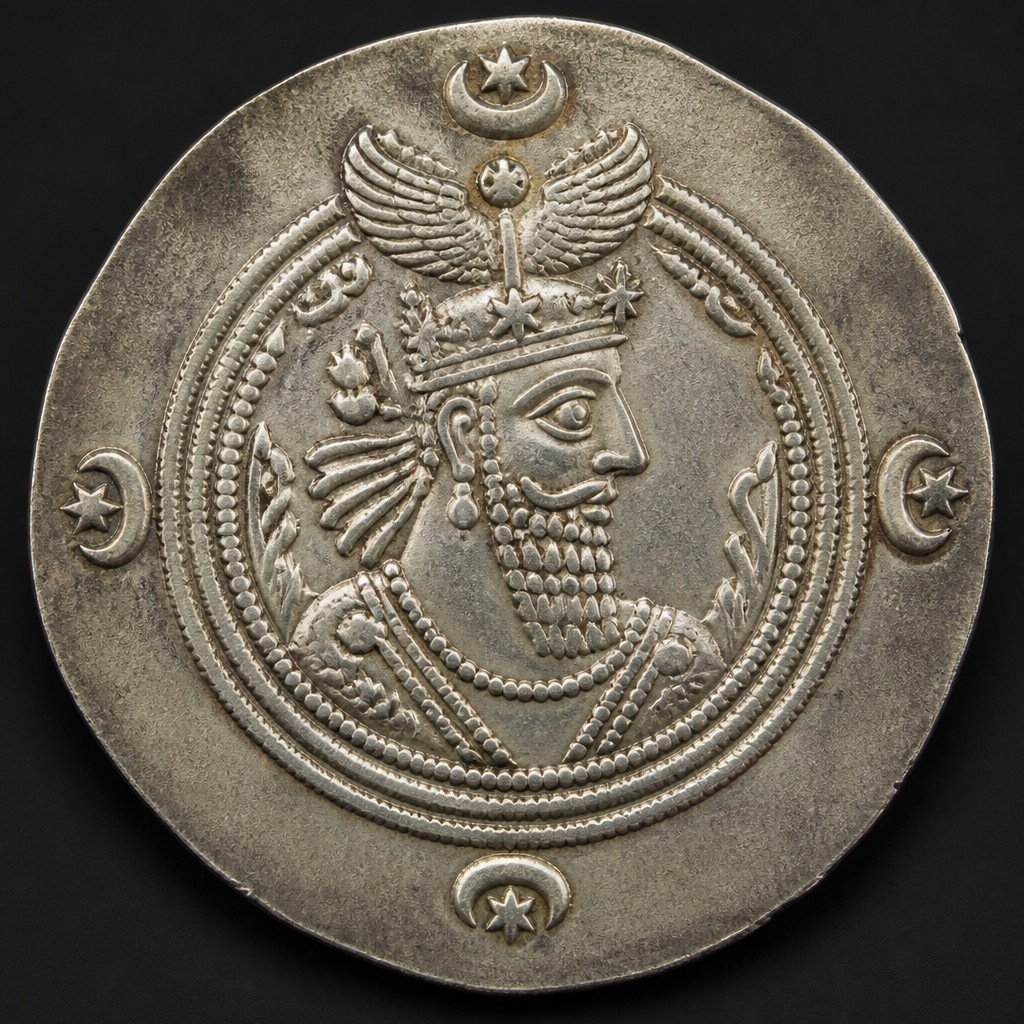
What Is the Sassanid Drachm?
Struck across the roughly four centuries of the Sassanian Persian Empire, the silver drachm was the empire's standard coin denomination, produced in enormous quantities by many kings, which makes it one of the more accessible ancient coin types for collectors today.
Obverse Design
The obverse shows a right-facing bust of the reigning Sassanid king wearing an elaborate, often winged or bejeweled crown. Each king wore a visually distinct crown design, making the crown itself the single most useful feature for identifying which specific ruler issued a given coin. Pahlavi-script inscriptions naming the king typically surround the portrait.
Reverse Design
The reverse consistently shows a Zoroastrian fire altar, usually flanked by two attendant figures, with a regnal year and mint abbreviation placed to either side of the altar's base, a design that remained remarkably consistent across the dynasty even as crown styles and portraits changed.
Size, Weight, and Metal
Sassanid drachms are notably thin and broad compared to many later coin traditions, typically struck on a wide, slightly dish-shaped (scyphate) silver flan. Silver fineness was generally high in the earlier centuries of the empire but tended to decline somewhat in later issues as the empire's finances came under strain.
Mint Marks
Mint abbreviations appear as short Pahlavi-script letter combinations placed beside the fire altar on the reverse, identifying which of the empire's numerous regional mints struck the coin; matching these abbreviations to reference lists is necessary since they aren't spelled out in full.
Telling It Apart from Similar Coins
Because the fire-altar reverse format stayed so consistent, the fastest way to distinguish one Sassanid king's coinage from another is the obverse crown: compare its shape, any wings, crescents, or stars attached to it, and the overall silhouette against reference images for each king's known crown type.
Condition and Grading at a Glance
Given the coin's age and thin, wide flan, look for how well the crown's fine details and jewels survive, along with the sharpness of the fire altar and attendant figures on the reverse. Centering is also important, since Sassanid coins were often struck slightly off-center on their broad flans.
Authenticity Red Flags
Ancient coins of this type are sometimes reproduced or modern-cast and sold as genuine ancient pieces, so look for the fine, sharp relief typical of authentic ancient striking rather than a soft, bubbly cast surface, and be wary of coins with unnaturally uniform, even wear that doesn't match the coin's claimed circulation history. Genuine drachms also show the natural, slightly irregular strike typical of hand-hammered ancient production, including occasional off-center strikes and flan cracks, rather than the perfectly uniform, mechanically consistent surface typical of a modern-made copy.
Frequently asked questions
How can I tell which Sassanid king issued my coin?
Compare the shape and details of the crown on the obverse portrait; each king wore a visually distinctive crown design that serves as the primary identifier.
What's always on the reverse?
A Zoroastrian fire altar flanked by two attendants, a design that remained consistent throughout most of the dynasty's coinage.
Why is the coin flan thin and dish-shaped?
This broad, slightly curved (scyphate) flan style was characteristic of Sassanid minting technique throughout the empire's history.
How do I read the mint mark?
Look for a short Pahlavi-script abbreviation placed beside the fire altar's base and compare it against published mint-abbreviation reference lists.
Persian Sassanid Silver Drachm identified by the community
Recent Persian Sassanid Silver Drachm coins identified with Coin Identifier.