
How to Identify the Persian Gold Toman (Qajar)
A gold coin of Qajar-dynasty Persia, typically featuring the lion-and-sun emblem or a shah's portrait, along with Persian inscriptions naming the ruler and mint.
Read the full Persian Gold Toman (Qajar) encyclopedia entry →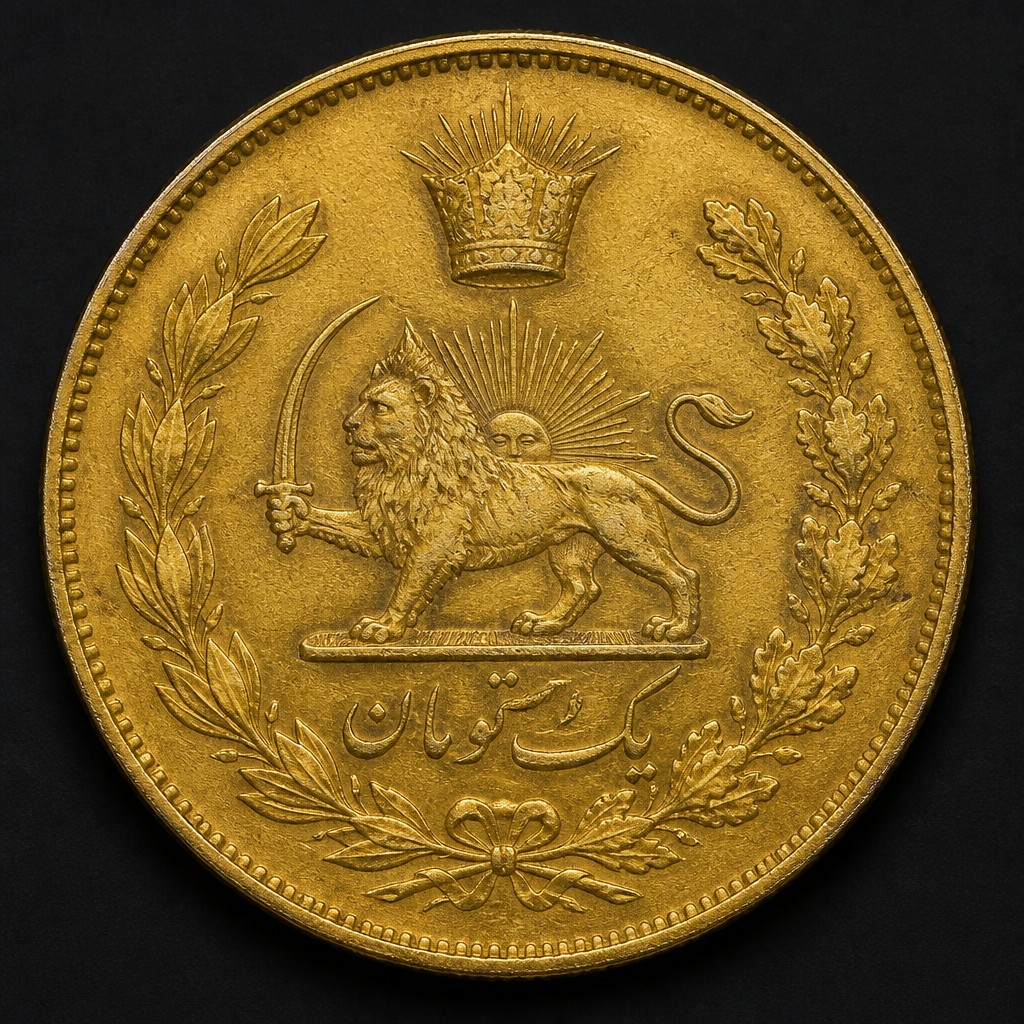
What Is the Qajar Gold Toman?
The toman was the principal gold denomination of Persia under the Qajar dynasty (roughly 1789-1925), used both as circulating high-value currency and as a store of wealth, with designs and portrait styles evolving considerably across the many shahs who reigned during this period. Because the dynasty spanned well over a century, toman coinage documents a gradual shift from traditional Islamic-style emblematic designs toward more Western-influenced portraiture as Persia's contact with Europe deepened.
Obverse Design
Earlier Qajar gold tomans typically feature the Lion and Sun (Shir-o-Khorshid) national emblem of Persia rather than a ruler's portrait, while later issues, particularly from the reign of Naser al-Din Shah and his successors, introduced Western-influenced portrait busts of the shah, reflecting increased European contact and minting technology in the late 19th century.
Reverse Design
The reverse carries Persian-language inscriptions naming the ruling shah, the mint city, and the date, generally in the Islamic Hijri calendar, often set within a decorative floral or scroll border typical of Qajar-era die engraving.
Size, Weight, and Metal
Qajar gold tomans were struck at a high gold fineness typical of the era's Persian coinage, with weight and diameter varying by specific date and mint since standards were not always perfectly uniform across the dynasty's long production history. Always compare a given coin to reference examples of the same date and denomination.
Mint Marks
The mint city is named in the Persian inscription on the coin itself rather than abbreviated into a separate mint letter, so reading the inscription is the way to confirm where a coin was struck; Tehran and other regional mints appear across the dynasty's history.
Telling It Apart from Similar Coins
Because Qajar coinage changed considerably in style across more than a century of production, compare the obverse design (lion-and-sun emblem versus portrait bust) and the calligraphic style of the inscriptions to place a coin within a specific shah's reign, and be careful not to confuse tomans with the smaller, more common silver kran denomination from the same dynasty.
Condition and Grading at a Glance
On portrait issues, check the shah's facial features and any crown or medal detail for wear; on lion-and-sun issues, examine the lion's mane, the sun's rays, and the surrounding inscription for sharpness, since these fine details wear down first with circulation. Because gold coins of this type were often kept as savings rather than spent in everyday transactions, many surviving examples show comparatively light wear relative to their age.
Authenticity Red Flags
Given the coin's gold value, verify weight and diameter against known specifications for the specific date and mint, and examine the Persian calligraphy for correct, fluid formation. Reproductions sometimes render the script stiffly or introduce inconsistencies in the lion-and-sun design's proportions.
Frequently asked questions
What is the Lion and Sun symbol?
It was Persia's national emblem for centuries, showing a lion with a sword in front of a rising sun, commonly used on Qajar-era coinage before portrait designs became more common.
When did shah portraits start appearing on Persian gold coins?
Portrait-style busts became more common in the later 19th century, particularly under Naser al-Din Shah, as European-influenced minting techniques spread.
How is the toman different from the kran?
The toman was the larger gold denomination, while the kran was a smaller silver coin used for everyday transactions.
What calendar is used for dating?
Qajar coinage is generally dated using the Islamic Hijri calendar rather than the Gregorian calendar.