
How to Identify the Persian Gold Daric
A guide to the Achaemenid Empire's gold daric, covering its archer-king obverse, incuse reverse, weight standard, and how it differs from the silver siglos.
Read the full Persian Gold Daric encyclopedia entry →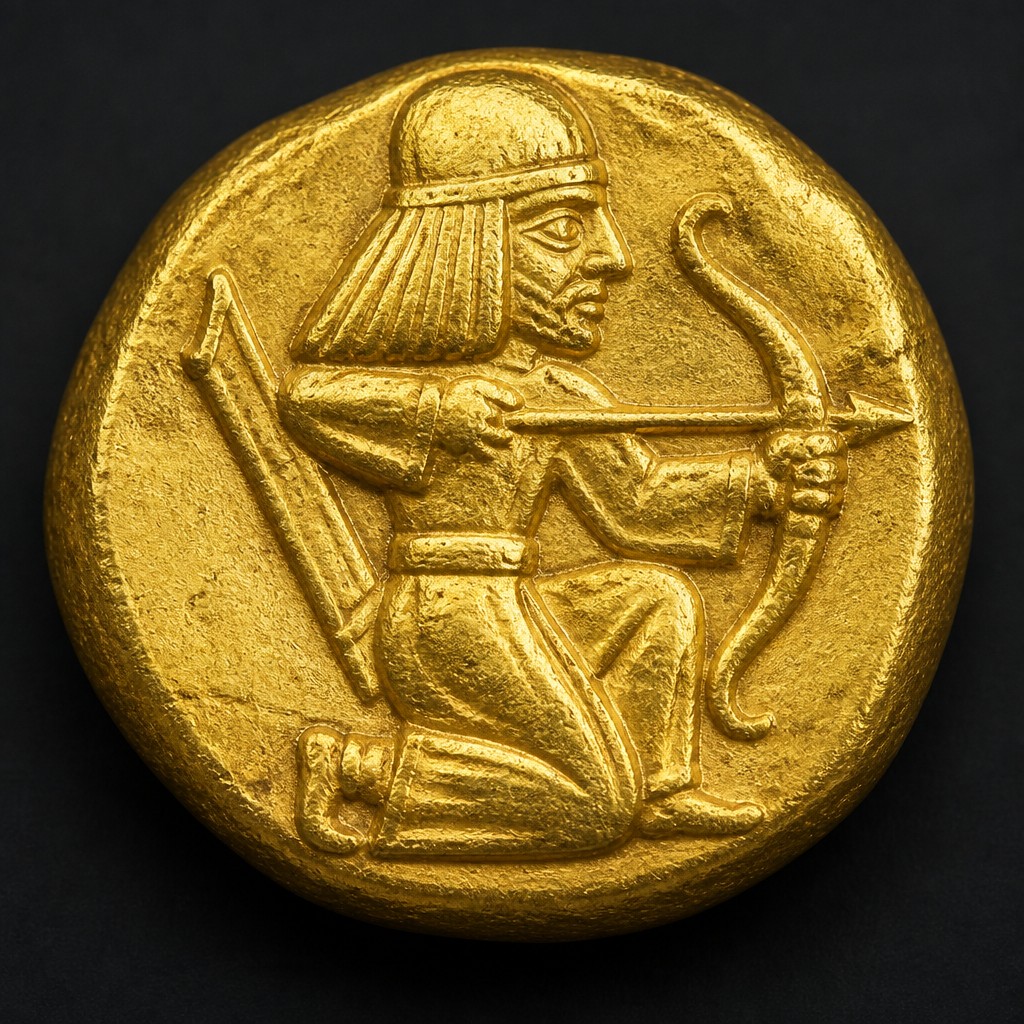
What Is the Coin
The daric is a gold coin of the Achaemenid Persian Empire, introduced under Darius I (reigned 522-486 BC) and continued by his successors. It was among the most widely trusted and traded gold coins of the ancient Near East and eastern Mediterranean for roughly two centuries.
Obverse Design
The obverse depicts the Persian Great King shown in a running or kneeling posture, typically holding a bow in one hand and a spear or arrow in the other, wearing a crown and royal dress. This "royal archer" image became closely associated with Persian gold coinage. There is no lettering on the coin.
Reverse Design
The reverse shows only an irregular, oblong incuse punch mark, the result of the striking process using a simple punch rather than an engraved reverse die, consistent with other early ancient coinages.
Size, Weight, Metal & Edge
The daric is struck in gold and weighs approximately 8.4 g, with an irregular, thick, bean-shaped flan rather than a perfectly round, flat modern coin shape. There is no edge design, as these are hand-struck ancient coins.
Identifying Features in Place of Mint Marks
Darics carry no inscriptions or conventional mint marks. Attribution and dating rely on stylistic details of the archer figure (such as the specific pose and the treatment of the crown and robe folds), which numismatists have grouped into a sequence of types spanning different reigns.
Telling It Apart From Similar Coins
The gold daric's silver counterpart, the siglos, shares the same archer design but in silver and at a much lighter weight, so metal alone distinguishes the two denominations. The daric should also not be confused with the earlier Lydian Croeseid, which uses a lion-and-bull design rather than an archer, or with later Hellenistic gold coins that introduced portraiture and Greek lettering after Alexander the Great's conquests ended Achaemenid rule.
Grading and Condition at a Glance
Because darics were struck by hand with simple dies, off-center strikes and weak areas of detail are common and expected. Collectors look for a clear, well-centered archer figure with visible facial features, crown, and leg positioning, along with a full, unclipped flan of the correct weight.
Authenticity Red Flags
As with other high-value ancient gold types, unusually crisp or "too clean" surfaces lacking natural wear, incorrect weight, or an archer pose that does not match documented stylistic groups are warning signs. A flan shape or thickness that looks too regular and machine-like is also inconsistent with the hand-struck production methods used at the time. Because ancient gold coinage is a specialized collecting area prone to forgery, careful comparison to well-documented reference examples and expert opinion are especially valuable before assuming authenticity.
Frequently asked questions
Who introduced the daric?
Darius I of the Achaemenid Persian Empire, in the late 6th century BC.
What image appears on the obverse?
The Persian king shown as an archer, in a running or kneeling pose, holding a bow and spear or arrow, with no lettering.
What is the difference between a daric and a siglos?
Both share the archer-king design, but the daric is gold and heavier while the siglos is the silver denomination and much lighter.
Does the daric have a mint mark?
No, it carries no inscriptions; attribution relies on stylistic differences in the archer's pose and dress across reigns.