
How to Identify the Pergamon Cistophoric Tetradrachm
A distinctive silver cistophorus from the Attalid kingdom of Pergamon, recognizable by its sacred cista mystica obverse and serpent-entwined bow case reverse.
Read the full Pergamon Cistophoric Tetradrachm encyclopedia entry →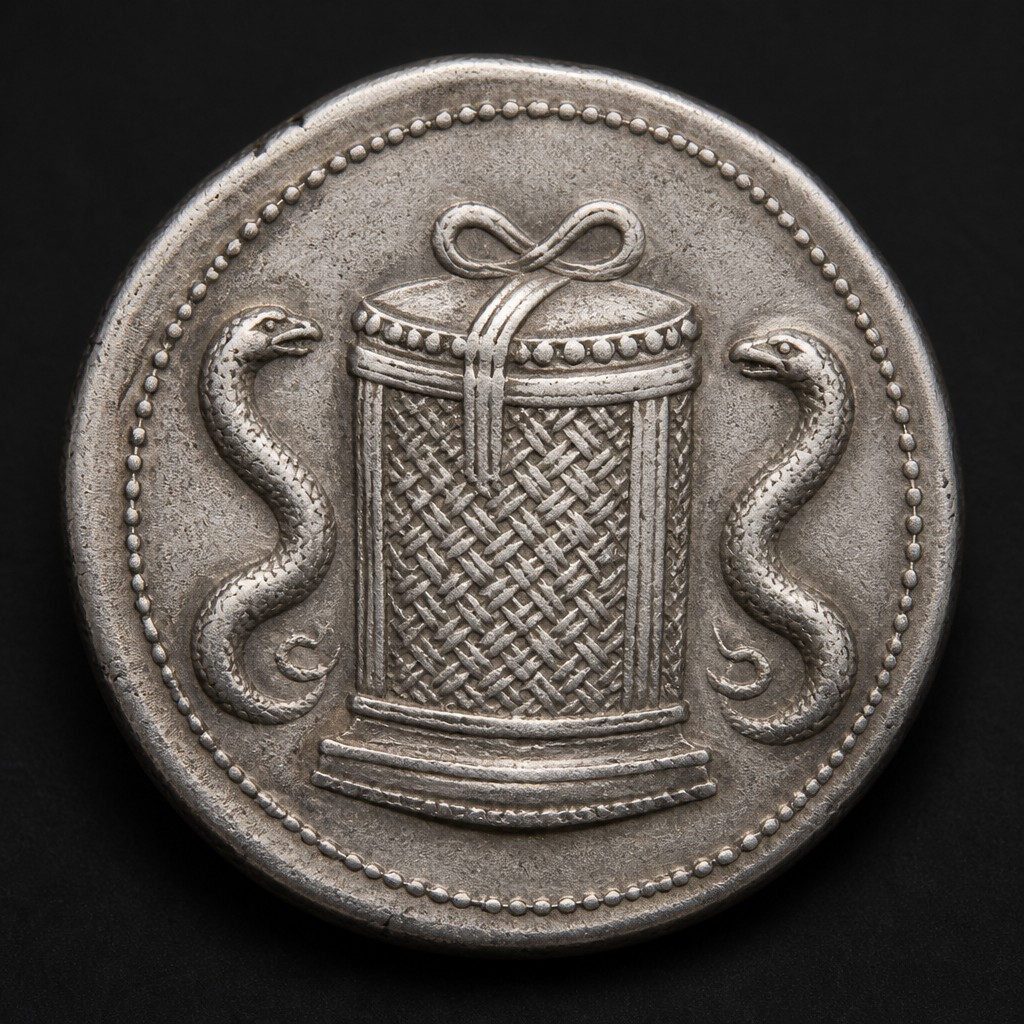
What the Coin Is
The cistophorus was a unique silver coinage introduced by the Attalid kings of Pergamon in the mid-second century BC, used across their kingdom in Asia Minor and continuing in circulation for centuries afterward, including under early Roman provincial administration. Unlike most royal Hellenistic coinage, cistophori generally omit a ruler's portrait, giving them a distinctive civic rather than dynastic appearance.
Obverse Design
The obverse shows a cista mystica, a round sacred basket or chest associated with the mystery cult of Dionysos, depicted with its lid partly open and a serpent rising up from within. This entire scene is enclosed within a wreath of ivy leaves, reinforcing the Dionysiac religious association of the design.
Reverse Design
The reverse depicts a bow case (gorytos) with two serpents entwined around it, flanked by additional symbols such as a bundle or club depending on the mint, along with a city monogram or abbreviated mint signature. Ivy leaves often appear in the field as well, echoing the obverse wreath, and no royal name or portrait typically appears, even on issues struck under a specific king's authority.
Size, Weight, and Metal
Cistophoric tetradrachms are silver but struck on a reduced weight standard compared to the standard Attic tetradrachm, generally weighing close to 12.5 to 12.7 grams rather than the roughly 17 grams typical of Attic-standard coinage. This lighter weight is one of the clearest practical checks for identifying a genuine cistophorus.
Mint Marks and Where to Find Them
Because cistophori were struck at multiple cities across the region, not just Pergamon itself, look for a small monogram or set of letters near the bow case on the reverse, which identifies the specific mint city. Pergamon's own issues often carry a distinct monogram associated with the city, while other mints such as Ephesos or Apameia used their own separate markings on coins of the same overall design.
Telling It Apart from Similar Coins
The cista mystica and serpent-wrapped bow case combination is unique to cistophoric coinage and is not used by any other Hellenistic mint, making the type easy to recognize once seen. The main identification task is distinguishing between the various cities that struck cistophori using the small mint monograms, since the core obverse and reverse design remained consistent across issuing authorities and over a long span of time.
Judging Condition at a Glance
On the obverse, check the coils of the serpent and the weave-like texture of the basket, which are engraved in relatively low relief and can wear smooth relatively quickly. On the reverse, the two entwined serpents around the bow case are the focal point, and their crossing pattern should remain visually distinct on a well-preserved coin rather than blending into a single blurred shape.
Authenticity Red Flags
Because cistophori lack a portrait, forgers sometimes focus on faking the serpent details inaccurately, producing snakes that look too smooth, symmetrical, or simplified compared to genuine dies. Also verify the weight carefully, since a coin claiming to be a cistophorus but weighing close to a full Attic tetradrachm (around 17 grams) rather than the expected lighter cistophoric weight should raise immediate suspicion.
Frequently asked questions
Why doesn't this coin show a king's portrait?
Cistophoric coinage was deliberately designed with a civic, religious character rather than a dynastic one, so it generally omits royal portraits even when struck under the authority of a specific Attalid king.
What is the object shown on the obverse?
It is a cista mystica, a sacred basket associated with the mystery cult of Dionysos, shown with a serpent emerging from its partly open lid and framed by an ivy wreath.
How do I know if a cistophorus is genuine by weight?
Genuine cistophoric tetradrachms weigh approximately 12.5 to 12.7 grams; a coin of this design weighing close to 17 grams, the standard Attic tetradrachm weight, would be inconsistent with authentic issues.
How can I tell which city minted a specific cistophorus?
Check the small monogram or letters placed near the bow case on the reverse, since different cities such as Pergamon, Ephesos, and Apameia each used their own distinct mint markings on this shared coin type.