
How to Identify the Penny
A visual guide to the large British bronze Penny, identified by its seated Britannia reverse, substantial size and weight, and plain edge.
Read the full Penny encyclopedia entry →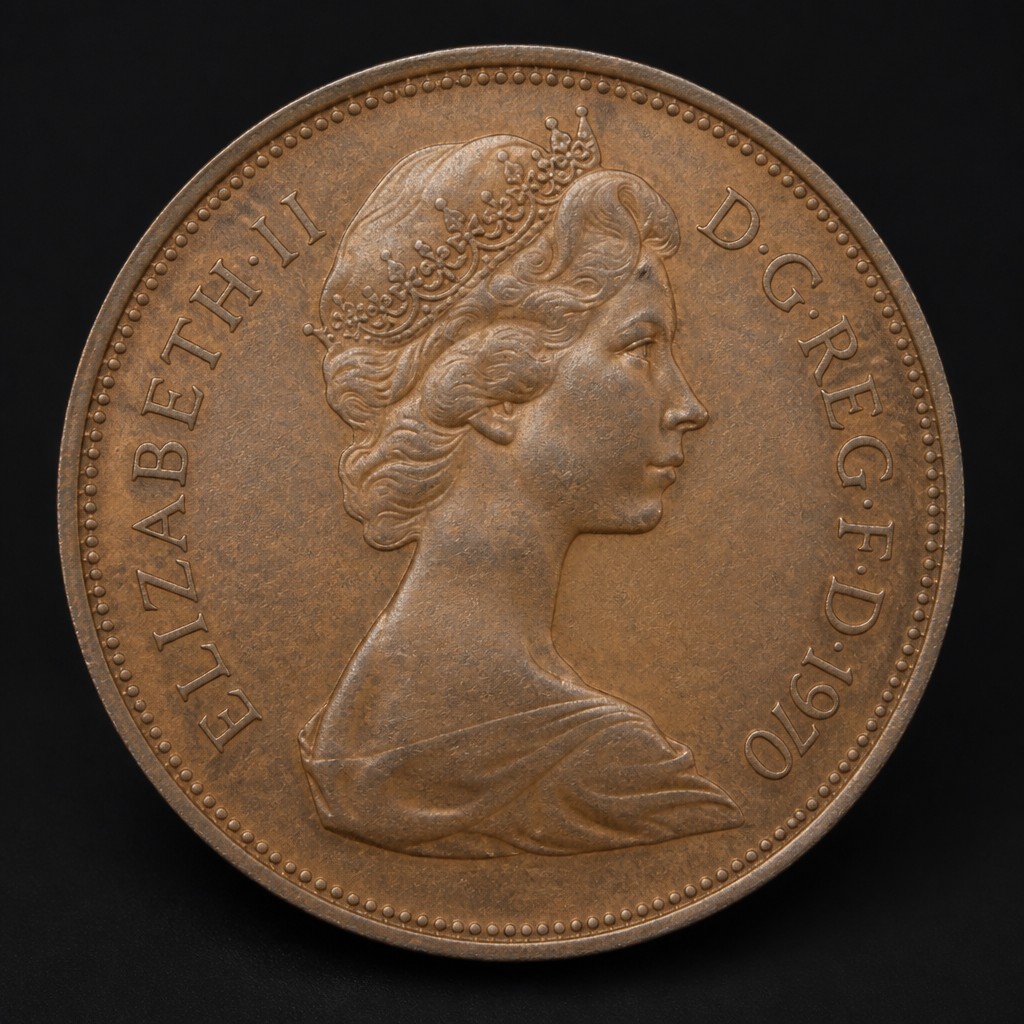
What It Is
The (old) Penny was Britain's everyday bronze coin, worth one-twelfth of a shilling, struck in essentially the same large format from 1860 until decimal currency arrived in 1971. Its familiar heft made it a workhorse of daily commerce for over a century. Before 1860, pennies intended for circulation were struck in copper rather than bronze, so very old "cartwheel" and early Victorian copper pennies look and feel noticeably different from the bronze pennies most collectors encounter today.
Obverse Design and Inscriptions
The obverse shows the monarch's portrait in profile with the Latin royal title and the date typically placed below the bust, matching the conventions used across the same reign's other bronze coins.
Reverse Design and Inscriptions
The reverse depicts Britannia seated, facing right, holding a trident and resting her other arm on a shield, with waves and a ship sometimes visible at her feet depending on the exact date and design variety. "ONE PENNY" is not spelled out in words on most versions; the denomination is understood from the size and long-standing design.
Size, Weight, Metal, and Edge
The penny is large, measuring about 31 mm in diameter and weighing approximately 9.4 grams. It was struck in bronze (95% copper, 4% tin, 1% zinc, with slight variations over time). The edge is plain (smooth), not reeded, which is typical of Britain's low-denomination bronze coinage.
Mint Marks and Where to Find Them
Regular London-struck pennies for domestic circulation carry no mint mark. Some pennies were struck under contract at other facilities during high-demand periods, and specialist references note subtle die differences collectors use to identify these, though no visible mint letter typically appears.
Telling It Apart From Similar Coins
The penny is easily distinguished from the smaller halfpenny and farthing by its larger diameter and greater weight, and from post-decimal bronze or copper-plated steel pennies (worth one new penny) by size, since the old penny is considerably larger than any modern British one-penny piece.
Judging Condition at a Glance
Check Britannia's shield and the folds of her robe, along with the fine lettering in the legend, as these details wear down steadily with circulation. Because bronze coins were often heavily used, finding a sharply detailed, evenly toned example is a mark of better condition; heavy corrosion, pitting, or a green crust suggests long burial or poor storage rather than simple circulation wear.
Authenticity Red Flags
Watch for coins with a suspiciously light weight or a diameter noticeably off from about 31 mm, both of which point to a cast counterfeit rather than a genuine struck coin. A grainy, sandy surface texture or visible casting seam around the edge are further signs of a reproduction. Also compare the exact style of Britannia's shield and pose against genuine examples from the claimed date, since some reproductions combine design elements from different years that would never appear together on a real coin.
Frequently asked questions
How big is an old British penny compared to a modern one?
The old bronze penny (about 31 mm) is considerably larger and heavier than the modern decimal one-penny coin, which is much smaller and lighter.
What is shown on the back of an old penny?
A seated figure of Britannia holding a trident and resting on a shield, a design used with only minor variations for over a century.
What metal is the old penny made from?
It is struck in bronze, an alloy of mostly copper with small amounts of tin and zinc.
Does the old penny have a mint mark?
No, regular circulation pennies from the London mint do not carry a visible mint mark.