
How to Identify the Penny of Cynethryth
Collector checks for the Cynethryth penny: right-facing bust, queen's name legend, moneyer reverse, size and metal, and authentication cautions.
Read the full Penny of Cynethryth encyclopedia entry →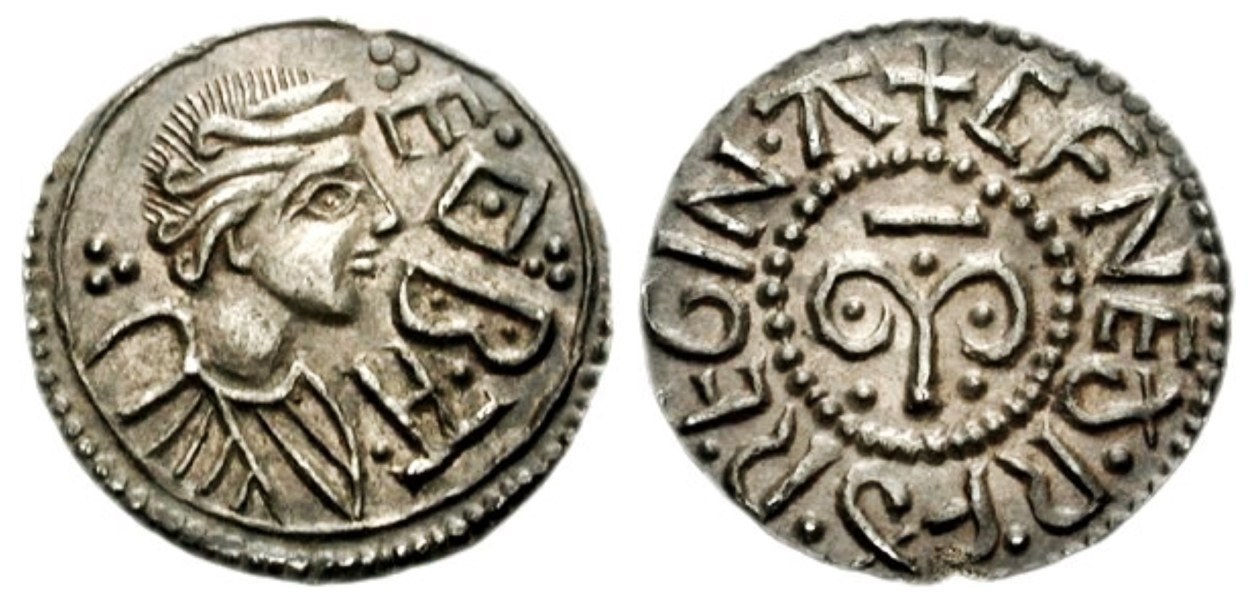
Start with format, metal, and size. This is a thin, broad silver penny of the earliest reformed type, typically around 17-20 mm across and light in the hand at roughly 1 to 1.3 grams. It is struck, not cast, so expect sharp raised lettering and devices and no casting seams. A thick, small silver piece is more likely an earlier sceatta, and any coin that feels heavy or shows casting texture should raise immediate doubt.
Read the obverse legend for the queen's name. The defining diagnostic is a right-facing bust surrounded by an inscription naming Cynethryth, written in Latinized Anglo-Saxon forms (a spelling of CYNEĐRYĐ, sometimes accompanied by a royal title). The portrait deliberately echoes Roman and Byzantine empress busts, so the head has a classical, stylized character rather than a naturalistic likeness. Note the early medieval letter forms, including thorn and eth characters that will look unusual.
Check the reverse for the moneyer arrangement. Rather than a pictorial scene, the reverse presents a geometric, ornamental layout of lettering, typically built around the moneyer's name associated with Eoba. The combination of a named queen on one side and a named moneyer set in decorative order on the other is the key pairing that distinguishes this type from other early pennies of Offa's coinage.
Separate it from look-alikes. Ordinary pennies of Offa himself carry the king's name and different portrait and monogram styles, and later Anglo-Saxon pennies use entirely different legends and designs. The presence of a female name and an empress-style bust is what sets the Cynethryth penny apart, so the legend must be read carefully rather than judged by the portrait alone.
Authenticate before trusting any example. Because so few genuine coins exist and the type is highly desirable, forgeries and modern copies are a real risk. Weigh and measure the coin, examine the lettering and dies under magnification, compare it against published specimens of the recorded type, and treat documented provenance and expert opinion as essential before accepting any piece as authentic.
Frequently asked questions
What is the single clearest sign it is a Cynethryth penny?
The obverse legend naming the queen (a form of CYNEĐRYĐ) around a right-facing bust. A female name on the coin is the defining feature, since no other Anglo-Saxon queen appears on coinage.
How do I tell it apart from a penny of Offa?
Pennies of Offa name the king and use his portrait and monogram styles. The Cynethryth type names the queen and uses an empress-style bust, so reading the legend is the reliable test.
What size and weight should I expect?
A thin, broad silver penny about 17-20 mm across and roughly 1 to 1.3 grams. Thicker, smaller silver pieces are more likely earlier sceattas.
Should I be worried about fakes?
Yes. This is a famous, extremely rare type, so copies and forgeries exist. Rely on expert authentication, published comparisons, and documented provenance before accepting any example.