
How to Identify the Penny of Cnut
A collector's walkthrough for confirming an Anglo-Saxon silver penny of Cnut: the bust and legend, the cross reverse, size and weight, mint and moneyer, look-alikes, and authentication cautions.
Read the full Penny of Cnut encyclopedia entry →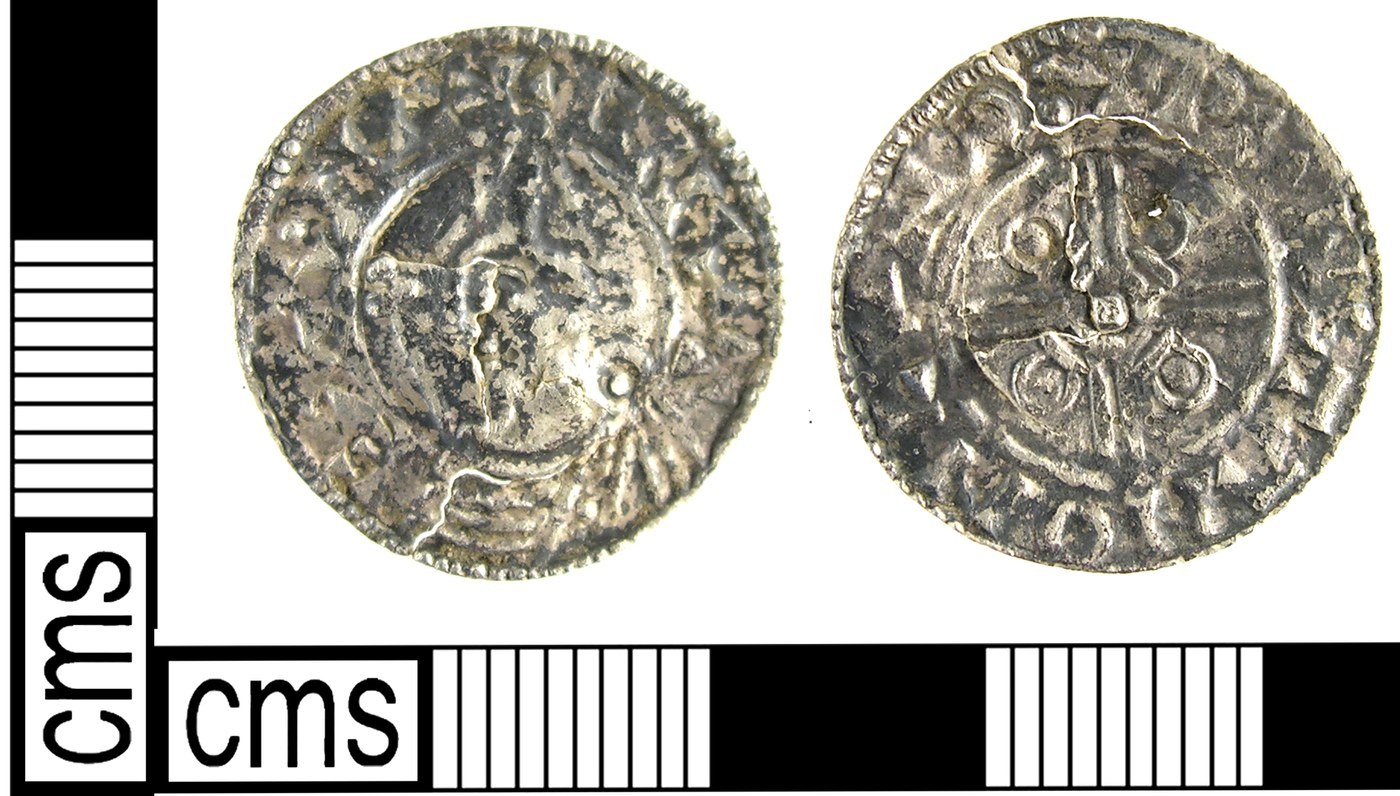
Start with the obverse. A penny of Cnut shows the king's bust, here facing left and wearing a diadem, encircled by a legend that names the king in a form such as CNVT or CNVT REX. The portrait is stylised rather than realistic, so do not expect a lifelike likeness; the reliable identifier is the royal name in the legend, not the modelling of the face. Read the letters carefully, allowing for the reversed or blundered forms that late Anglo-Saxon die-cutters sometimes used.
Turn to the reverse. The example shown has a cross with pellets, one of the standard reverse designs of the period, surrounded by a legend giving the moneyer's name and the mint town, both abbreviated. This inscription is where the coin's specific identity lives: it tells you where the penny was struck and by whom, and it is essential for placing the coin among Cnut's several types. Compare the bust style and reverse together against reference plates to assign the correct type.
Check the physical coin against the standard. A genuine penny of this era is a thin silver disc roughly 17 to 21 mm across and light in the hand, on the order of one to one and a half grams. It was hammered by hand, so an irregular or slightly off-centre flan, uneven striking, and parts of the legend running weak or off the edge are all normal and are not by themselves signs of a fake. A coin that is thick, heavy, unusually regular, or non-silver in appearance should raise suspicion.
Be careful with look-alikes. Cnut's pennies closely resemble the immediately preceding coinage of Æthelred II and the following pennies of Harold I and Harthacnut, all of which use similar busts and cross reverses. Rely on the obverse royal name and the specific type combination rather than the general look. Modern replicas, cast forgeries, and tooled coins exist; watch for a casting seam on the edge, bubbled or grainy surfaces, soft mushy lettering, and a weight or diameter that falls outside the expected range.
Finally, treat authentication and provenance as part of identification for any coin of value. Genuine hammered pennies are widely imitated, and the reverse legends can be misread, so confirm difficult mints and moneyers with a specialist in Anglo-Saxon coinage. Documented find or collection history and an opinion from a reputable dealer or grading service add real confidence before you rely on an attribution or pay a premium.
Frequently asked questions
What is the quickest way to confirm it is Cnut?
Read the obverse legend around the bust for the king's name in a form such as CNVT or CNVT REX. The royal name, combined with a period-correct bust and cross reverse, is more reliable than the portrait style alone.
What size and weight should a genuine example be?
A thin silver disc about 17 to 21 mm across and light in weight, roughly one to one and a half grams. A coin that is notably thick, heavy, or non-silver in appearance is suspect.
How do I read the mint and moneyer?
The reverse legend around the cross gives an abbreviated moneyer name and mint town. Letters may be reversed or blundered, so compare against reference lists of Cnut's mints and moneyers; a specialist can confirm difficult readings.
Does an off-centre, irregular coin mean it is fake?
No. These pennies were struck by hand, so irregular flans, off-centre designs, and partly weak or missing legends are normal for genuine coins. Judge authenticity by the silver fabric, weight, style, and lettering rather than by a perfectly round shape.