
How to Identify the Parthian Silver Drachm
A silver coin of the Parthian Empire showing a bearded royal portrait on the front and a seated archer holding a bow on the back, with the dynastic name Arsaces used by nearly every king.
Read the full Parthian Silver Drachm encyclopedia entry →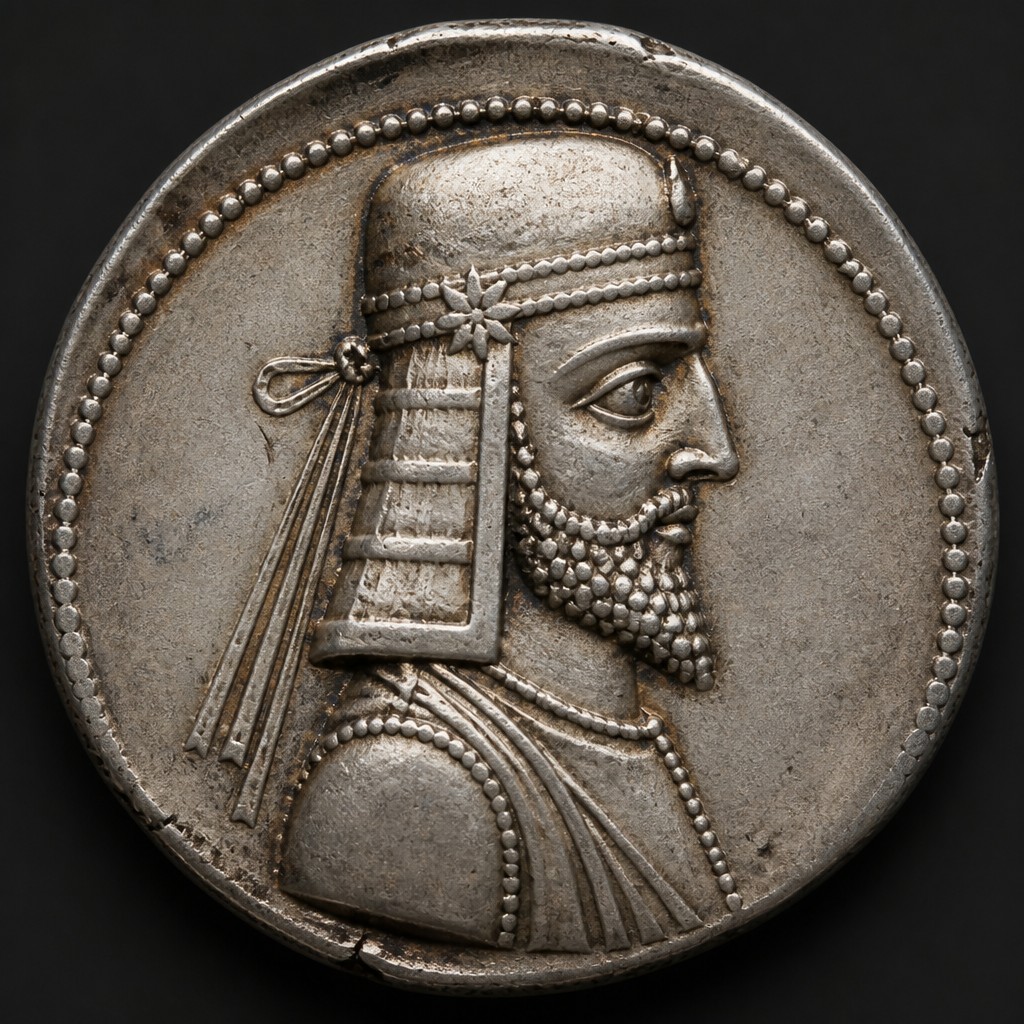
What It Is
The silver drachm was the everyday silver denomination of the Parthian Empire, which dominated Iran and Mesopotamia from the mid-3rd century BC to the early 3rd century AD. Drachms were struck at numerous mints across the empire and are far more commonly encountered than the larger Parthian tetradrachm, making them the most accessible entry point for collectors interested in Parthian coinage.
Obverse Design
The obverse features a left-facing bust of the reigning king wearing a diadem or, in some periods, a soft tiara, with beard and hairstyle details that change gradually from reign to reign. Because Parthian kings frequently used the same throne name, identifying the specific ruler usually depends on comparing these portrait details rather than reading a unique name.
Reverse Design
The reverse shows the dynasty's founding image: a seated archer, understood to represent the king or the dynastic founder Arsaces, holding a bow and seated on an omphalos or throne. Around this figure runs a Greek legend, typically some form of "BASILEOS BASILEON ARSAKOU," meaning "of the King of Kings, Arsaces," since Arsaces became a generic dynastic title used by nearly all Parthian rulers.
Size, Weight, and Metal
Parthian drachms are silver coins roughly 20mm in diameter and about 4 grams in weight, though strikes are frequently a little off-center or soft compared to contemporary Greek coinage from further west.
Mint Marks and Where to Find Them
Small Greek letters or monograms appear in the exergue beneath the archer, indicating the mint city, with Ecbatana being a especially common source for drachms (as opposed to Seleucia, which specialized in tetradrachms). Some issues also include a date in the Seleucid era calendar within the reverse field.
Telling It Apart from Similar Coins
Because the reverse legend rarely names an individual king by a unique personal name, attributing a drachm to a specific ruler requires comparing the portrait style, beard shape, and headgear against reference sequences of Parthian kings. This distinguishes Parthian drachms from Seleucid or Bactrian coinage, which more often uses distinctive personal names and varied reverse deities.
Judging Condition at a Glance
Parthian drachms are often weakly or unevenly struck even when new, so judge condition by looking at the clarity of the portrait's facial features and the legibility of the mint monogram rather than expecting the crisp, full strikes typical of some other ancient coinages. A coin with only light circulation wear can still look somewhat soft in the archer's details simply because of how the dies were originally engraved and struck.
Authenticity Red Flags
Watch for coins that are unusually heavy, have blurred or mushy details consistent with casting rather than striking, or combine a portrait style with a mint monogram or date that does not match any documented pairing.
Frequently asked questions
Why do so many Parthian coins say 'Arsaces' if there were many different kings?
Arsaces was the dynastic founder's name, and it became a standard royal title used by nearly all subsequent Parthian kings on their coinage, rather than each king using his own personal name.
How can I identify which king issued my drachm if the name doesn't help?
Compare the portrait's beard style, hairstyle, and headgear (diadem versus tiara) against reference images of the Parthian king sequence, since these details changed over time.
What is the seated figure on the reverse?
It depicts a seated archer holding a bow, generally understood to represent the king or the dynasty's founder, and it is a consistent design element across most Parthian drachms.
Why does the strike often look weak or uneven?
Parthian mints commonly produced coins with softer, less crisp strikes than some other ancient mints, so this is typical of the series rather than necessarily a sign of heavy wear.