
How to Identify the Papal States Scudo
A silver coin issued by the Papal States, typically bearing the reigning Pope's coat of arms or portrait on one side and a religious or saintly image on the other.
Read the full Papal States Scudo encyclopedia entry →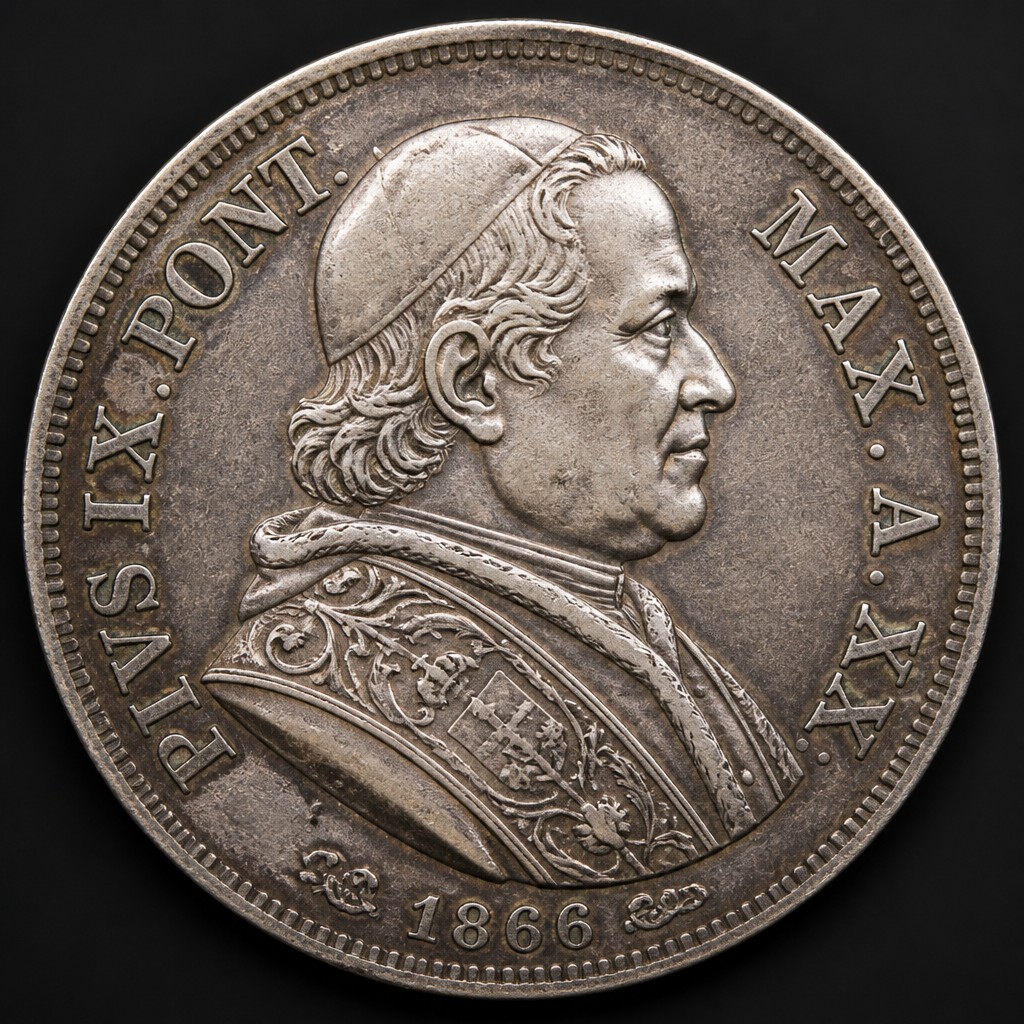
What It Is
The Scudo was the principal silver coin of the Papal States, the territory in central Italy governed directly by the Pope, struck from the 16th century through the mid-19th century until the territory's absorption into unified Italy. Because coinage was issued in the name of each successive Pope, designs and inscriptions changed frequently across reigns.
Obverse Design
Most scudi show the coat of arms of the reigning Pope, typically topped with the papal tiara and crossed keys of St. Peter, along with a Latin legend giving the Pope's name and regnal details, such as "PIUS VI PONT MAX."
Reverse Design
Reverse designs vary more than the obverse and often depict a religious scene or figure relevant to the specific Pope or mint, such as a standing saint, an allegorical figure, or a decorative religious symbol, accompanied by a Latin legend and sometimes the specific mint city name.
Size, Weight, and Metal
Struck in silver, typically around .900 fine depending on period, the scudo is a substantial coin, generally 38-44mm in diameter with weight commonly falling between 26 and 27 grams, comparable in heft to other large European silver crowns of the era. The edge may be plain, reeded, or lettered depending on period and mint.
Mint Marks
Because the Papal States operated mints in multiple cities (including Rome, Bologna, and Ancona among others), a mint mark or city name often appears in small text on the reverse, along with an engraver's or mint-master's initials in some periods.
Telling It Apart From Similar Coins
Because designs changed with each papacy, correctly identifying a specific scudo depends on matching the papal coat of arms and Latin name to the correct Pope's reign. The crossed-keys-and-tiara motif is a reliable general indicator that a coin belongs to the Papal States rather than another Italian state, which typically used different heraldic symbols.
Judging Condition at a Glance
High-grade examples show crisp detail in the papal tiara's bands and the fine lines of the coat of arms, along with sharp lettering in the legend. Circulated coins often show wear first on the highest points of the arms and any raised reverse figure, with legends remaining legible longer around the protected rim area.
Authenticity Red Flags
Given the historical and religious significance of these coins, reproductions exist, particularly of scudi tied to well-known or popular Popes. Verify that the coat of arms design, legend wording, and date are all consistent with the named Pope's actual reign, and check silver weight and fineness against expected standards for the specific mint and period.
Frequently asked questions
What symbol identifies a coin as coming from the Papal States?
The papal tiara combined with the crossed keys of St. Peter, usually shown above or as part of the reigning Pope's coat of arms.
Why do Papal States scudi look so different from each other?
Each Pope issued coinage under his own name and arms, so designs, legends, and even reverse imagery changed significantly across different reigns.
What is the metal and typical size of a scudo?
It is a large silver coin, generally .900 fine, about 38-44mm in diameter and around 26-27 grams.
How do I find the mint city on a Papal scudo?
Look for a small mint mark or city name in the legend or lower portion of the reverse design, sometimes paired with a mint official's initials.